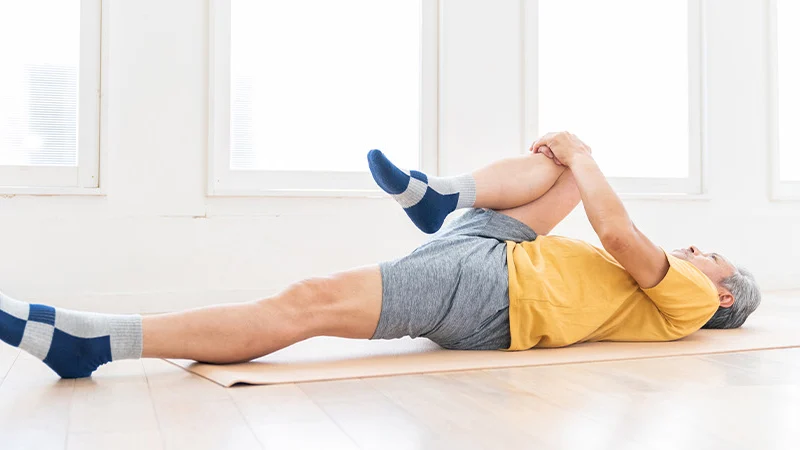
It’s almost here – those indulgent holiday parties with sugary fried goodies, finger foods galore and bubbly cocktails where you rationalize just one more. It’s ok, I mean, we all know what immediately follows the annual December gluttony with Pavlovian-like certainty, right? The New Years Resolutions. What will it be this year? Crossfit? Jogga? (that one is fun to say) How about Soul Cycle? Perhaps a boot camp? Whatever your 2019 workout may be, the key is to train smart to avoid getting hurt.
Posture, posture, posture…
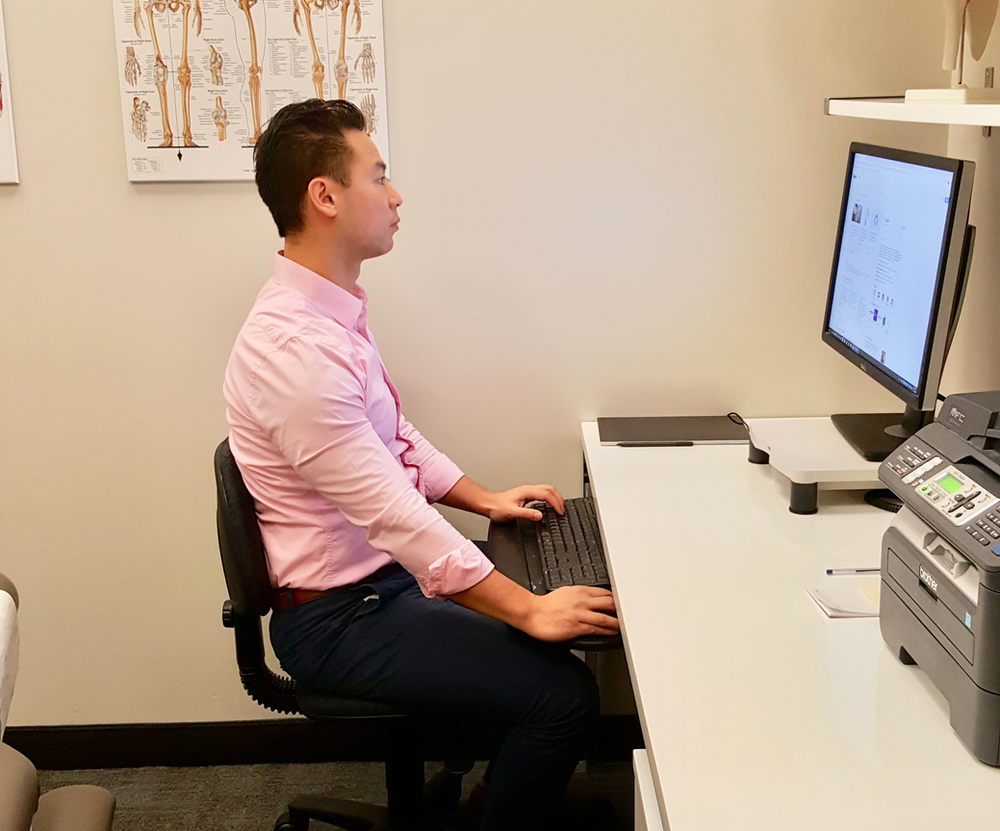
Unfortunately the highly demanding and commonly sedentary office jobs most people have during the day can set them up for injury during their workouts. Why is that? Something your parents and teachers preached to you at a young age. You know you should sit up and stand up straight, but do you? At the end of your work day, do you feel like you look like Mr. Burns? Your shoulders are rounded, your neck is poking forward, and your upper back is stiff as a board. Exercising is the right thing to do but starting your workout feeling like this can cause a variety of neck and shoulder issues.
Lets talk about the aforementioned Mr. Burns posture and what causes you to feel that way. The rounded shoulders are due to tension in the chest, more specifically, in the pectorals minor and major muscles. The tightness in the neck is due to tension in the upper trapezius which is the muscle connecting your neck and your shoulders. The stiffness in the upper back is because of tension in the muscles and joints between the vertebrae in the thoracic spine.
Warm up
The latest research shows that the best warm up is an active one. Start on the treadmill, elliptical, bike, or any cardio machine for 5-10 minutes. This gives you some time to clear your mind of the day’s stress, visually plan your workout, and it serves to fire up your body for the training ahead.
Wall Angel
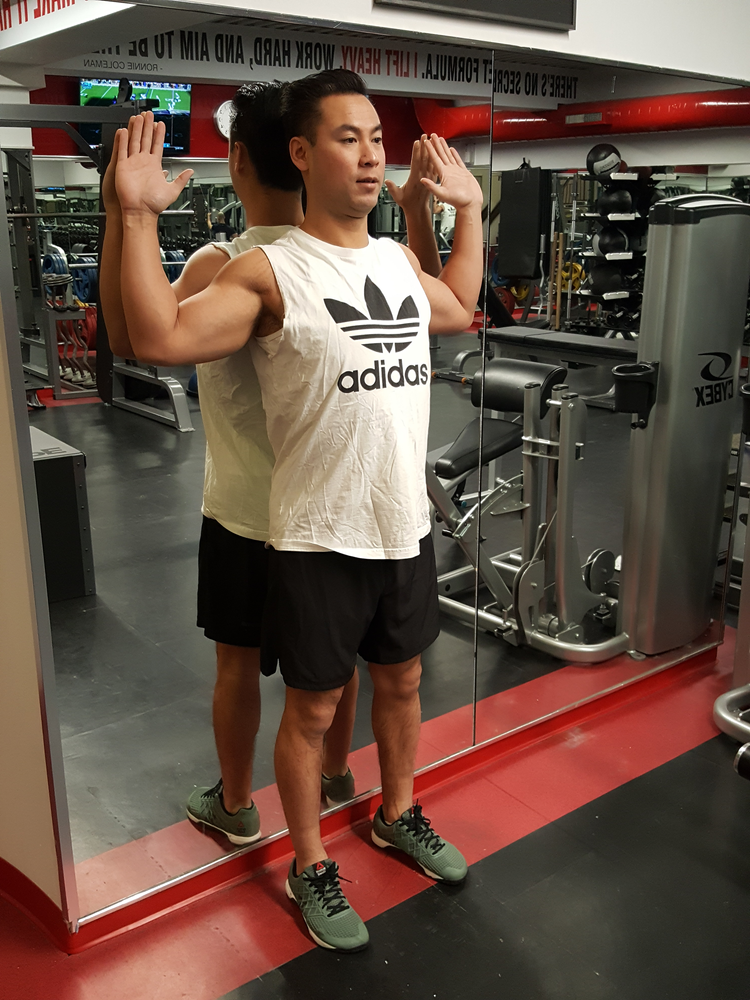
This is a simple and effective way at improving flexibility in the shoulders and upper back. After an active warm up, stand with your back, arms, and forearms against the wall as if you are ready to lift something over your head. Begin reaching over your head keeping your back and arms flush against the wall. Keeping your body against the wall, reach as high as you can and then lower your arms (like a snow angel) – repeating for 10 reps and 3 sets. This exercise stretches the tight chest muscles and promotes neck and upper back extension, as well as straightening of the spine. This exercise is excellent at releasing forward rounded shoulders and correcting upper back posture.
Don’t forget to train your back
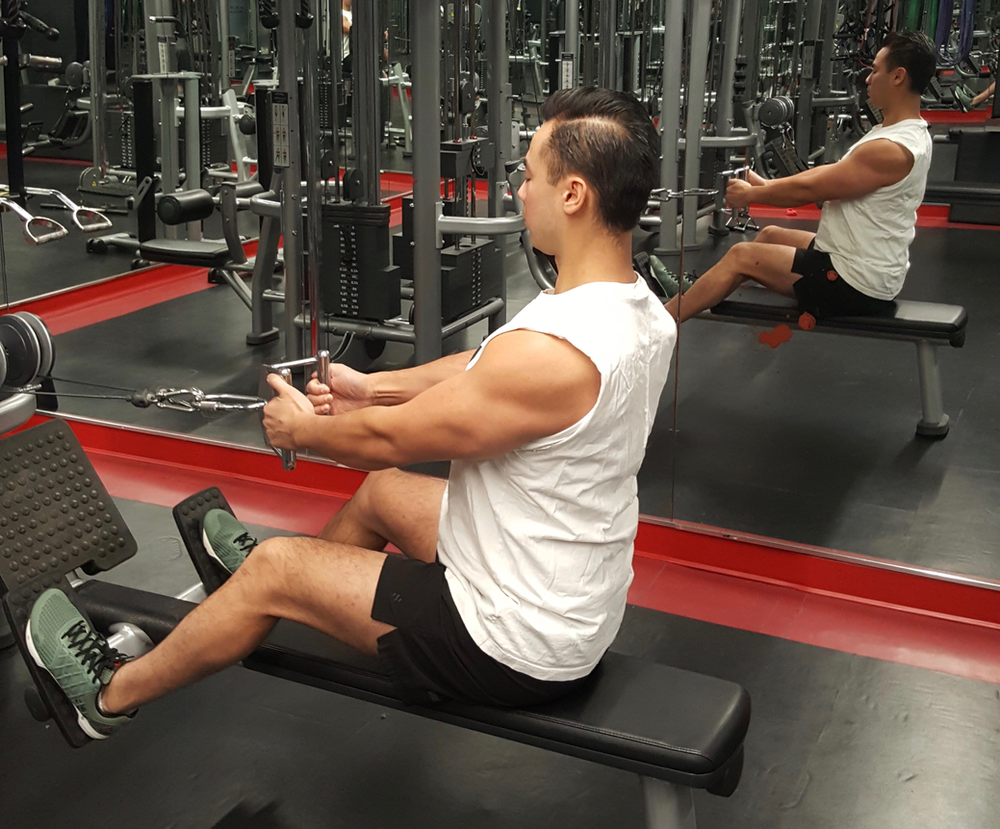
Although most people like focusing on training their beach muscles – chest and arms for gents, while the ladies tend to focus on hips and thighs – training your back is the key to preventing upper body injuries. Keeping your back muscles strong also helps combat the rounded shoulder posture that most seated workers fall victim to. Remember to sit up tall and pinch your shoulder blades together when doing exercises such as the lat pull down or rowing machine to engage those back muscles. Concentrate on the form – inhale during the beginning of the rep, visualize those muscles contracting and exhale as you work through that rep.
Foam Roller
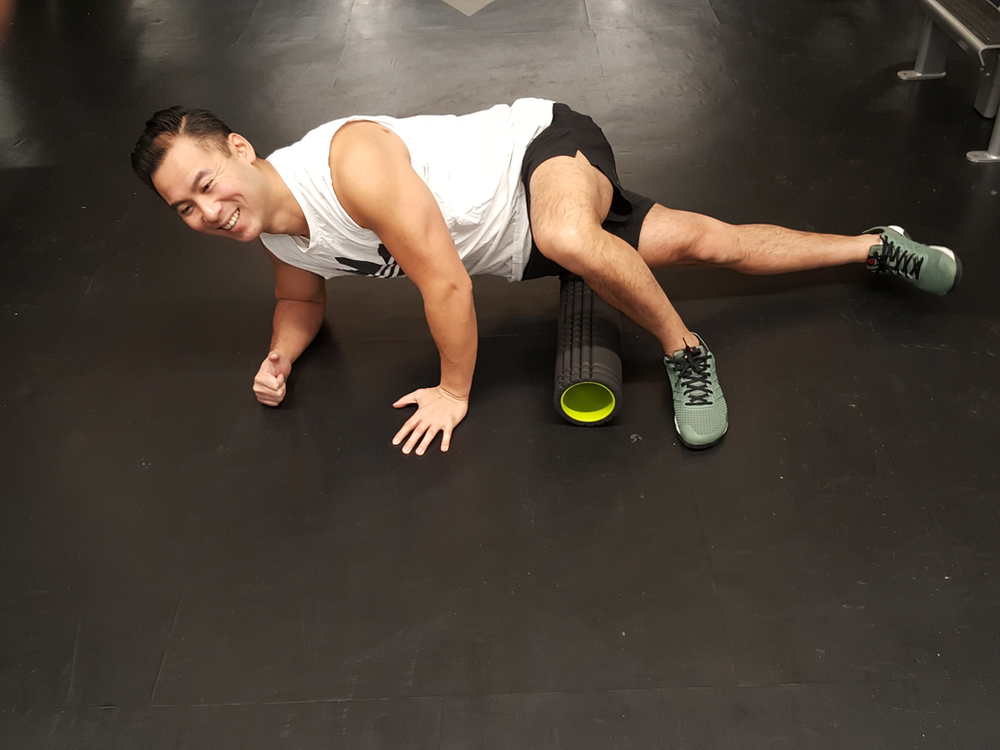
Finish the workout with another great upper body stretch. Lay on the foam roller length wise against your spine and relax your head on the foam roller. Position your arms and legs outwards like a starfish. Bring your arms up above shoulder height and hold that stretch for a minute and then then lower the arms down below shoulder height to stretch out a different part of the chest. Close your eyes and focus on your breathing as you cool down and finish this last phase of your workout.
Workout Injury Prevention – Frequently Asked Questions
1. What are the best warm-up exercises before starting a workout?
A good warm-up prepares your body for movement by increasing blood flow, mobility, and muscle activation. Focus on dynamic (moving) exercises rather than static stretching. Examples include:
- Light cardio (brisk walking, cycling, or jogging for 5–10 minutes)
- Dynamic stretches (leg swings, arm circles)
- Movement prep (bodyweight squats, lunges, glute bridges, band pull-a-parts)
Your warm-up should mimic the movements you plan to do in your workout.
2. How can posture affect my workouts and injury risk?
Posture plays a major role in how forces move through your body. Poor posture (like rounded shoulders or an arched lower back) can:
- Place excess stress on joints and ligaments
- Reduce muscle efficiency
- Increase risk of strains and overuse injuries
Maintaining proper alignment helps distribute load evenly and allows muscles to work more effectively.
3. What is a “Wall Angel” exercise and how does it help prevent injury?
A Wall Angel is a posture and mobility exercise performed with your back against a wall while moving your arms up and down like a “snow angel.”
It helps by:
- Improving shoulder mobility
- Strengthening upper back muscles
- Promoting better posture
This is especially useful for people who sit a lot or experience neck and shoulder tightness.
4. Why should I train my back muscles to avoid injuries?
Your back muscles are essential for posture, stability, and overall strength. Weak back muscles can lead to:
- Poor posture
- Increased strain on the neck, shoulders, and lower back
- Muscle imbalances
Strengthening your back (mid-back, upper back, and core) helps support proper movement and reduces injury risk.
5. How does foam rolling aid in preventing workout injuries?
Foam rolling is a form of self-myofascial release that helps:
- Reduce muscle tightness
- Improve blood flow
- Increase mobility
By improving tissue quality and flexibility, foam rolling can help your body move more efficiently and reduce strain during exercise.
6. Can foam rolling help with IT band tightness and overall flexibility?
Yes, foam rolling can help with IT band-related discomfort, but it’s most effective when combined with other strategies.
Important points:
- The IT band itself is not very stretchable
- Focus on rolling surrounding muscles like the quads, glutes, and TFL
- Combine with strengthening exercises for best results
This approach improves overall flexibility and reduces tension on the IT band.
7. What are common mistakes people make when starting a New Year fitness plan?
Some of the most common mistakes include:
- Doing too much too soon (sudden increase in intensity or volume)
- Skipping warm-ups and recovery
- Poor technique or form
- Not allowing enough rest between workouts
- Setting unrealistic goals
Gradual progression is key to staying consistent and injury-free.
8. How often should I perform these physio tips to see results and avoid injuries?
Consistency matters more than intensity. General guidelines:
- Warm-ups: before every workout
- Mobility and activation exercises: 3–5 times per week
- Foam rolling: after workouts or on rest days
You may start noticing improvements within a few weeks with regular practice.
9. Do I need to see a physiotherapist before starting a new fitness routine?
Not everyone needs to see a physiotherapist before starting exercise. However, it’s a good idea if you:
- Have a history of injuries
- Experience pain during movement
- Are returning to exercise after a long break
- Want guidance on proper technique
A physiotherapist can create a personalized plan and help you avoid setbacks.
10. What other common physio-recommended strategies can help prevent fitness injuries?
Additional injury prevention strategies include:
- Progress gradually (increase load, intensity, or duration slowly)
- Prioritize proper technique over heavier weights
- Include rest and recovery days
- Cross-train to avoid overuse injuries
- Listen to your body—pain is a signal, not something to push through
Staying consistent, balanced, and mindful in your training will go a long way in preventing injuries.