
Feeling pain in the front of your shoulder? In many cases this is due to a condition called “anterior shoulder impingement”. In this condition the rotator cuff tendons, which connects to the front of the shoulder, begin rubbing into one another which causes pain. This impingement is due to a muscle imbalance. Muscles such as the pectorals major, minor, subscapularis, and latissimus dorsi are too tight and pulls the shoulder forward. Whereas muscles such as the posterior deltoid, infraspinatus, and teres minor, are too weak to counter balance the anterior shoulder tension. This muscle imbalance cause the shoulder joint to glide forward causing this impingement of the rotator cuff tendons. Manual therapy such as active release, joint mobilization, and acupuncture are very effective at releasing muscle tension. Here are some exercises I prescribe to my patients to strengthen and rehabilitate the shoulder. Follow us on instagram @rebuildphysiotherapy for full videos of these simple shoulder exercises to fix your shoulder pain.
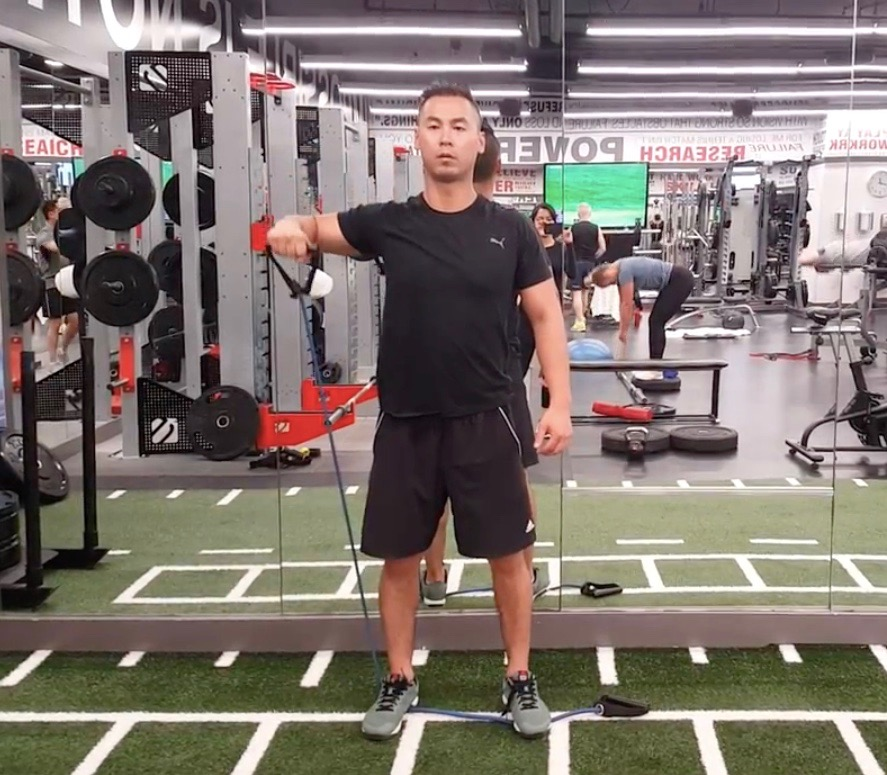
1) 90/90 external rotation to overhead press
-
- Holding a resistance band, step onto the other end to anchor it to the ground, and lift up your elbow.
-
- Keep your upper back straight and neck in a neutral position.
-
- Slightly pinch your scapula back toward your spine engaging your scapular stabilizers.
-
- Externally rotate your shoulder then overhead press.
-
- Slowly lower hand and internally rotate your shoulder back to starting position.
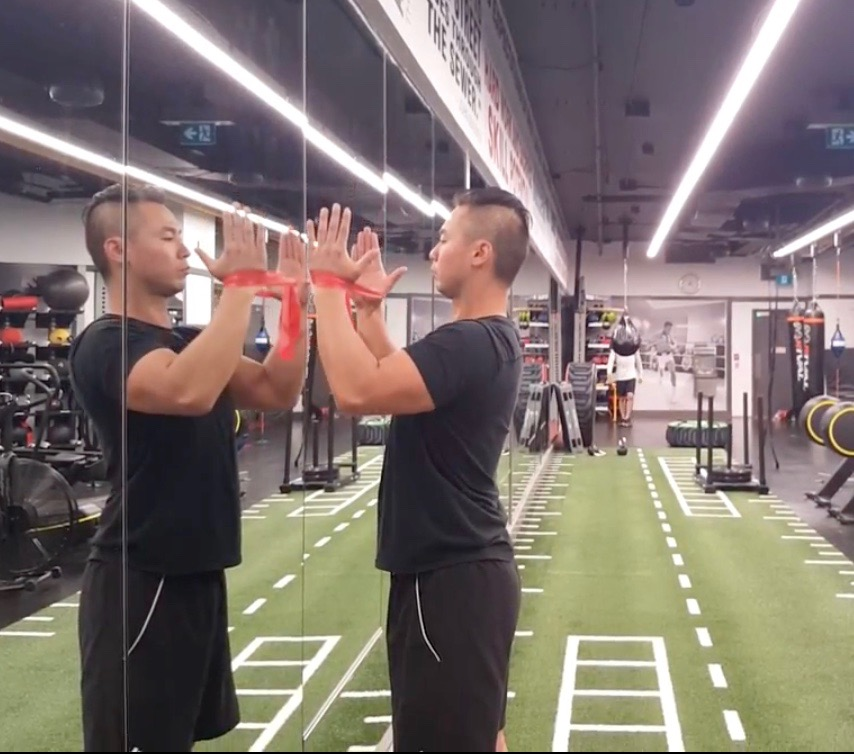
2) Isometric external rotation wall slides
-
- Tie a resistance band into a loop.
-
- Place your hands between the loop and pull the band apart until hands are shoulder width apart.
-
- Slightly pinch your scapula back toward your spine engaging your scapular stabilizers.
-
- Keeping your hands and elbows perpendicular to your body. Slide your hands up the wall.
-
- Slowly lower your hands back down keeping your scapular stabilizers engaged.
-
- During this exercise reach up overhead as high as possible with your shoulders and avoid doing this by arching your back.
3) Kettle bell overhead presses
-
- Slightly pinch your scapula back toward your spine engaging your scapular stabilizers.
-
- Holding the kettle bell upside down will challenge the rotator cuff and scapular stabilizers.
-
- With your elbow pointed out to the side, press the kettlebell overhead.
-
- Perform this exercise slowly keeping the kettlebell balanced
-
- Regression 1: Overhead pressing in the sagittal plane (keeping your elbow forward).
-
- Regression 2: Overhead pressing in the scapular plane (keeping your elbow slightly out to the side).

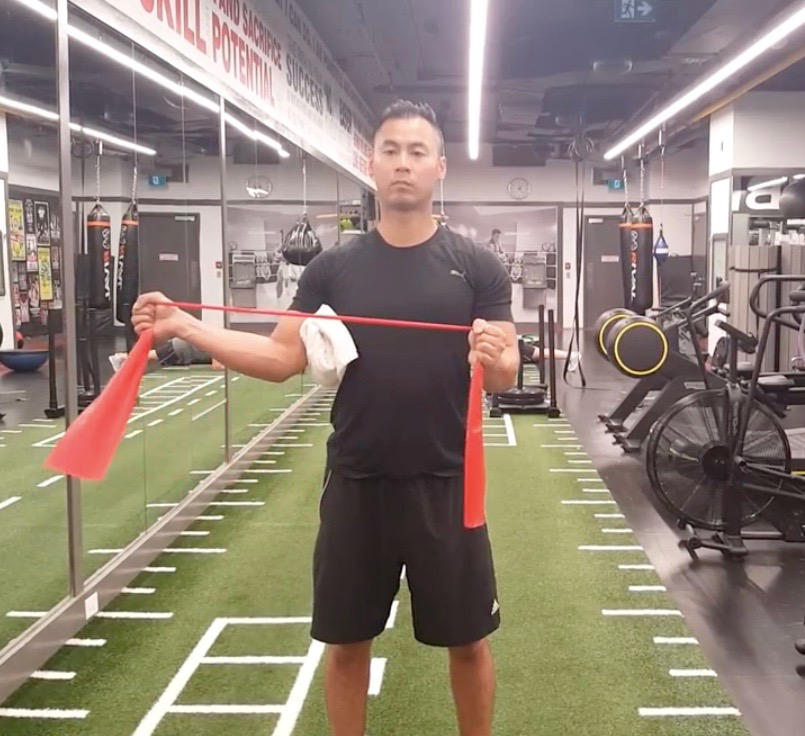
4) External rotation
-
- Classic rotator cuff drill.
-
- Placing a rolled towel between your elbow and obliques. This is very important because this position will create more recruitment of the rotator cuff external rotators during this exercise.
-
- Slightly pinch your scapula back toward your spine engaging your scapular stabilizers.
-
- Keep your upper back straight and neck in a neutral position.
-
- External rotate your shoulder
-
- Slowly internally rotate your shoulder as you keep your scapula retracted and stabilizers engaged.
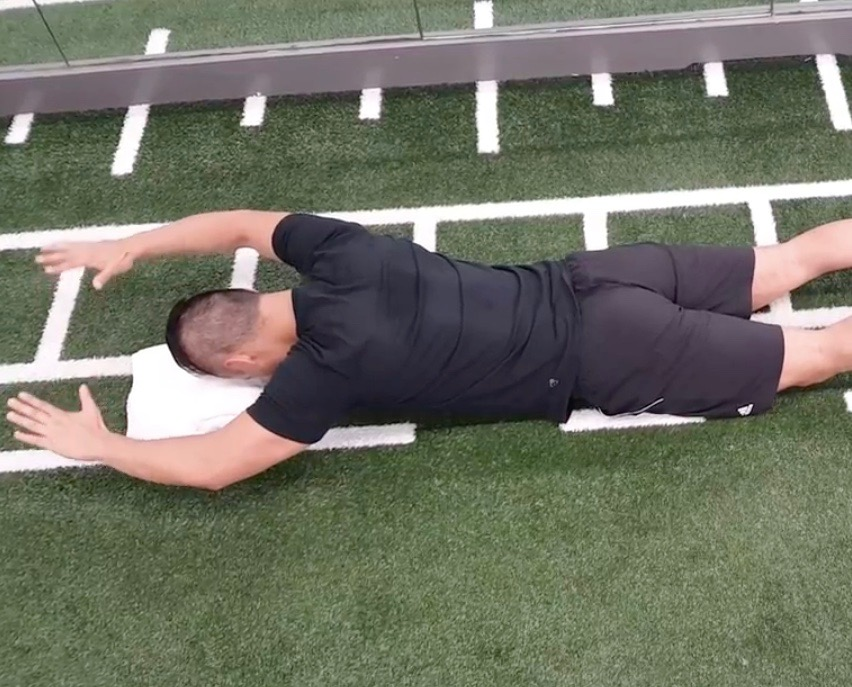
5) Reverse Snow Angles
-
- Lye, stomach down, onto a yoga mat with your head resting on a rolled towel.
-
- Slightly pinch your scapula back toward your spine engaging your scapular stabilizers.
-
- While maintained a scapular set position reach arms overhead keeping elbows straight.
-
- Slowly lower arms back down to side.
-
- Progression: Perform this exercise holding onto light weights.
Shoulder Pain & Physiotherapy Exercises – Frequently Asked Questions
1. What are the most effective physiotherapy exercises to relieve shoulder pain?
The most effective exercises focus on improving mobility, strength, and control of the shoulder and surrounding muscles. Commonly recommended exercises include:
- Scapular retractions (pulling shoulder blades back)
- Rotator cuff strengthening (external/internal rotations with a band)
- Wall slides or wall angels
- Pendulum exercises (gentle mobility work)
- Thoracic extension exercises (improving upper back mobility)
The best program depends on the cause of your shoulder pain, so exercises should ideally be tailored to your specific condition.
2. How do physiotherapy exercises help with shoulder impingement pain?
Physiotherapy exercises address the root causes of shoulder impingement by:
- Improving shoulder blade (scapular) positioning
- Strengthening the rotator cuff to better control joint movement
- Increasing space in the shoulder joint during movement
- Reducing muscle imbalances and tension
Over time, this helps decrease irritation of the tendons and reduces pain with overhead or reaching movements.
3. How often should I do shoulder physiotherapy exercises for best results?
For most people:
- Mobility and activation exercises: 4–6 times per week
- Strengthening exercises: 2–4 times per week
Consistency is key. It’s better to do a small amount regularly than large sessions inconsistently.
4. What common mistakes should be avoided when doing shoulder physio exercises?
Common mistakes include:
- Pushing through pain instead of working within a comfortable range
- Using poor form or compensating (e.g., shrugging shoulders)
- Progressing too quickly with resistance or repetitions
- Neglecting posture and upper back positioning
- Skipping warm-ups
Proper technique and gradual progression are critical for recovery.
5. How long does it take to see improvement in shoulder pain with physiotherapy exercises?
Most people begin to notice improvement within:
- 2–4 weeks for mild to moderate issues
- 6–8+ weeks for more persistent or chronic conditions
Full recovery timelines vary depending on the severity, consistency with exercises, and underlying cause.
6. Should I warm up before doing these shoulder exercises?
Yes, warming up is important. A proper warm-up:
- Increases blood flow to the muscles
- Improves mobility
- Reduces risk of irritation or injury
Simple options include light arm movements, resistance band activation, or a few minutes of general cardio.
7. Can physiotherapy exercises fix shoulder pain caused by desk posture?
In many cases, yes. Shoulder pain related to desk posture is often due to:
- Rounded shoulders
- Forward head posture
- Weak upper back muscles
Physiotherapy exercises can:
- Strengthen postural muscles
- Improve mobility in the chest and upper back
- Correct movement patterns
However, combining exercises with ergonomic changes (desk setup, screen height, regular breaks) gives the best results.
8. When should I consult a physiotherapist instead of self-treating at home?
You should consider seeing a physiotherapist if:
- Pain persists longer than a few weeks
- Symptoms are worsening instead of improving
- You have significant weakness or limited range of motion
- Pain affects sleep or daily activities
- You’re unsure which exercises are appropriate
A physiotherapist can provide a proper diagnosis, hands-on treatment, and a personalized exercise plan to speed up recovery.