Low Back and Neck Pain
Slouching forward over the handle bars will create a compromised posture for your neck and back. Hours in this curled position can cause fatigue and tension in the muscles of your neck and back. If you are also sitting a lot during your work day the additional sitting during cycling can exasperate your back.
Solution:
To relieve pressure in the back from this forward position perform back extension exercises. On rest breaks during your ride, stand up and bend backwards. Repeat this exercise for a number of repetitions. Relieve the neck tension by performing chin retractions. Assess your riding position. If your position is very aggressive and the handle bars are low raise the handle bars a bit. Ride more up right for a few days to allow the back and neck to recover.
Iliopsoas Tendonitis
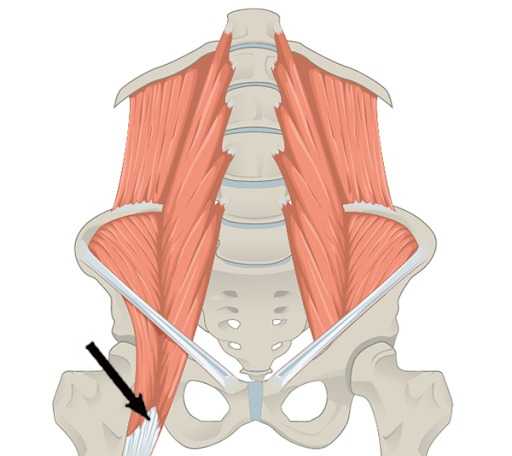
The sitting position in biking puts the iliopsoas, aka the hip flexor, in a shortened position. Long periods of sitting on a bike and at work can often cause iliopsoas tendonitis. Part of the iliopsoas attaches into the back. Tightness in this hip flexor muscle can compress the back vertically like an accordion. This will contribute to tension and pain in the back. There is also a bursae underneath the iliopsoas tendon that can be compressed when the iliopsoas muscle is tight. This will cause pain in the front of the hip when walking or sitting.
Solution:
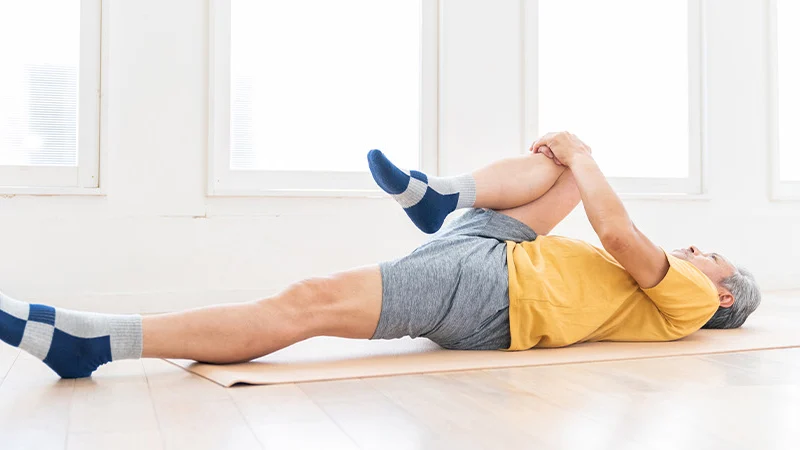
Stretch the hip flexor in a lunge stretch and massage it by lying on a lacrosse ball. Since sitting at work is often another factor causing this issue take more frequent walking breaks away from your desk and consider working from a standing desk.
Tailbone pain
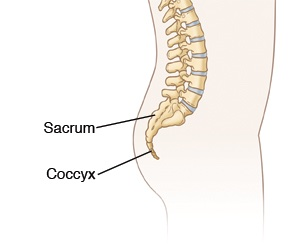
Excess pressure in the tailbone, more accurately termed the coccyx, is often due to an issue with the bike seat.
Solution:
Check the tilt of your bike seat. If it is tilted forward or backward it could put unnecessary pressure on your tail bone. Your bike seat should be flat and level with the ground. Also check if your seat is too low since this could also put extra pressure on your tailbone.
Evaluate to see if your bike seat is too soft. Overpadding in a bike seat can cause compression of the perenium and the sensitive nerves in that area. The seat should have a flat rear section to support the sit bones without pressing up on the perenium. if your bike seat is too firm considering using padded bicycle shorts that will give your more cushioning in the tail bone.
If you are suffering from a cycling injury, manual therapy treatments from a physiotherapist can help. Contact Rebuild Physiotherapy in Toronto today!
FAQ: Back Pain from Cycling
1. What causes back pain from riding a bicycle?
Back pain from cycling is often caused by prolonged forward bending, muscle fatigue, or poor posture. Common contributors include:
- Weak core or back muscles
- Tight hamstrings or hip flexors
- Poor bike setup
- Long rides without breaks
2. Can poor bike fit lead to back pain?
Yes, poor bike fit is one of the most common causes of cycling-related back pain. Issues like a saddle that’s too high or low, handlebars that are too far or too low, or improper reach can place excessive strain on your lower back.
3. How can I adjust my bike to prevent back pain?
Key adjustments include:
- Saddle height: Ensure a slight bend in your knee at the bottom of the pedal stroke
- Handlebar position: Raise them slightly if you feel excessive strain on your back
- Reach: Avoid overreaching; you should comfortably hold the bars without rounding your back
- Saddle tilt: Keep it neutral to prevent pelvic strain
A professional bike fitting can be very helpful.
4. What stretches help relieve cycling-related back pain?
Helpful stretches include:
- Hamstring stretch
- Hip flexor stretch
- Child’s pose for the lower back
- Cat-cow stretch for spinal mobility
- Glute stretches (e.g., figure-4 stretch)
Hold each stretch for 20–30 seconds and repeat regularly.
5. Are there specific exercises that can prevent back pain when cycling?
Yes, strengthening key muscle groups can help:
- Core exercises (planks, dead bugs)
- Glute strengthening (bridges, clamshells)
- Lower back endurance exercises (bird-dogs)
- Upper back strengthening (rows)
These improve posture and reduce strain on the spine.
6. Should I stop riding if I have back pain?
Not always. If the pain is mild, you can often continue riding with adjustments to intensity, duration, or bike setup. However, if the pain is sharp, worsening, or persistent, it’s best to rest and address the issue with a physiotherapist before continuing.
7. What posture should I use on the bike to avoid back pain?
- Keep a neutral spine (avoid excessive rounding)
- Engage your core lightly
- Relax your shoulders and avoid shrugging
- Keep a slight bend in your elbows
- Distribute weight evenly between saddle and handlebars
Good posture reduces unnecessary strain on the back.
8. How long does it take for cycling-related back pain to improve?
Mild discomfort may improve within a few days to 1–2 weeks with proper adjustments and exercises. More persistent issues may take 4–6 weeks or longer, depending on the cause and consistency of treatment.
9. When should I see a physiotherapist or doctor for back pain from cycling?
Seek professional help if:
- Pain persists beyond 1–2 weeks
- Pain is severe or worsening
- You experience numbness, tingling, or weakness
- Pain interferes with daily activities or sleep
A physiotherapist can assess your posture, bike fit, and movement patterns to help resolve the issue effectively.