The weather is warmer, the days are sunnier, and the running season starts again! After a winter of hibernation returning back to running can sometimes be tricky and there are some common injuries that can happen from running too fast and too far. Let’s take a look at Delon’s case. To get in shape for the summer he has decided to start running and signed up for the RBC race for kids 10 K mid September.
Training started in May and was going well until his right knee started bothering him in June. During our initial appointment he reported general knee pain all around his knee cap. Currently he is running 3-4x per week and each run is 5 km in length. His right knee would hurt during each run after 3 km and pain and swelling would occur after the run till the next day. When the knee was irritated walking, climbing stairs, and bending down to pick things up would aggravate it. Rest and ice seems to help.
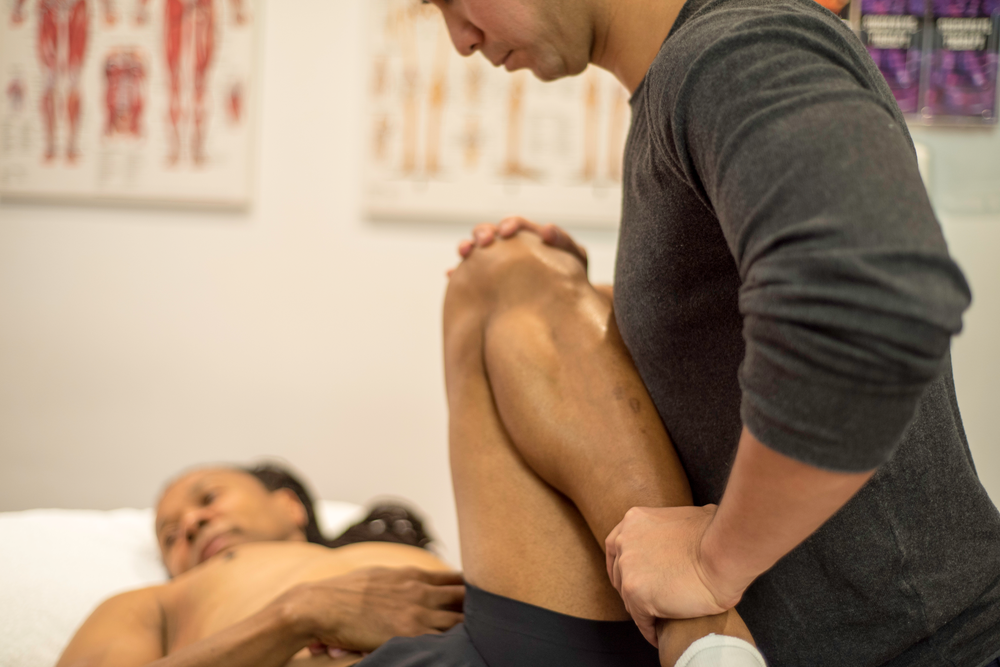
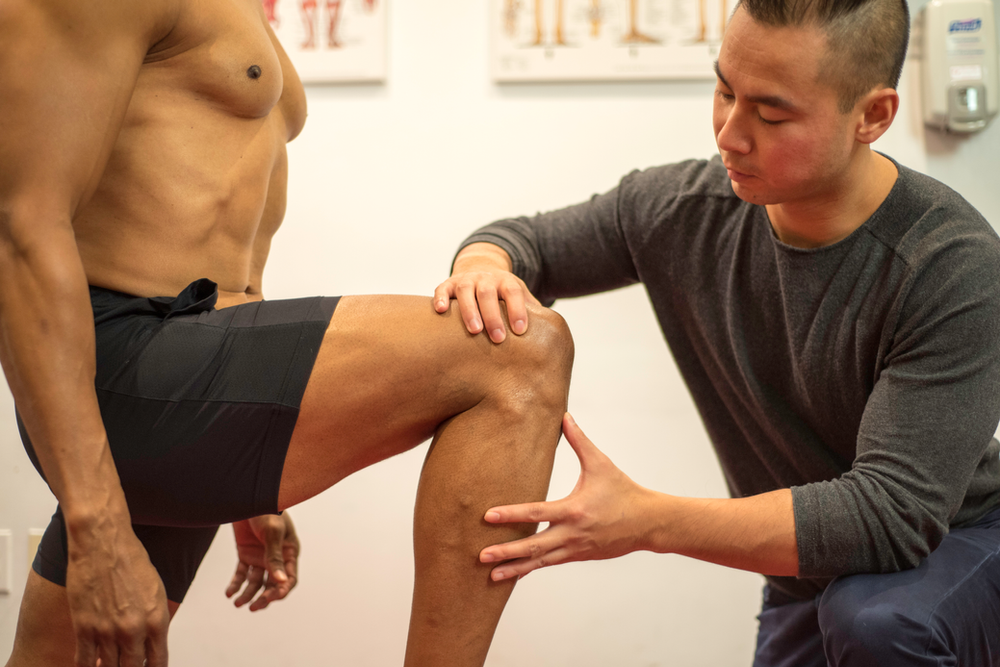
During his physical exam I noticed swelling around the right knee cap. As he performed a squat movement he said that his right knee hurt about halfway down into the movement. When I performed some strength tests it was clear the the right quadricep and right gluteus maximus and medius was weaker then the left. When assessing his flexibility I found tightness along his lowback muscles, hip flexors, IT band and quadriceps. Delon has a very common knee injured called “patella femoral pain syndrome” otherwise know as “runner’s knee” where there is a muscle imbalance in the hip and knee. Tightness in the quadriceps, IT band, and hip flexors causes the knee cap to pull outwards. Weakness along the quadriceps and gluteus further contributes to this tracking issue.
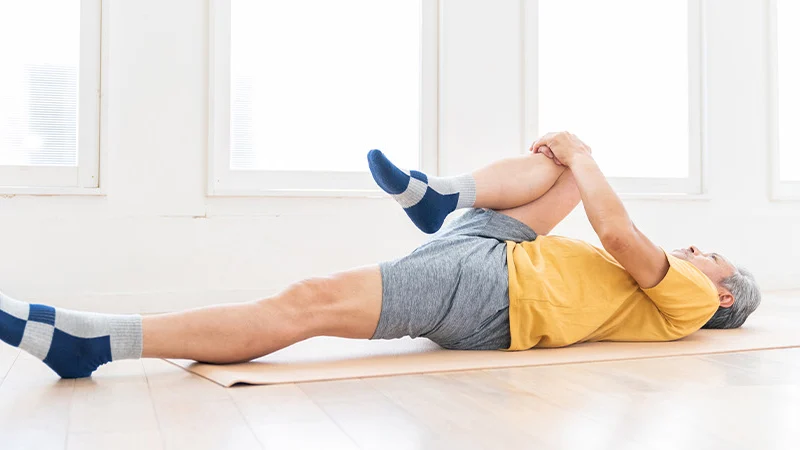
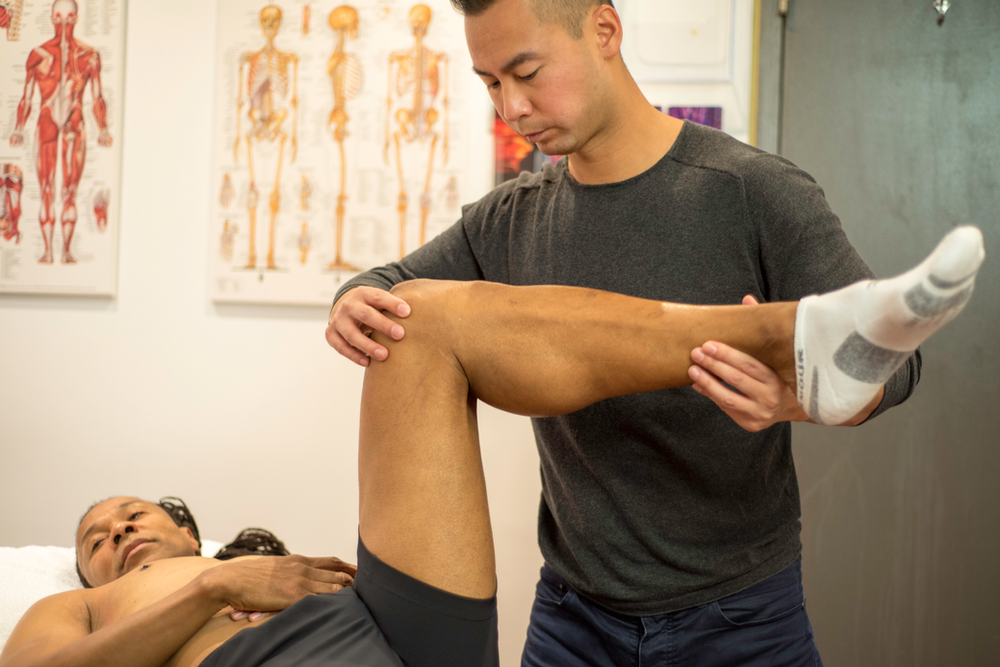
Delon was very determined to get his knee better, run, and complete in the RBC race for kids 10 K. During the first 3 weeks of treatment, I asked him to continue with his training however to keep his milage at 5 km per run and complete it using an interval method (3 min run and 1 min walk). Treatment began by loosening up his quadriceps, ITB, hip flexors, and low back by using Active Release Techniques (ART). Active Release Techniques is designed to stretch each individual muscle in the body. It is used to loosen tight muscles and breakdown scar tissue that can build up with repetitive training. He was also prescribed a home strengthening and flexibility program. For his strengthening program I prescribed squats to address his weakness in his quadriceps and glut maximus and clam shell exercise to address the weakness in his gluteus medius. To improve his flexibility I showed him how to use a foam roller to massage and loosen up the muscles of his hips and thighs at home.
As treatment went on he began to feel better during and after his run. Walking, climbing stairs, and picking up things off the ground no longer hurt the knee. As his symptoms improved we were able to increase the duration and intensity of the run. After 5 weeks of treatment Delon was feeling 100%. His knee was feeling great, his cardiovascular condition was ready, and he was looking forward to race day!
Lower body injuries in the hip, knee, ankle, and feet commonly begin in the spring as people return to their sporting activities. Don’t let these injuries linger and interrupt the rest of the summer. Have it checked out at Rebuild Physiotherapy and enjoy an active and pain free summer.
Runner’s Knee (Patellofemoral Pain Syndrome) – FAQ
1. What is Runner’s Knee?
Runner’s Knee, also known as patellofemoral pain syndrome, is a common condition that causes pain around or behind the kneecap (patella). It typically occurs when the kneecap does not track properly along the groove of the thigh bone, leading to irritation of the surrounding tissues.
2. What symptoms are typical of Runner’s Knee?
Common symptoms include:
- Dull, aching pain around or behind the kneecap
- Pain with running, squatting, or climbing stairs
- Discomfort after prolonged sitting (“moviegoer’s knee”)
- Clicking or grinding sensations in the knee
- Occasional mild swelling
3. What causes Runner’s Knee in runners?
Runner’s Knee is usually caused by a combination of factors, including:
- Weakness in the hips, glutes, or quadriceps
- Poor running mechanics or alignment
- Tight muscles (gluteus maximus and quadriceps)
- Sudden increases in training volume or intensity
- Inadequate footwear or running on hard/uneven surfaces
These factors can lead to increased stress on the kneecap and surrounding structures.
4. How can physiotherapy help treat Runner’s Knee?
Physiotherapy targets the underlying causes of the condition. Treatment may include:
- Strengthening key muscle groups (quadriceps, glutes, hips)
- Massaging and stretching tight muscles to improve flexibility
- Correcting movement patterns and running form
- Manual therapy to reduce pain and improve mobility
- Education on activity modification and gradual return to running
5. How long does it take to recover from Runner’s Knee?
Recovery time varies, but most people improve within 4–6 weeks with consistent physiotherapy. More persistent or severe cases may take several months, especially if the issue has been present for a long time.
6. Should I stop running if I develop Runner’s Knee?
Not necessarily. In some cases, you can continue running with modifications such as reducing distance, speed, or frequency. However, if pain is significant or worsening, a temporary break may be needed to allow the knee to settle.
7. What exercises are commonly used in Runner’s Knee rehab?
Common rehab exercises include:
- Quadriceps strengthening (e.g., straight leg raises, wall sits)
- Glute and hip strengthening (e.g., clamshells, bridges, side steps)
- Functional exercises (e.g., step-ups, controlled squats)
- Stretching for gluteus maximus and quadriceps
These exercises help improve alignment and reduce stress on the kneecap.
8. How can Runner’s Knee be prevented?
Prevention strategies include:
- Gradually increasing running intensity and volume
- Strength training for hips and legs
- Maintaining proper running technique
- Wearing appropriate, supportive footwear
- Allowing adequate rest and recovery
9. Is swelling a sign I need physiotherapy for Runner’s Knee?
Mild swelling can occur but is not always present. If swelling is persistent, worsening, or accompanied by pain that limits activity, it’s a good idea to seek physiotherapy for proper assessment and treatment.
10. Can Runner’s Knee affect everyday activities outside of running?
Yes, Runner’s Knee can impact daily activities such as:
- Climbing stairs
- Squatting or kneeling
- Sitting for long periods
- Getting in and out of chairs or cars
If left untreated, symptoms can interfere more significantly with everyday function.