Jane has been having 6 months of right elbow and wrist pain. She loves to workout. She wakes up at 5 am to weight train 3 times per week and plays squash once a week. She has been finding gripping dumbbells and barbells during her workouts increasingly painful in her wrist and elbow. She says that when playing squash forehand shots aggravate her elbow. Simple activities such as typing and washing dishes aggravate her wrist. Lifting her purse and carrying groceries aggravate her elbow. She loves to work out and play sports. She wants to get her arm back to normal in time for the start of her beach volleyball league.
PHYSICAL EXAM
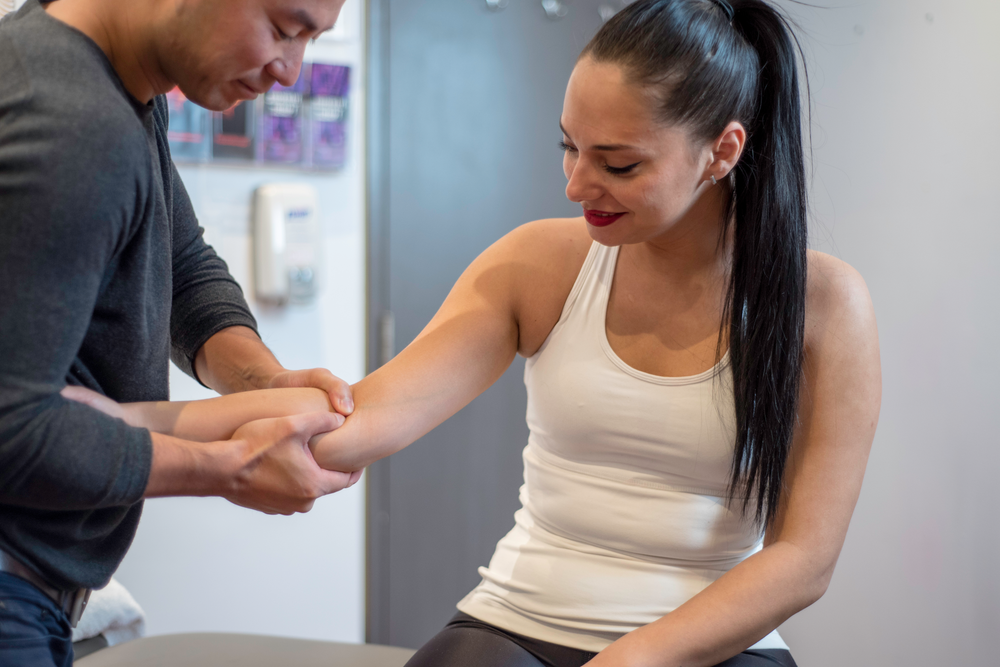
To begin the assessment I looked at the angle of her elbow joint and I saw that it is slightly laterally deviated. This type of injury can be common among squash players. The repetitive forehand shots taken by squash players can cause a deviation outwards in the elbow joint leading to the pain Jane is complaining of. The elbow joint is essentially a hinge joint where the ulna (one of the two forearm bones) hooks onto the humerus (the upper arm bone). I tested the movement in the elbow joint by gliding the joint side to side. As I did so I noticed a restriction in range of motion gliding the joint outwards.
I then looked at Jane’s wrist and elbow range of motion. Fully bending her elbow reproduced her elbow pain. I asked Jane to perform a bicep curl against my resistance and this also hurt. When the elbow is out of alignment the strength of the elbow will be reduced and painful. Her forearm muscles were also really tight and the tendons of these muscles travel down past these wrist bones and attach into the hand. Tension in these muscles and tendons can cause compression along the bones in the wrist causing pain in the wrist.
TREATMENT
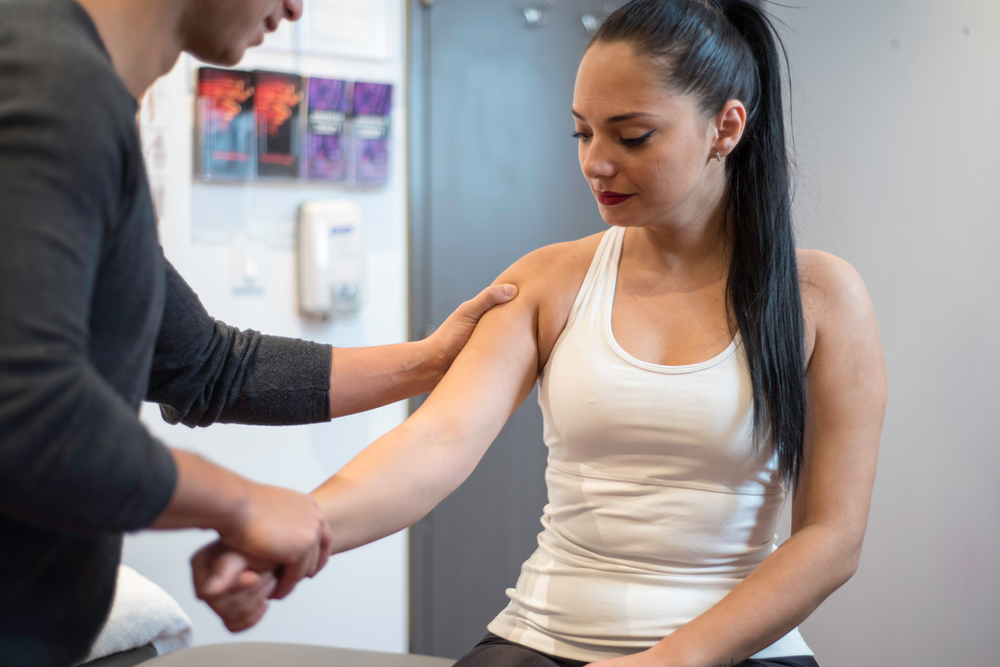
I performed joint mobilizations to the elbow, gliding the joint outwards, to correct the alignment of Jane’s elbow. After performing a few sets of these mobilizations I retested her elbow strength and it was much improved. Then I massaged the various muscles in the forearm which decreased tension in the muscles, tendons, and therefore the wrist. Acupuncture was also used to decrease pain in the elbow and wrist.
After a few weeks of treatment Jane reported that her elbow pain was significantly reduced. She was now able to train heavier at the gym and was able to perform her forehand shots during squash pain free. Her wrist pain also decreased with typing at work and washing dishes at home. By the end of her trial of treatment she was able to return back to her workouts, squash, and was ready for her beach volleyball season!
Squash Injuries & Physiotherapy – FAQ
1. What are common injuries that squash players experience?
Squash is a fast-paced sport with quick direction changes, making certain injuries more common:
- Ankle sprains
- Knee injuries (such as patellofemoral pain or ligament strains)
- Calf and hamstring strains
- Achilles tendon irritation
- Tennis elbow (lateral elbow pain)
- Wrist strains
- Lower back pain
These injuries are often related to sudden movements, repetitive stress, or inadequate conditioning.
2. How can physiotherapy help with a squash injury?
Physiotherapy helps both relieve symptoms and address the root cause of the injury. Treatment may include:
- Targeted strengthening and mobility exercises
- Manual therapy to reduce pain and stiffness
- Movement and technique correction
- Sport-specific rehab and return-to-play planning
- Advice on load management and recovery
3. What symptoms should squash players watch for that indicate they need treatment?
You should consider treatment if you experience:
- Persistent or worsening pain during or after playing
- Swelling or stiffness in a joint
- Reduced strength, flexibility, or performance
- Pain that affects daily activities
- A feeling of instability or “giving way”
Early treatment can prevent minor issues from becoming more serious.
4. How long does recovery from a typical squash injury take?
Recovery time varies depending on the injury:
- Mild strains or irritation: 1–3 weeks
- Moderate injuries: 3–6 weeks
- More severe injuries: several months
A structured physiotherapy program can help speed up recovery and reduce the risk of re-injury.
5. Can squash injuries be prevented with proper conditioning?
Yes, many squash injuries are preventable. Key strategies include:
- Strength training (especially legs, core, and shoulders)
- Agility and balance exercises
- Proper warm-up before playing
- Gradual progression of intensity and playing time
- Adequate rest and recovery
6. Is it normal to feel wrist or elbow pain after playing squash?
Occasional mild soreness can happen, especially after intense play. However, persistent or sharp pain is not normal and may indicate overuse injuries like tennis elbow or wrist strain. These should be assessed early to prevent worsening.
7. Should I continue playing squash if I feel pain during a match?
It depends on the severity:
- Mild discomfort: You may continue with caution and monitor symptoms
- Sharp or increasing pain: It’s best to stop playing to avoid further injury
Pushing through pain can lead to longer recovery times.
8. What should I wear and do to avoid squash injuries?
To reduce injury risk:
- Wear proper indoor court shoes with good grip and support
- Use a correctly sized racquet and proper grip
- Warm up thoroughly before playing
- Stay hydrated and take breaks as needed
- Consider protective eyewear for safety
9. When should I see a physiotherapist after a squash injury?
You should seek physiotherapy if:
- Pain lasts more than a few days
- Symptoms are worsening instead of improving
- You have swelling, weakness, or instability
- The injury affects your ability to play or perform daily activities
Early assessment leads to faster and more effective recovery.
10. Can physiotherapy improve squash performance as well as treat injury?
Absolutely. Physiotherapy can help:
- Improve strength, speed, and agility
- Enhance movement efficiency on the court
- Reduce injury risk
- Optimize recovery between matches
This not only helps you stay injury-free but also perform at a higher level.