
Degenerative disc disease is a common condition where spinal discs lose hydration and flexibility over time, causing neck or back pain, stiffness, and reduced mobility. This guide explains the causes, symptoms, and treatment options, including how physiotherapy, posture correction, strengthening exercises, and lifestyle changes can help relieve pain and improve spinal health.

What is it?
Degenerative disc disease is a condition in which one or more of the discs between the vertebrae of the spine deteriorate or break down, leading to pain, stiffness, and other symptoms. The discs are the cushions between the vertebrae that help to absorb shock and provide flexibility to the spine. These cushion like discs contain water. After the age of 20, the water content in the disc begins to “dry out” making the disc more vulnerable to cracks and tears. As the discs degenerate, they can cause the vertebrae to rub together, leading to irritation and inflammation of the surrounding tissues. It is important to understand that degenerative disc disease is a normal part of aging since this “drying out” of the disc happens to everyone after the age of 20. However most people do not have symptoms. Often symptomatic degenerative disc disease is caused by lifestyle factors such and posture, overall health, and fitness. This is great news since it means it can be corrected.
What are the signs and symptoms?
-
Stiffness and decreased range of motion in the neck.
-
Pain in the neck that may radiate to the shoulder, arms, and hands.
-
Numbness and/or tingling in the shoulder, arms, and hands.
-
Weakness in the shoulder, arms, and hands.
How is it treated?
Your physiotherapist will massage, traction, and stretch your neck and shoulder to help you regain neck mobility. Acupuncture can be very effective at reducing neck, arm, and hand pain caused by degenerative disc disease. Acupuncture needles will be placed along your neck, arm, and hand to help decrease pain and promote healing. Your physiotherapist will prescribe exercises to stretch and strengthen your neck.
Your physiotherapist will also help you determine if posture and ergonomics is causing your current symptoms. Forward head posture on computer or laptop can often be the culprit of symptomatic degenerative disc disease. By giving you tips about sitting up straight in a supportive chair, as well as raising your monitors to eye level, you can recover from this injury and prevent re-injury in the future.
Common Home Exercises
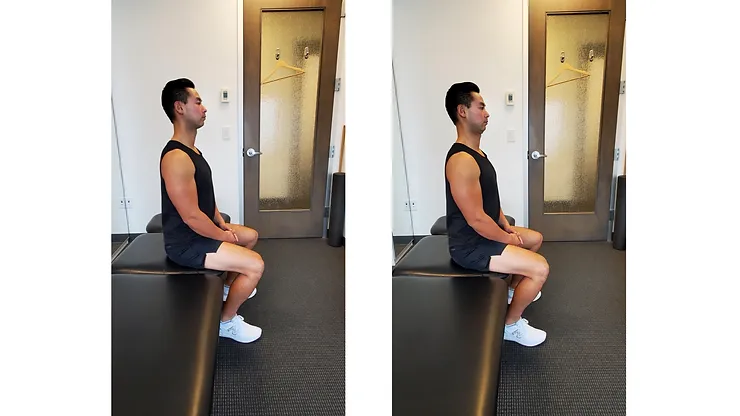
Chin tuck
Start in a seated position with your head into a neutral position, and keep your eyes looking straight ahead. Gently tuck your chin towards your chest, so that your chin is parallel to the ground. Hold this position for 5 seconds, then release. Repeat this exercise 10 times for 3 sets.
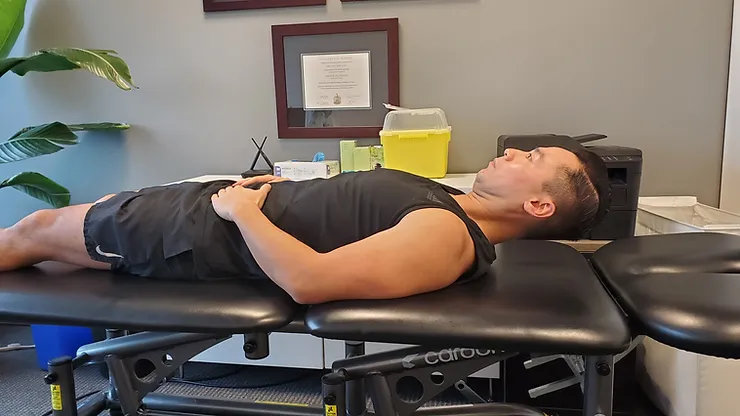
Deep neck flexor activation
Lye on your back in bed. Start by performing a chin tuck and hold this position. Then lift your head 2 inches off the bed holding for 1 second before putting your head back down. Repeat this for 10-20 repetitions for 3 sets.
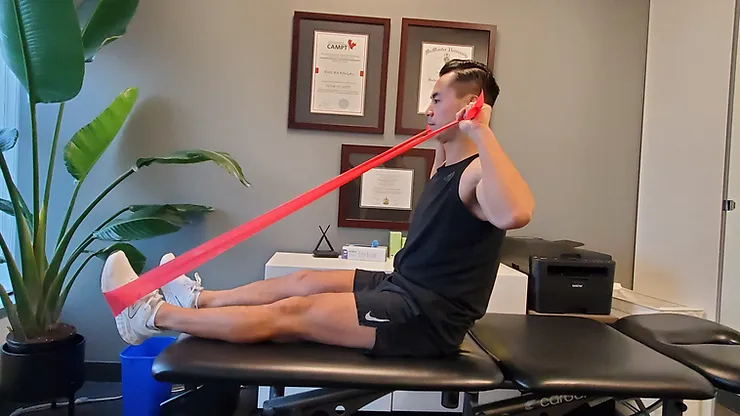
Face pulls
This exercise focuses on strengthening your upper back muscles which is important for good posture. Wrap a resistance band around your foot while holding onto both ends of the band. Pull the band toward you until your hands are on either side of your head and squeeze your upper back muscles. Keep your head in a neutral position and avoid pulling your head forward during this exercise.
1. What is degenerative disc disease?
Degenerative disc disease (DDD) is a condition in which the spinal discs gradually wear down over time, leading to back pain, stiffness, and reduced flexibility. Although it is called a “disease,” it is actually a normal part of aging for many people. As the discs lose water content and height, they become less effective at cushioning the vertebrae, which can result in pain, inflammation, or pressure on nearby nerves.
2. What are the early signs of degenerative disc disease?
The early signs of degenerative disc disease often include persistent low back or neck pain, stiffness after sitting or waking up, and discomfort that worsens with bending, lifting, or twisting. Some people also experience pain that radiates into the buttocks, legs, or arms if nearby nerves become irritated. Symptoms typically develop gradually and may come and go before becoming more persistent.
3. What causes degenerative disc disease?
Degenerative disc disease is primarily caused by age-related wear and tear on the spinal discs. As people age, the discs naturally lose hydration and elasticity, making them less able to absorb shock. Other contributing factors include repetitive heavy lifting, previous spinal injuries, smoking, obesity, poor posture, prolonged sitting, genetics, and physically demanding occupations.
4. Can physiotherapy help treat degenerative disc disease?
Yes. Physiotherapy is one of the most effective non-surgical treatments for degenerative disc disease. A physiotherapist will assess your posture, strength, mobility, and movement patterns before developing an individualized treatment plan. Treatment may include manual therapy, core strengthening, flexibility exercises, posture correction, education, and activity modification to reduce pain, improve function, and help prevent future flare-ups.
5. What are the best exercises for degenerative disc disease?
The best exercises for degenerative disc disease focus on improving spinal stability, flexibility, and core strength while minimizing stress on the spine. Common exercises include pelvic tilts, bridges, bird dogs, modified planks, walking, gentle stretching, and core stabilization exercises. A physiotherapist can recommend exercises that are appropriate for the location and severity of your disc degeneration.
6. Is walking good for degenerative disc disease?
Yes. Walking is one of the best low-impact exercises for people with degenerative disc disease. Regular walking helps improve circulation, strengthen the muscles that support the spine, reduce stiffness, and maintain mobility without placing excessive stress on the spinal discs. Start with shorter walks and gradually increase your distance as your symptoms improve.
7. Can degenerative disc disease heal without surgery?
Yes. Most people with degenerative disc disease improve without surgery through conservative treatment. While the damaged disc itself does not regenerate, symptoms often improve significantly with physiotherapy, exercise, activity modification, weight management, and pain management strategies. Surgery is usually only considered when severe nerve compression, significant weakness, or persistent pain does not respond to conservative care.
8. What activities should I avoid with degenerative disc disease?
People with degenerative disc disease should avoid activities that significantly increase spinal stress or worsen their symptoms. This may include repetitive heavy lifting, prolonged sitting, frequent bending or twisting, high-impact activities such as jumping, and lifting with poor technique. Staying active is still important, but activities should be modified to avoid aggravating pain while maintaining strength and mobility.
9. How long does it take to recover from degenerative disc disease?
Recovery from degenerative disc disease varies depending on the severity of the condition and the individual’s overall health. Many people notice meaningful improvement within four to six weeks after starting physiotherapy and an appropriate exercise program. Because degenerative disc disease is a chronic condition, long-term exercise and healthy movement habits are important for managing symptoms and preventing flare-ups.
10. When should I see a physiotherapist for degenerative disc disease?
You should see a physiotherapist if you have persistent back or neck pain lasting more than a few weeks, recurring episodes of stiffness, pain that interferes with work or daily activities, or discomfort that worsens with movement. Seek immediate medical attention if your symptoms include significant leg or arm weakness, numbness, loss of bowel or bladder control, or severe pain following a traumatic injury. Early physiotherapy can help reduce pain, improve mobility, and delay the progression of symptoms.