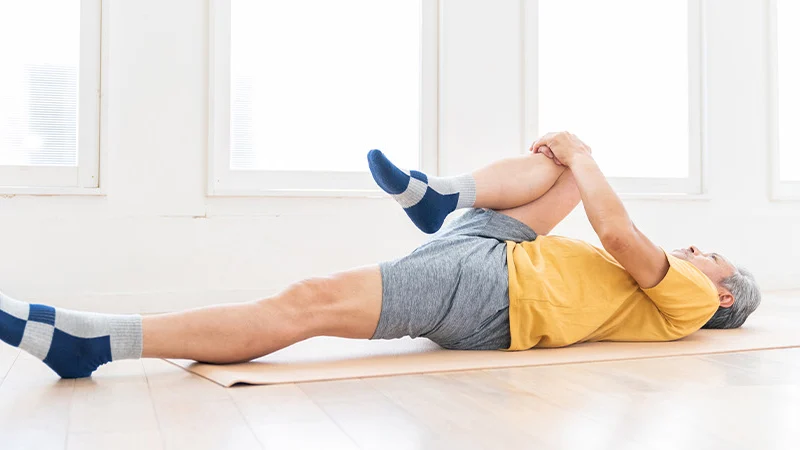
You are doing sit-ups and crunches to build that six-pack, but your back gets sore. Exercises like sit-ups and crunches cause flexion in the lower back, which can increase stress to back joints and discs. Especially for people with a history of lower back problems, these type of exercises can make back problems flare up. So how are you going to build those washboard abs without hurting your back?
Dr. Stuart McGill, renowned back specialist and professor at the University of Waterloo, recommends exercises based on strengthening the core in a neutral spine position. Lie on your back with one knee straight and the other knee bent with your foot flat on the floor. Notice the slight curve in your lower back and a space between your back and the floor. This is a neutral lumbar spine position. Note this as we progress through these exercises.
Warm-up
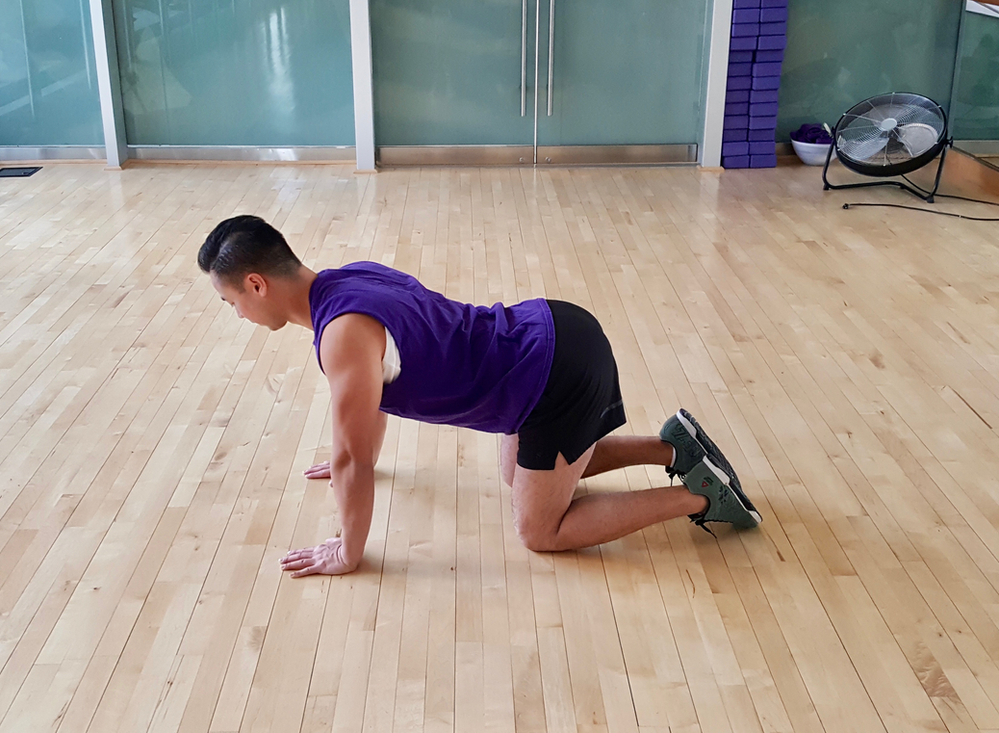
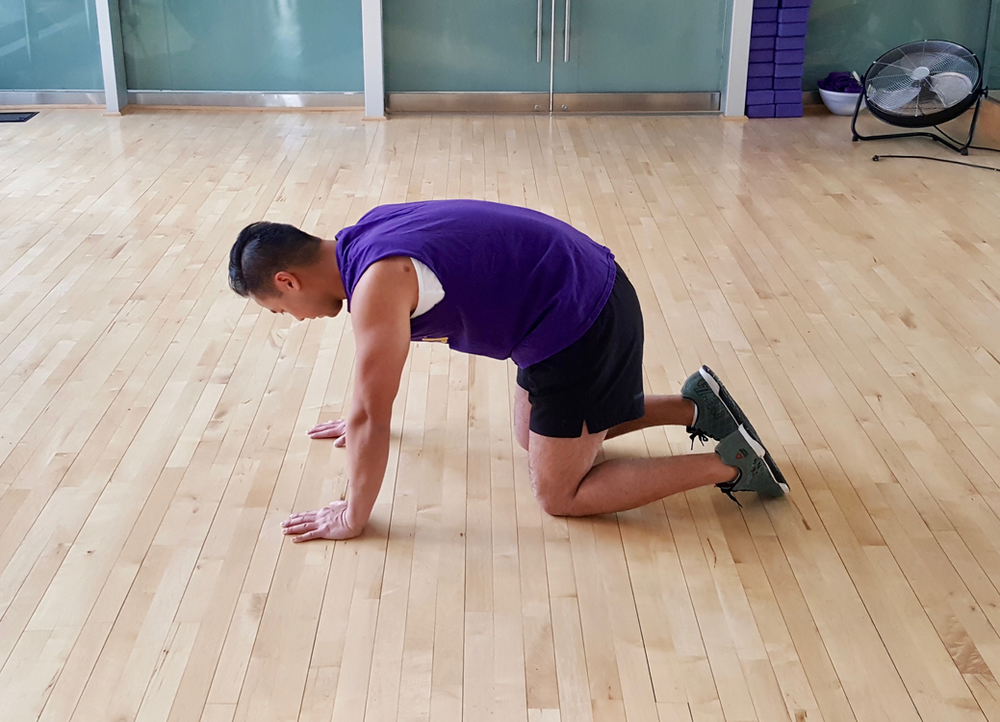
Cat-camel stretch:
From hands and knees, lower back down toward the floor causing an arch in your lower back (cat), then round your back up toward the ceiling (camel).
Do 10 reps.
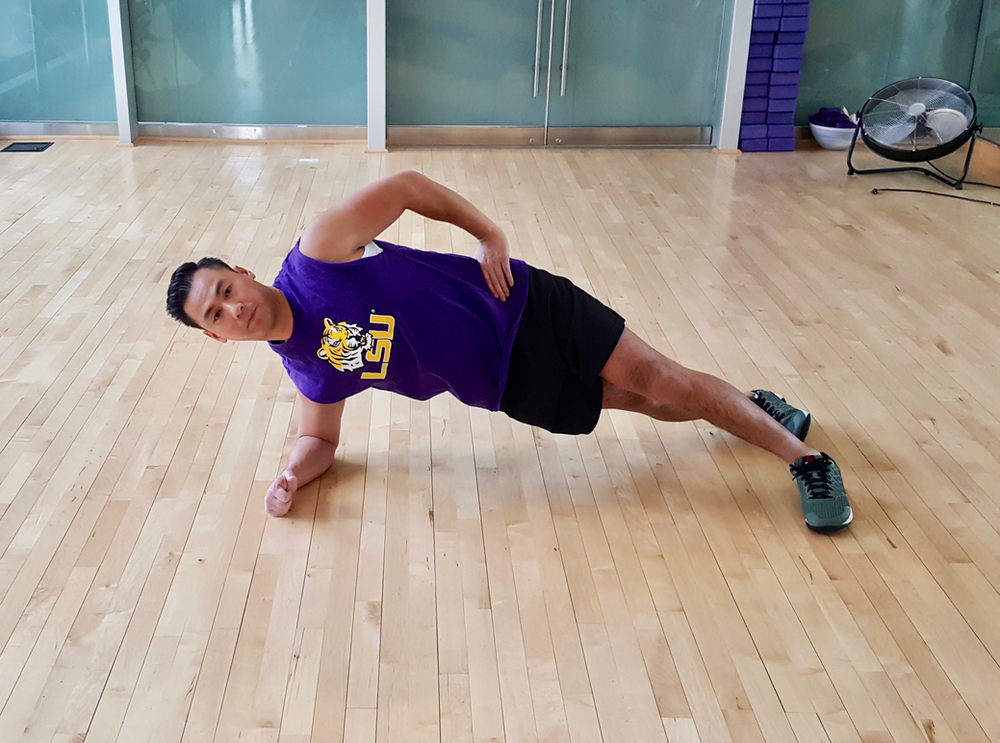
1. Side Plank – Builds obliques
Get on your side with elbow under your shoulder and feet stacked on top of each other. Engage core, lifting hips off the ground, creating a straight line from head to toe. Hold for 30-60 seconds. Beginners can plank from elbows to knee. For an advanced version, start with a right side plank, rotate into a front plank, then rotate to a left side plank, each for a 30-second interval.
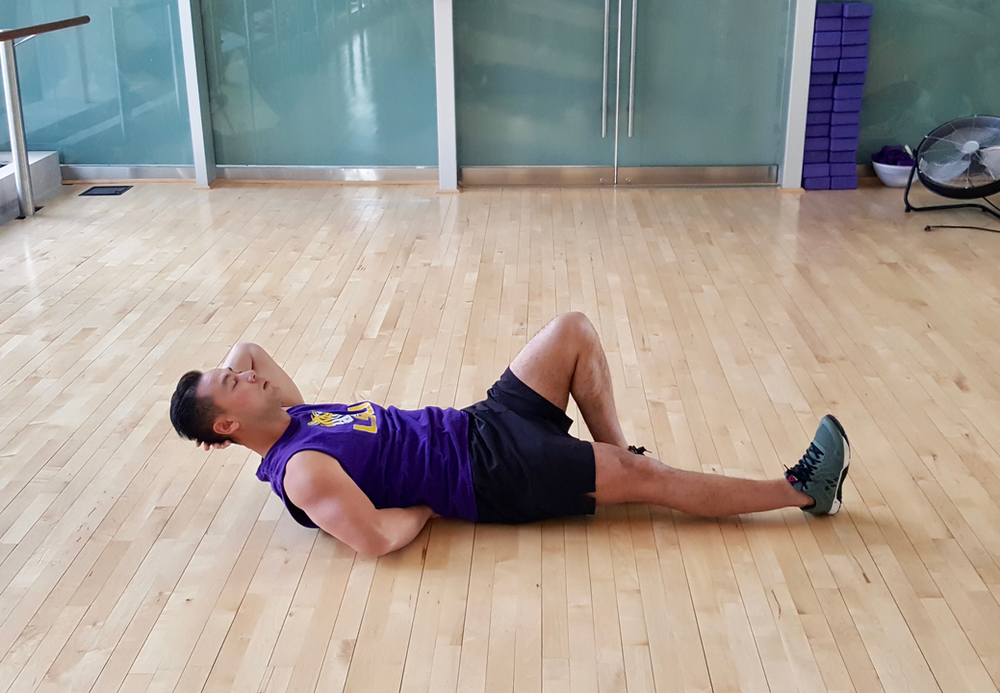
2. Curl-up – Targets rectus abdominis (the 6-pack)
Lie on the floor with one knee straight, one knee bent with foot flat on the floor, creating that neutral lumbar position in your back. Place both hands under the small arch in your back. Lift your chest up toward the ceiling while keeping your neck straight. Movement comes from your upper back, leaving your lower back in a safe, neutral position. Avoid the temptation of pushing your lower back into your hands because this will increase stress to the ligaments and discs in your spine.
Do 3 sets of 10-20 reps. Alternate the bent knee position halfway between each rep.
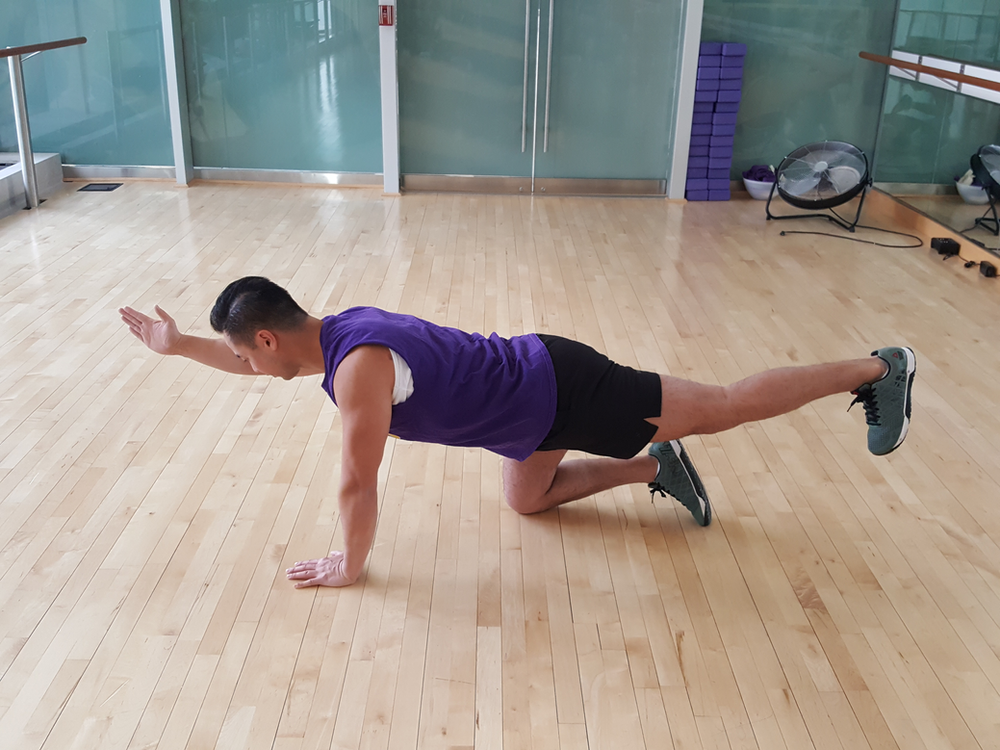
3. Bird Dog – Strengthens lower back & glutes
Dr. McGill’s research has shown this to be a great lower back and core exercise that decreases the load on the spine by 50 per cent compared to traditional Roman chair back extension exercises. Get down on hands and knees. Maintain a neutral lumbar spine position and engage your core. Lift one arm off the floor, straighten your elbow, lift the opposite leg and straighten your knee. This will create a straight line from fingers to toes. Hold this position for up to 7-8 seconds. Alternate sides.
Do 3 set of 6-10 reps.
A widely recommended trio of exercises (often referred to in physio as core stability work) includes:
- Side planks
- Bird dogs
- Modified curl-ups
These exercises focus on building core stability without placing excessive strain on the spine. They help improve strength, control, and endurance of the muscles that support your lower back. Read the blog above for more detail.
2. How do side planks help improve back health?
Side planks target the muscles along the sides of your core (obliques and quadratus lumborum), which are essential for spinal stability.
Benefits include:
- Improved lateral (side-to-side) stability
- Reduced strain on the lower back
- Better overall core endurance
A stronger, more stable core helps protect your spine during everyday movements.
3. What is a bird dog exercise and how does it relieve back pain?
The bird dog is a controlled movement where you extend the opposite arm and leg while maintaining a stable spine.
It helps by:
- Training coordination and balance
- Strengthening the core and back muscles
- Encouraging proper spinal alignment
This reduces unnecessary movement in the spine, which can decrease irritation and pain.
4. Why are curl-ups recommended instead of traditional sit-ups for back pain?
Modified curl-ups are safer for the spine compared to traditional sit-ups because they:
- Minimize spinal flexion (bending stress)
- Activate core muscles without overloading the lower back
- Help maintain a neutral spine position
Traditional sit-ups can place excessive pressure on the discs and may aggravate back pain.
5. How often should I do these back exercises to see improvement?
For most people:
- Daily or near-daily practice is ideal for activation and endurance
- Perform 1–2 sets of each exercise, focusing on quality over quantity
Consistency is key. Many people start to notice improvements within a few weeks when exercises are done regularly.
6. Can these exercises help with chronic lower back pain?
Yes, these exercises are commonly used for both acute and chronic lower back pain. They:
- Improve spinal stability
- Reduce recurring flare-ups
- Build resilience in supporting muscles
However, chronic pain can have multiple contributing factors, so a personalized plan may still be beneficial.
7. What is a neutral lumbar spine and why does it matter?

A neutral lumbar spine refers to the natural, slight curve in your lower back—not overly arched and not flattened.
It matters because:
- It distributes forces evenly through the spine
- Reduces stress on discs and joints
- Allows muscles to function efficiently
Maintaining a neutral spine during exercise and daily activities is one of the most important strategies for preventing and managing back pain.