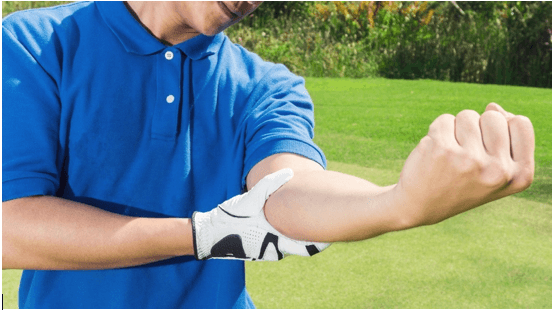
Golfer’s elbow is a condition similar to tennis elbow. The difference is that a golfer’s elbow causes pain where the tendons of your forearm muscles attach near the inside of your elbow. However, the pain might even spread into your forearm and wrist. Golfer’s elbow is not necessarily limited to golfers, as everyday people who repeatedly flex their wrists or clench their fingers can develop golfer’s elbow. Don’t let the pain of golfer’s elbow keep you from your favourite activities, so let’s take a look at what exactly is golfer’s elbow, early signs and symptoms, and treatment options.
What is it?
Golfer’s elbow, otherwise known as medial epicondylitis, mostly causes pain, inflammation, and tenderness in the muscles on the inside of the elbow and the forearm. This condition usually appears after overuse or just the general wear and tear of your tendons and muscles. The pain from golfer’s elbow can either come on suddenly without any warning, or gradually over a long period of time. Activities such as repetitive gripping motions, swinging golf clubs, or racket sports can often lead to golfer’s elbow. Everyday activities such working with tools, typing, or clicking on a mouse can also lead to this condition.
What are the signs and symptoms?
-
- Pain and tenderness on the inner side of your elbow
-
- Pain that worsens with certain repetitive movements
-
- Stiffness or weakness in the elbow
How is it treated?
Your physiotherapist will use soft tissue treatments like massage and active release to treat your elbow. Elbow pain on the inside of the elbow is caused by tension in muscles in the front of your forearm. Deep massage in these forearm muscles will release tension and pain in the inside of the elbow. Active release treatments will stretch the muscles and tendon in the front of the forearm and break down muscle knots. Acupuncture can be helpful to increase blood flow to the elbow and encourage healing. An elbow brace will also be useful to reduce pressure and pain on the elbow.
Sometimes pain along the inside of your elbow can be caused by compression of nerves in your neck. If this is the case you may also feel burning pain or numbness along your arm, forearm, and fingers. A skilled a physiotherapist will be able to assess if nerve compression in your neck is the true cause of your elbow pain.
Common home exercises:
Prayer stretch:
Place your palms together in a prayer position. Lift up your elbows gently and you should feel a stretch along the front of your forearm. Hold this stretch for 30 second and repeat for 3 sets.

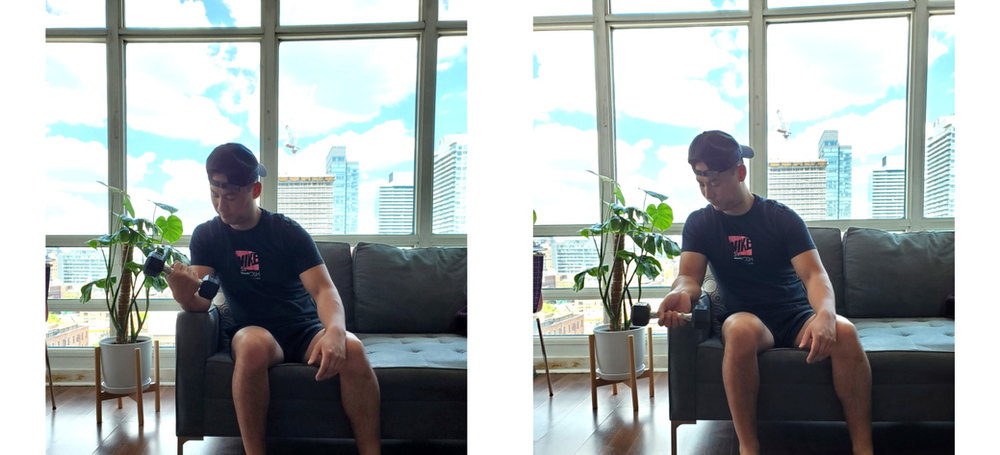
Eccentric wrist flexion:
Hold onto a band/weight with your hand and rest your elbow on the armrest of the couch/table with your palm facing the ceiling. Hold the band or weight up then slowly lower your hand downwards for a count of 3 seconds. Use your opposite hand to help you lift the band/weight back up. Perform this exercise for 8-15 reps x 3 sets.
Wrist pronation/supination:
With your elbow resting by your side, hold onto a frying pan/pot. Turn your wrist over like if you were turning a key. Perform this exercise for 8-15 reps x 3 sets.n
Gripping:
Grip a heavy water bottle with a pinch grip by holding onto the cap of the water bottle with your elbows straight. Hold the water bottle out in front of you for 10-30 seconds x 3 sets.

Golfer’s Elbow (Medial Epicondylitis): Frequently Asked Questions
1. What is golfer’s elbow, and how does it develop?
Golfer’s elbow is a condition that affects the tendons on the inside of the elbow. It develops when these tendons become irritated or overloaded due to repetitive wrist and forearm movements.
It commonly involves:
- Overuse of forearm flexor muscles
- Repetitive gripping or lifting
- Small, repeated strain leading to tendon irritation (tendinopathy)
- Gradual onset rather than a single injury
2. What are the early warning signs of golfer’s elbow?
Early symptoms often develop gradually and may include:
- Pain or tenderness on the inside of the elbow
- Stiffness in the elbow, especially in the morning
- Weak grip strength
- Pain when lifting, gripping, or twisting objects
- Discomfort that worsens with activity
3. Can golfer’s elbow occur even if I don’t play golf?
Yes. Despite the name, golfer’s elbow is not limited to golfers. It can occur in anyone who repeatedly uses their forearm and wrist.
Common examples include:
- Office workers using a mouse or keyboard
- Manual laborers lifting or carrying loads
- Individuals doing repetitive gym exercises
- People using hand tools frequently
4. What activities commonly cause golfer’s elbow pain?
Activities that place repeated stress on the forearm tendons include:
- Repetitive gripping or squeezing
- Weight training (especially curls or lifting heavy loads)
- Throwing sports (baseball, javelin)
- Using hand tools (hammering, screwdrivers)
- Typing or mouse use for long periods
5. Why does golfer’s elbow cause pain on the inside of the elbow?
The pain occurs on the inside of the elbow because this is where the forearm flexor tendons attach to the medial epicondyle (a bony part of the elbow). When these tendons are overloaded, they become irritated and sensitive.
This can lead to:
- Local inflammation or tendon degeneration
- Pain with wrist flexion or gripping
- Tenderness when pressing the inner elbow
6. Can repetitive typing or tool use lead to golfer’s elbow?
Yes. Repetitive or sustained hand and wrist activity can contribute to golfer’s elbow, especially when combined with poor ergonomics or inadequate rest.
Examples include:
- Long hours of typing
- Excessive mouse use
- Repetitive tool handling
- Poor wrist positioning during work
7. What are the most effective treatments for golfer’s elbow?
Treatment usually focuses on reducing irritation and restoring tendon strength.
Common approaches include:
- Activity modification (reducing aggravating tasks)
- Rest or load management
- Ice for pain relief (short term)
- Bracing or counterforce straps
- Physiotherapy and exercise-based rehab
- Gradual strengthening program
- In some cases, injections or medical interventions
8. How does physiotherapy help with golfer’s elbow recovery?
Physiotherapy helps by addressing both pain and the underlying cause of tendon overload.
It may include:
- Manual therapy to reduce muscle tightness
- Progressive strengthening of forearm muscles
- Stretching and mobility exercises
- Load management education
- Posture and ergonomic correction
- Return-to-activity guidance
9. Which stretches are recommended for golfer’s elbow relief?
Common stretches include:
- Wrist flexor stretch (straightening arm and extending wrist back)
- Forearm stretching with gentle pressure on fingers
- Elbow extension stretches
- Gentle grip relaxation exercises
Stretches should be:
- Held gently (no sharp pain)
- Performed regularly but not aggressively
- Combined with strengthening for best results
10. What strengthening exercises can improve golfer’s elbow symptoms?
Strengthening helps rebuild tendon capacity and reduce recurrence risk.
Common exercises include:
- Wrist curls (light resistance)
- Reverse wrist curls
- Eccentric forearm strengthening
- Grip strengthening (stress ball, hand gripper, pinch grip text book)
- Resistance band wrist exercises
Progress should be gradual and guided by symptom response.