
Often the cause of shoulder pain from bench press is a strain of the rotator cuff muscles. The rotator cuff is a set of 4 muscles that moves your shoulder. All 4 of these muscles attach to the front of the shoulder which can be the source of pain. Often my patients complain of pain along the front or side of their shoulder when they have injured it during bench press. After a rotator cuff strain the shoulder is sore and mobility is limited. Let’s explore how to fix your shoulder pain after bench press with some exercises.
EARLY PHASE OF PHYSIOTHERAPY
The focus of this stage of physiotherapy is to focus on mobility of the shoulder involving movements of the the arm up to shoulder height. Exercises should ideally be pain free, however mild discomfort is acceptable.
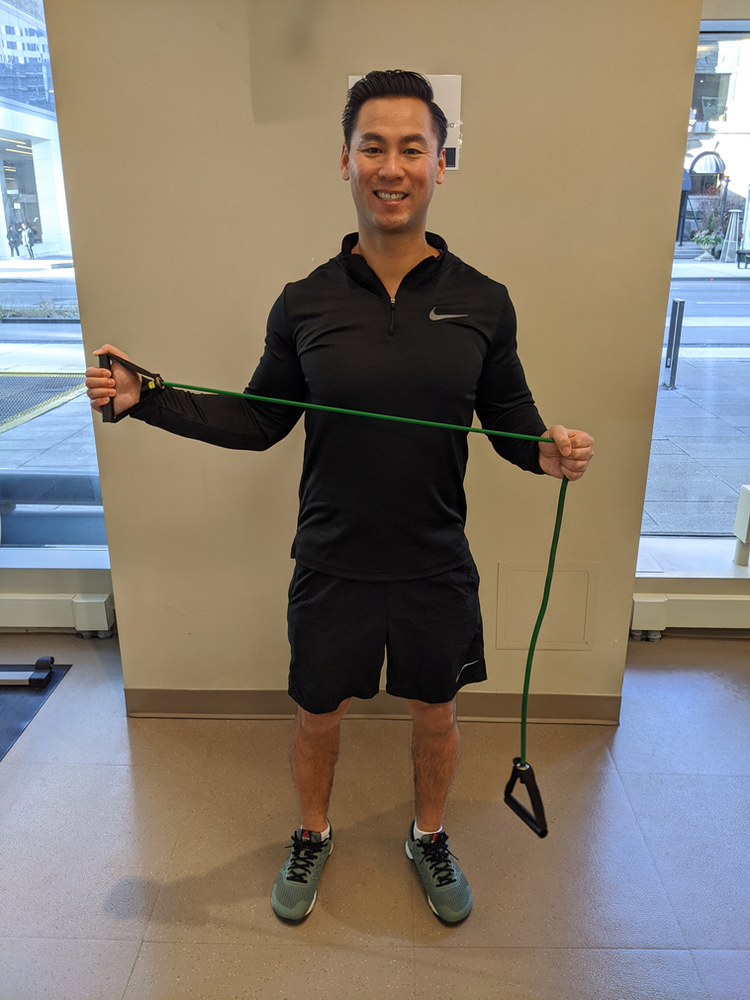
Shoulder external rotation
-stand up straight, pinch both shoulder blades back slightly.
-with the injured arm, place a small towel between your elbow and your torso.
-hold onto a resistance band with both hands.
-while keeping the rolled towel pined against your body, pull the band using the injured arm.
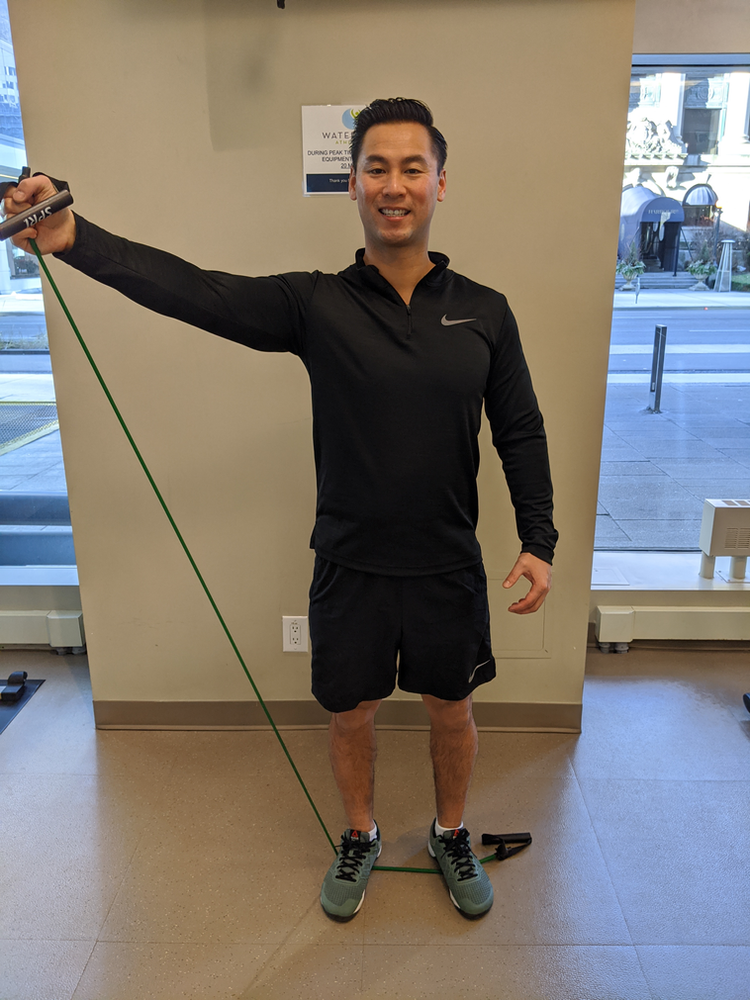
Scaption raises
-stand on one end of the band and hold onto the opposite end.
-stand up straight, pinch both shoulder blades back slightly.
-lift your arm out at a 45 degree angle and stop at shoulder height.
-after doing this exercise for a few weeks progress to performing a lateral raise where you bring the arm up to your side.
MID PHASE OF PHYSIOTHERAPY
At this stage the focus is working on overhead mobility. Again, stay within the mild range for pain during these exercises.
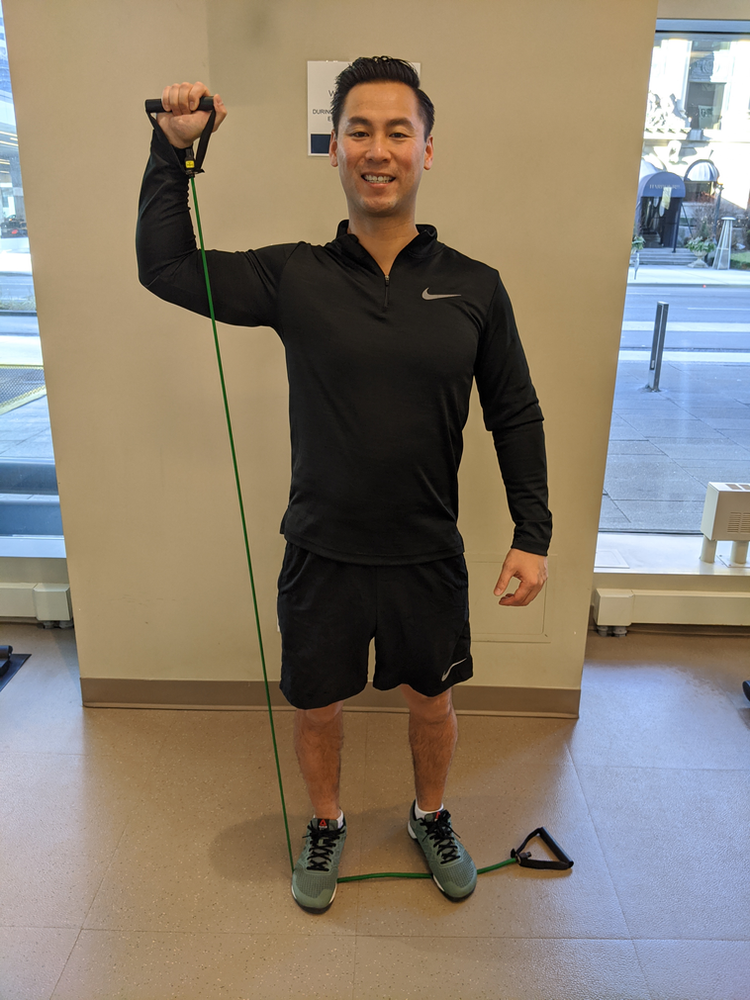
90/90 shoulder external rotation to overhead press
-stand up straight, pinch both shoulder blades back slightly.
-stand on one end of the band and hold onto the opposite end.
-start with your elbows up and your forearm parallel with the floor.
-rotate your arm until your forearm is facing the wall in front of you, then punch the ceiling.
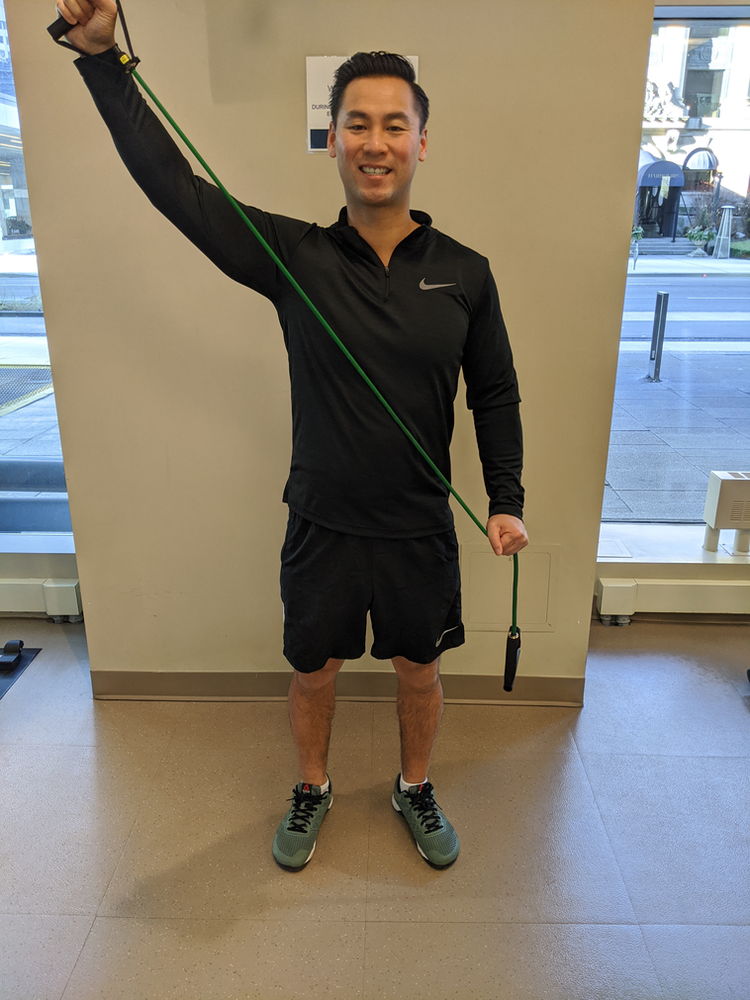
Pulling out the sword
-stand up straight, pinch your shoulder blades back slightly.
-holding the band with both hands, start with your hands on the opposite hip of the injured shoulder.
-pull the band up toward the injured shoulder, similar to pulling the sword out of it’s sheath.
LATE PHASE OF PHYSIOTHERAPY
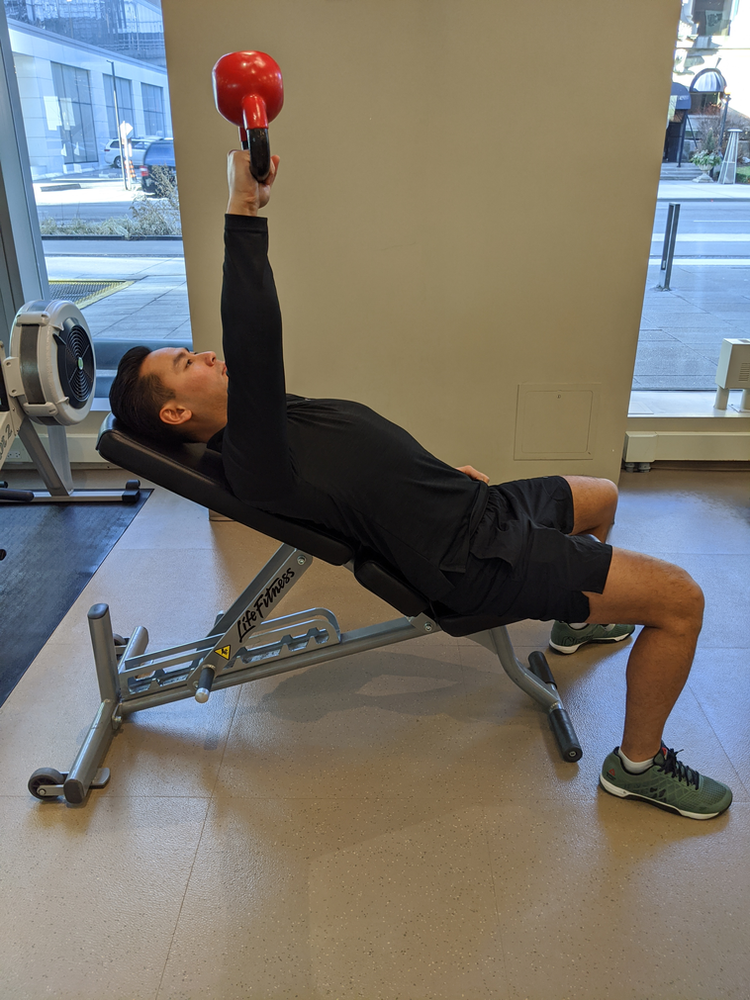
Chest and overhead press with kettlebells
Use a light (10-15 lbs) kettle bell for this exercise. Perform a chest press by holding onto an inverted kettle bell. The inverted kettle bell will require you to focus on balance and perform this exercise slowly. Use the kettle bell to perform flat/incline chest press and overhead shoulder press.
Chest and overhead press with dumbbells
Progress to using dumbbells for chest and overhead shoulder presses. Using dumbbells rather than a barbell at this point allows you to vary your shoulder position during the movement for increased comfort.
Chest and overhead press with barbell
Finally return back to chest and overhead press using a light barbell. Using the barbell will require you to move through a stricter range of motion. Remember to keep your elbow slight tucked down during the bench press movement since this puts less stress on the shoulder joint.
Try out these exercises to fix your shoulder pain after bench press. For further consultation, don’t hesitate to contact us at Rebuild Physiotherapy.
FAQ: Shoulder Pain After Bench Pressing
1. Why does my shoulder hurt after bench pressing?
Shoulder pain after bench pressing is often caused by poor technique, muscle imbalances, or overloading the joint. Common issues include flared elbows, excessive range of motion, weak stabilizing muscles, or tight chest and shoulder structures. These factors can place extra stress on the front of the shoulder.
2. Is rotator cuff strain common with bench press?
Yes, rotator cuff strain is relatively common in people who bench press regularly—especially if form is off or training volume is too high. The rotator cuff muscles help stabilize the shoulder, and they can become irritated when overloaded or fatigued.
3. How long does rehab take before I can bench press again?
Recovery timelines vary depending on the severity of the injury. Mild irritation may improve within 2–4 weeks, while more significant strains can take 6–8+ weeks. A gradual return to bench pressing is important, starting with lighter loads and proper control.
4. What exercises help fix shoulder pain from bench pressing?
Helpful exercises typically focus on improving shoulder stability, mobility, and muscle balance. These may include:
- Rotator cuff strengthening (external rotations)
- Scapular stabilization (rows, face pulls)
- Serratus anterior activation (wall slides, push-up plus)
- Thoracic mobility exercises
A physiotherapist can tailor these to your specific issue. Refer to the exercises in the above blog for more detail.
5. Should I be pain-free while doing rehabbing exercises?
Not necessarily. Mild discomfort (e.g., 2–3/10 pain) can be acceptable during rehab, as long as it does not worsen over time or linger after exercise. Sharp pain or increasing symptoms are signs to stop or modify the exercise.
6. Can improper bench press form cause shoulder pain?
Absolutely. Common form mistakes that contribute to shoulder pain include:
- Elbows flaring too wide
- Bar coming too high on the chest
- Lack of shoulder blade retraction
- Poor control during lowering
Correcting technique is often a key part of recovery and prevention.
7. Can strengthening other muscles help?
Yes. Strengthening surrounding muscles can significantly reduce shoulder strain. Focus on:
- Upper back (e.g., rhomboids, trapezius)
- Rotator cuff
- Core stability
A stronger support system helps distribute load more evenly and protects the shoulder joint.
8. Should I stop bench pressing completely if my shoulder hurts?
Not always. In many cases, you can modify rather than stop completely. Options include:
- Reducing weight or volume
- Switching to dumbbells or neutral grip
- Limiting range of motion
However, if pain is sharp, worsening, or affecting daily activities, taking a break is advisable.
9. When should I see a physiotherapist if my shoulder hurts after bench press?
You should consider seeing a physiotherapist if:
- Pain persists beyond 1–2 weeks
- Pain is worsening despite rest
- You notice weakness, instability, or reduced range of motion
- Pain interferes with daily activities or sleep
Early assessment can speed up recovery and prevent long-term issues.