Indication:
General Knee Pain, Patella Femoral Pain Syndrome, Patellar Tendinopathy
Technique #1:
-
- Sit with the knee bent at 90 degrees and maintain this position during the taping procedure.
-
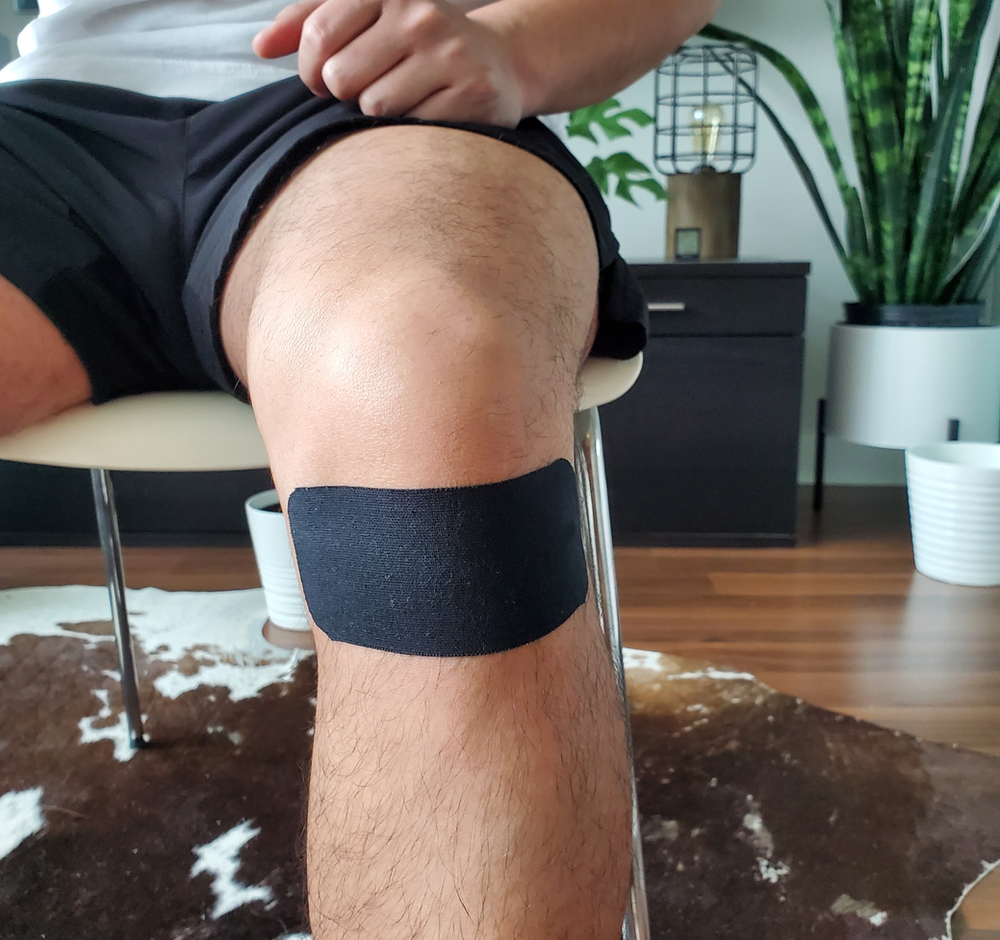
- Cut a strip of K-tape about 3 inches long and 2 strips of K-tape about 5 inches long.
-
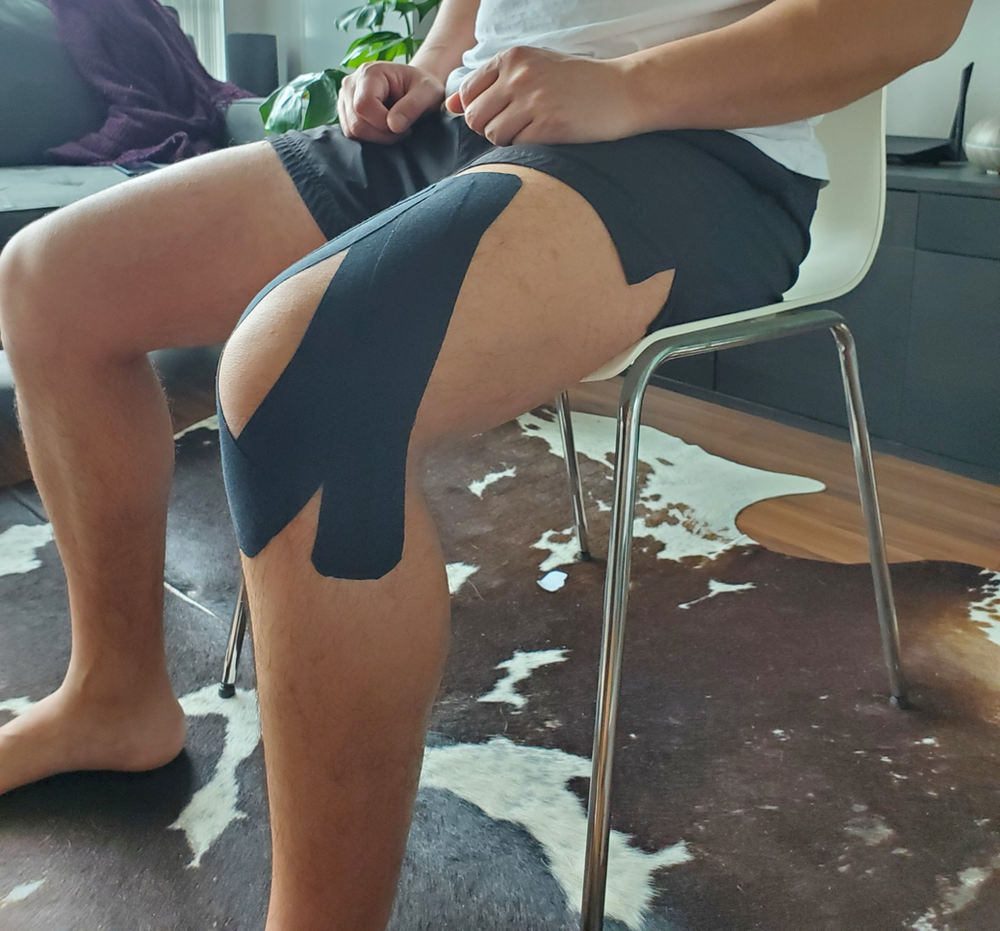
- Using the 3 inch K tape, apply 75% tension on either side of of the tape. Apply the centre of the tape directly onto the patellar tendon. Release the tension on the tape as you lay down either end of the tape along the side of the knee.
-
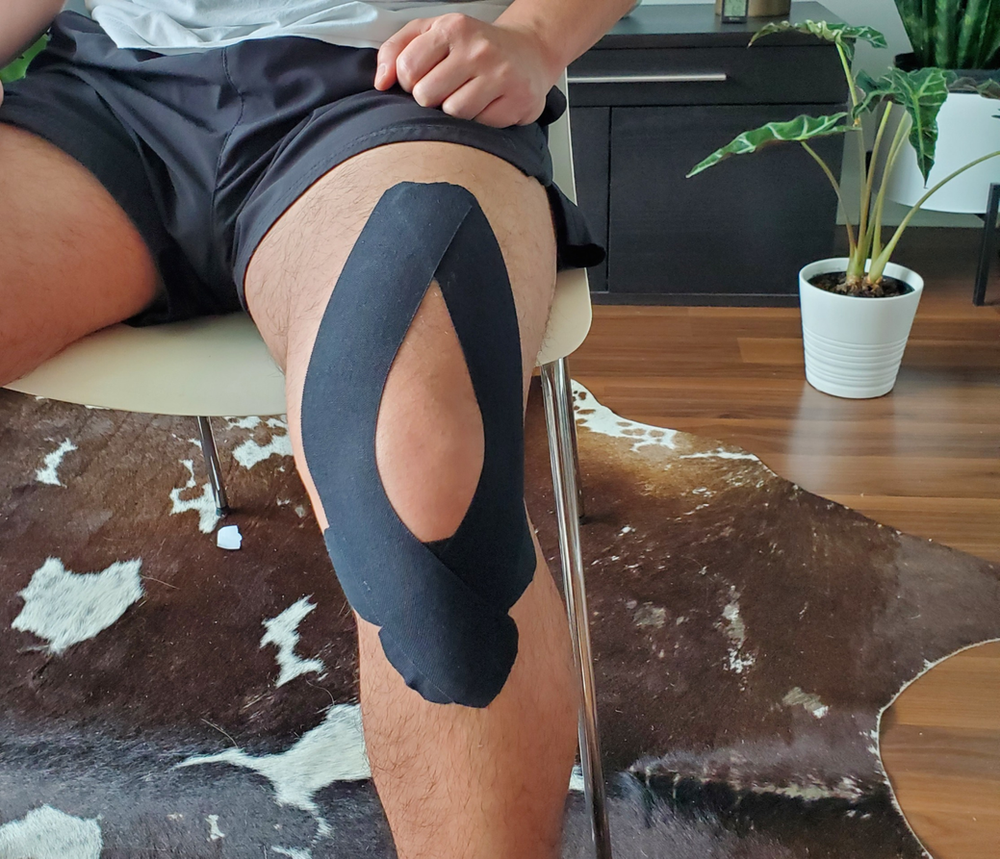
- Locate the centre point mid length down the front of the thigh. Next, locate the tibial tuberosity which will be a prominent bump below the knee cap. The next 2 strips of K-tape will start at the centre point mid length down the thigh and end at the tibial tuberosity.
-
- Apply one of the 5 inch strips to this centre point of the thigh. Apply 25% tension on the K-tape and lay the first half of the tape along the lateral lower half of the thigh. As you approach the knee apply 50 percent tension along the second half of the tape wrapping it around the knee cap. Apply no tension as you lay down the end of the tape at the tibial tuberosity.
-
- Repeat this same technique for the medial side of the thigh and knee.
-
- Using the backing paper of the tape rub the K-tape and heat activate the glue on the tape.
Indication:
MCL/LCL Knee Sprain
Technique #2:
-
- Sit with the knee bent at 90 degrees and maintain this position during the taping procedure.
-
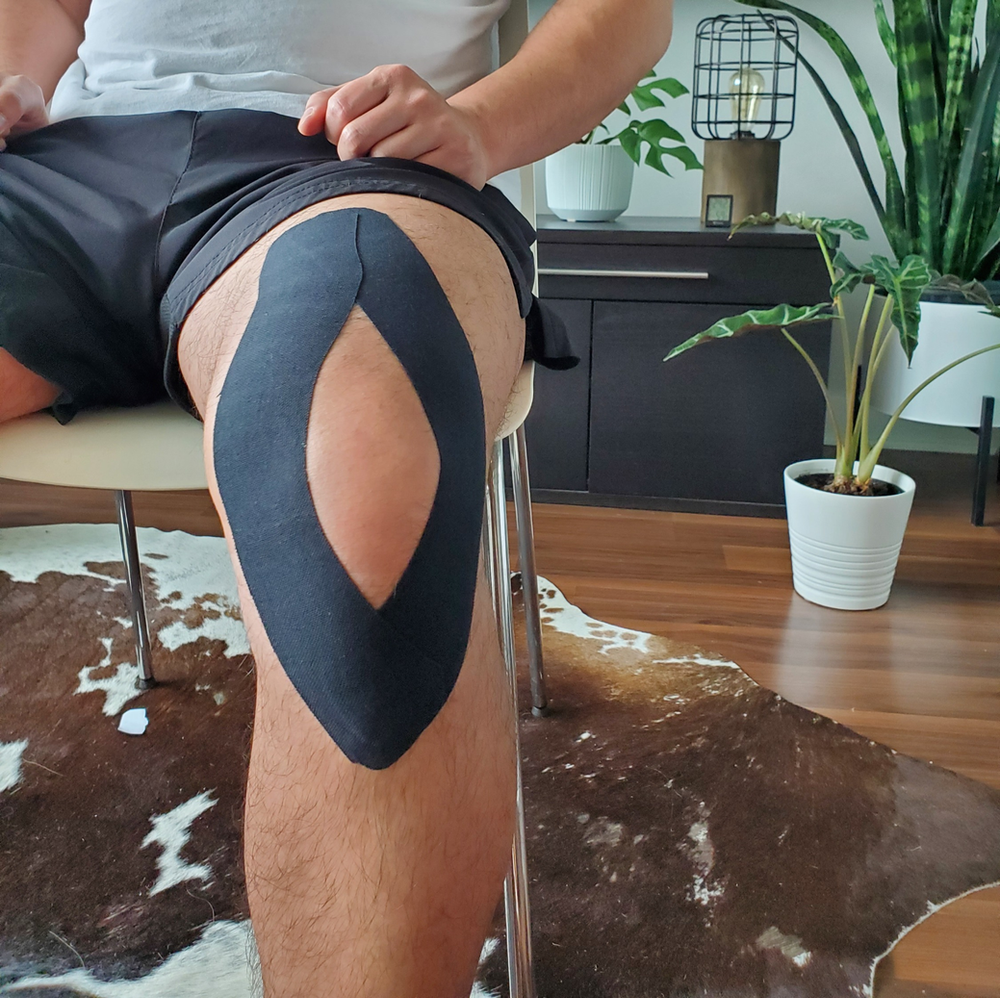
- Cut 4 strips of K-tape about 5 inches long.
-
- Apply one end of the K-tape with no tension along the tibial tuberosity. Apply 50% tension as you wrap the tape around the lateral side of the knee cap and up toward the centre point mid length of the thigh.
-
- Repeat the same technique on the medial side of the knee and thigh.
-
- Place one end of the K tape along the lateral side of the lower leg. Apply 50% tension on the tape as you apply the strip across the lateral side of the knee. Apply no tension as you lay down the end of the tape along the lateral thigh. This strip of K-tape will help support the LCL (lateral collateral ligament) ligament and provide you more stability.
-
- Repeat the same technique on the medial side of the knee to help support the MCL (medial collateral ligament).
-
- Using the backing paper of the tape rub the K-tape and heat activate the glue on the tape.
KT Tape for Knee Pain: Frequently Asked Questions
1. What is KT tape and how does it work for knee pain?
KT (Kinesiology Therapeutic) tape is a flexible, elastic adhesive tape designed to support muscles and joints without restricting normal movement. When applied to the knee, it gently lifts the skin, which may help improve circulation, reduce pressure on pain-sensitive tissues, and provide sensory feedback that can enhance joint awareness and movement patterns. The tape is commonly used by athletes and individuals managing knee discomfort during daily activities.
2. Does KT tape really help with knee pain?
KT tape may help reduce pain and improve comfort for some people, particularly when combined with exercise, physiotherapy, or other treatment approaches. Research suggests that it can provide short-term pain relief and improved function in certain knee conditions, although results vary from person to person. KT tape is generally considered a supportive tool rather than a standalone treatment for the underlying cause of knee pain.
3. What knee conditions can KT tape be used for?
KT tape is commonly used to help manage symptoms associated with:
- Patellofemoral pain syndrome (runner’s knee)
- Patellar tendonitis (jumper’s knee)
- Mild knee osteoarthritis
- Iliotibial (IT) band syndrome
- General knee overuse injuries
- Minor ligament strains
- Swelling and inflammation around the knee
- Recovery following certain sports-related knee injuries
A physiotherapist can help determine whether KT tape is appropriate for your specific condition.
4. How long can you wear KT tape on your knee?
Most KT tape applications can be worn continuously for 3 to 5 days, depending on the product, activity level, and skin sensitivity. The tape is typically water-resistant, allowing users to shower, swim, and exercise while wearing it. If the tape begins to peel significantly, causes irritation, or becomes uncomfortable, it should be removed.
5. Can I apply KT tape on my knee myself?
Yes. Many people successfully apply KT tape to their knees using manufacturer instructions, online tutorials, or guidance from a healthcare provider. Proper placement is important for achieving the intended support and comfort. If you’re using KT tape for a specific injury or chronic condition, it may be helpful to have a physiotherapist demonstrate the technique initially.
6. Is KT tape better than a knee brace?
Neither option is universally better—the best choice depends on your needs.
KT tape may be preferable when:
- You want full range of motion.
- You need lightweight support during sports or exercise.
- You prefer a less bulky option under clothing.
A knee brace may be preferable when:
- You need greater stability or joint protection.
- You are recovering from a ligament injury.
- Your physiotherapist recommends additional support.
In some cases, people use KT tape and a brace at different stages of recovery or for different activities.
7. Can KT tape prevent knee injuries?
KT tape may help improve body awareness and movement mechanics, which could reduce stress on the knee during activity. However, there is limited evidence that KT tape alone can prevent injuries. The most effective injury-prevention strategies typically include strength training, flexibility work, proper technique, adequate recovery, and appropriate footwear.
8. Are there any side effects of using KT tape?
KT tape is generally safe for most people, but potential side effects include:
- Skin irritation or redness
- Itching or discomfort
- Allergic reactions to the adhesive
- Blistering if applied incorrectly or too tightly
- Skin damage when removed improperly
If irritation develops, remove the tape and discontinue use. People with sensitive skin may benefit from testing a small piece first.
9. How tight should KT tape be on the knee?
KT tape should generally feel supportive but not restrictive. Depending on the application technique, the tape may be applied with little to moderate stretch, while the ends are usually applied without stretch to reduce skin irritation. You should be able to move your knee comfortably without numbness, tingling, increased pain, or changes in skin color. If any of these occur, remove the tape and reapply it more gently.
10. When should I avoid using KT tape for knee pain?
Avoid using KT tape or seek medical advice first if you have:
- Open wounds, cuts, or skin infections near the application site
- Known adhesive allergies
- Severe swelling of unknown cause
- Suspected fractures or serious ligament injuries
- Signs of deep vein thrombosis (DVT), such as unexplained calf swelling, warmth, or redness
- Significant circulation problems
- Unexplained or worsening knee pain
If your knee pain is severe, follows a major injury, causes instability, or does not improve with conservative care, consult a physiotherapists for a proper evaluation and treatment plan.