Anatomy and Cause of Injury
The labrum is a soft cartilage in the shoulder socket. The labrum cups the head of the humerus with the socket. The mechanism of injury is usually though a fall on an outstretched arm or sudden tug in the arm. 3 common types of labrum tears are SLAP tear, Bankart tear, and Reverse Bankart tear.
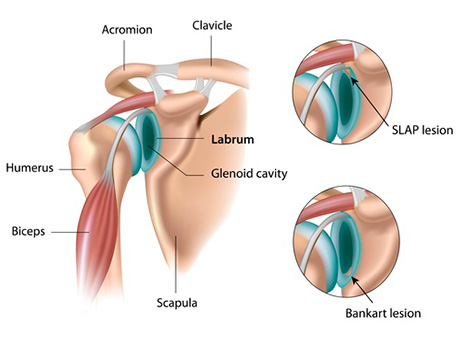
SLAP tears are common in overhead sports like baseball, tennis players, or jobs that require a lot of overhead activity. The tear is along the top half of the labrum and is usually related to damage to the bicep tendon as well. A Bankart tear usually is the result of a shoulder dislocation. The tear is along the bottom front part of the labrum. A reverse labrum tear is the result of trauma pushing the head of the humerus backwards. For example, blocking as a football linemen. A reverse labrum tear is less common and account for only 5-10% of labrum tears.
Signs and Symptoms
Symptoms of shoulder labrum tears would include popping, catching, and grinding in your shoulder. You may notice that your shoulder doesn’t feel stable and your range of motion is limited. Weakness in the shoulder and pain at night are also common complaints. Labrum tears usually occur with other shoulder injuries such as a dislocation, rotator cuff tear, and bicep tendon tear.
Assessment
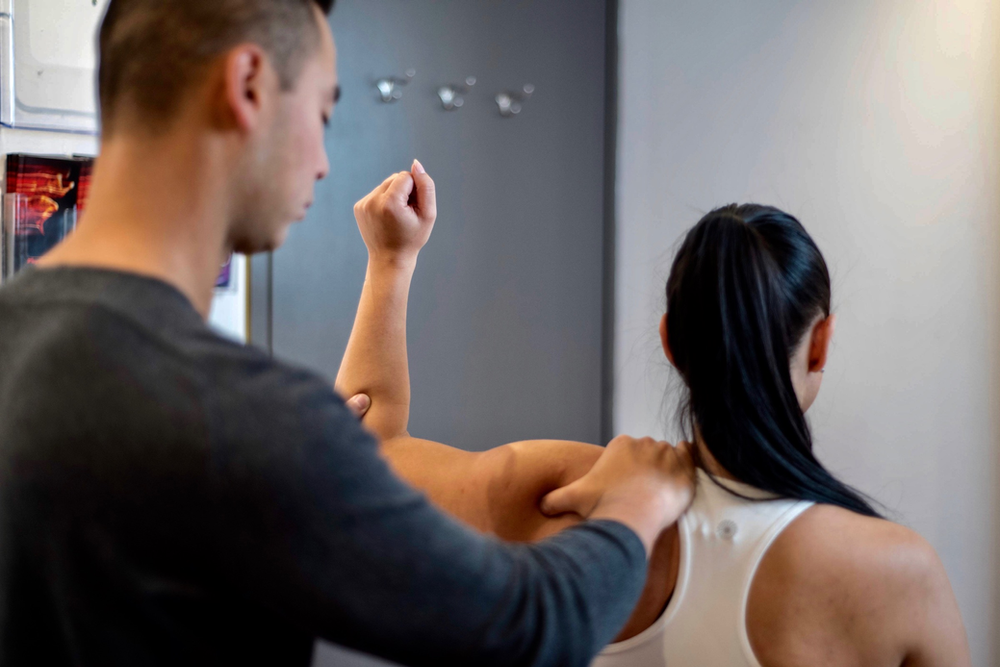
Your physiotherapist will take a detail history of your injury. Explaining how you injured your shoulder will be very helpful. Your physiotherapist will assess your shoulder mobility and perform orthopaedic tests. Your doctor can order a CT or MRI scan which will also be able to evaluate the labrum. An x-ray may also be ordered since a Hill Sachs fracture can be associated with a Banker lesion.
Treatment/ Surgery
Physiotherapy treatment will focus on manual therapy, exercise, and education on what movements to avoid. Your physiotherapist will massage and stretch your shoulder. Gentle exercise would be prescribed initially to regain mobility in the shoulder. Rotator cuff exercises will strengthen and stabilize your shoulder. A physiotherapy program may last 6-8 weeks.
In more severe cases surgery may be required. Arthroscopic surgery will remove and repair the damaged labrum. After surgery, you will wear a sling for 4 weeks. Physiotherapy after surgery will take 9-12 months. You will be able to return to most daily activities after 3 months. Overhead sports such as tennis or baseball, will require further strength and condition and can begin after 6 months.
FAQ: Shoulder Labrum Tear
1. What is a shoulder labrum tear?
A shoulder labrum tear is an injury to the ring of cartilage (the labrum) that surrounds the shoulder socket. This cartilage helps stabilize the shoulder joint and allows smooth, secure movement. A tear can cause pain, instability, or limited range of motion.
2. What are the common symptoms of a labrum tear?
Symptoms often include:
- Deep shoulder pain, especially with overhead movements
- Clicking, popping, or catching in the shoulder
- Feeling of shoulder instability or weakness
- Reduced range of motion
- Pain at night or when lying on the affected shoulder
3. What causes a labrum tear in the shoulder?
Labrum tears can occur due to:
- Acute trauma (e.g., a fall on an outstretched arm)
- Repetitive overhead movements (common in throwing or weightlifting)
- Shoulder dislocations or subluxations
- Age-related degeneration of the cartilage
4. How is a shoulder labrum tear diagnosed?
Diagnosis typically involves:
- Detailed medical history and symptom review
- Physical examination and specific shoulder tests
- Imaging such as MRI or MR arthrogram to confirm the tear
5. Can a labrum tear heal without surgery?
Small or partial tears can improve with physiotherapy, activity modification, and strengthening exercises. Full tears or those causing significant instability may not fully heal without surgical intervention.
6. When is surgery recommended for a shoulder labrum tear?
Surgery is considered if:
- Pain persists despite physiotherapy
- Shoulder instability affects daily activities or sports
- There is a significant tear or associated injuries (e.g., rotator cuff damage)
Surgical options typically involve repairing or reattaching the torn labrum.
7. What does physiotherapy for a labrum tear involve?
Physiotherapy focuses on:
- Reducing pain and inflammation
- Restoring shoulder range of motion
- Strengthening the rotator cuff and scapular stabilizers
- Correcting movement patterns to prevent further injury
Treatment is gradual and tailored to the severity of the tear.
8. How long does it take to recover from a labrum tear with physiotherapy?
Recovery varies:
- Mild tears: 6–12 weeks
- Moderate tears: 3–6 months
- Post-surgical rehab: often 4–6 months before full return to activity
Consistency and adherence to exercises are key for optimal recovery.
9. Can I return to sports after a labrum tear?
Yes, with proper rehabilitation. Gradual return to sports is essential, starting with controlled movements and low-impact activities before progressing to full training or competition. A physiotherapist can guide the timeline based on your progress.
10. What activities should be avoided during recovery?
- Heavy lifting or overhead pressing
- Repetitive throwing or overhead movements
- Activities that cause pain, clicking, or instability
- Sudden jerking or high-impact movements
Gradual, pain-free progression is important to protect the labrum and avoid setbacks.