So you have hurt your shoulder after pull ups and after a few months of rest and Physio you want to know how to get back to doing this exercise. I have personally been in this position myself. Here are the pull up progressions I used to rehab my shoulder and what I teach my patients.
Scapula Setting:
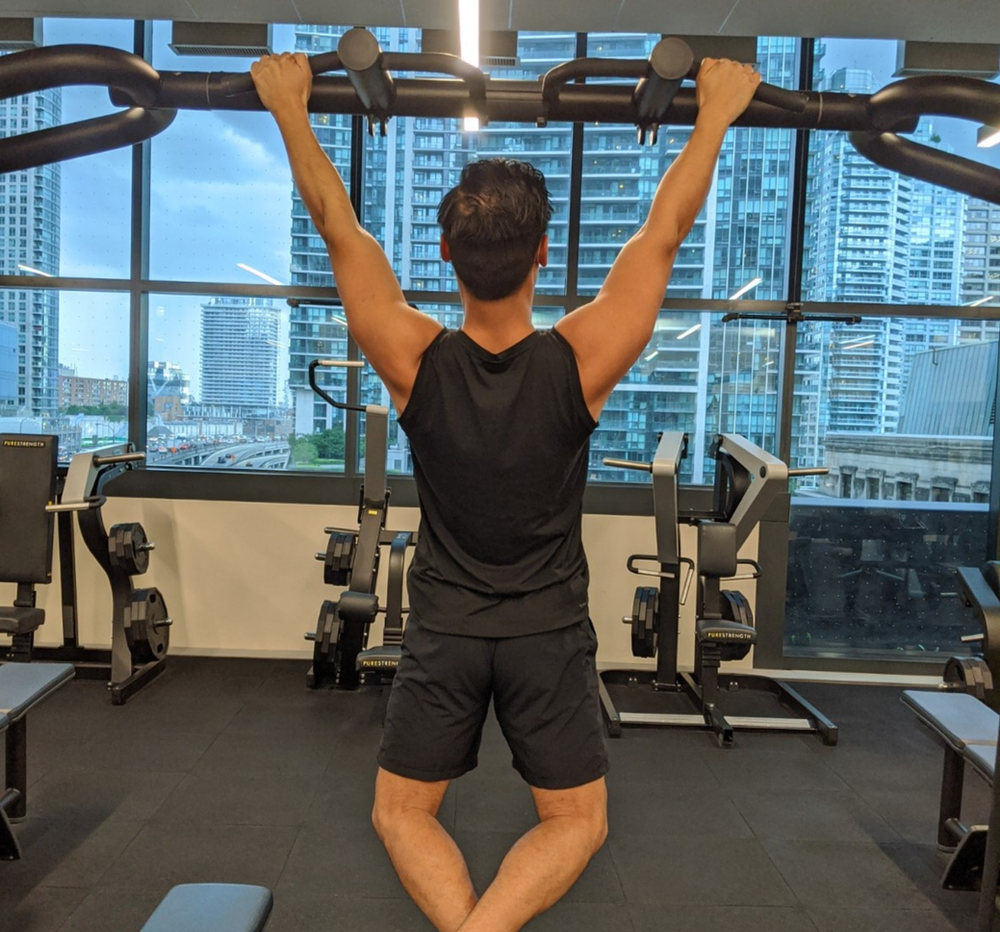
The cause of most shoulder injuries during a pull up is a forward shoulder position when performing the exercise. This series of exercises will teach you to properly engage your back muscles and set your shoulder and scapula back to safely perform a pull up and prevent re-injury. Hang onto a bar, since free hanging will aggravate your shoulder, engage you biceps slightly by bending your elbow. Pull your shoulder slightly in and down. Hold this position for 3 seconds. This scapular retraction and depression will recruit the middle and lower trapezius to stabilize your shoulder during pull ups. It is important to maintain this scapular position in the next exercise progressions.
Negative Pull Ups:
The next step is to strengthen the rotator cuff and performing a negative pull up is the best option. Hop off a bench and start with your chin above the bar. Keep you scapula slightly pinched in and down. As you lower you body your trapezius will control the upward rotation of your scapula. Increase the difficulty of this exercise by slowing down each negative repetition. Play around with different grips to train chin ups, wide, and narrow grip pull ups.
Banded pull ups:
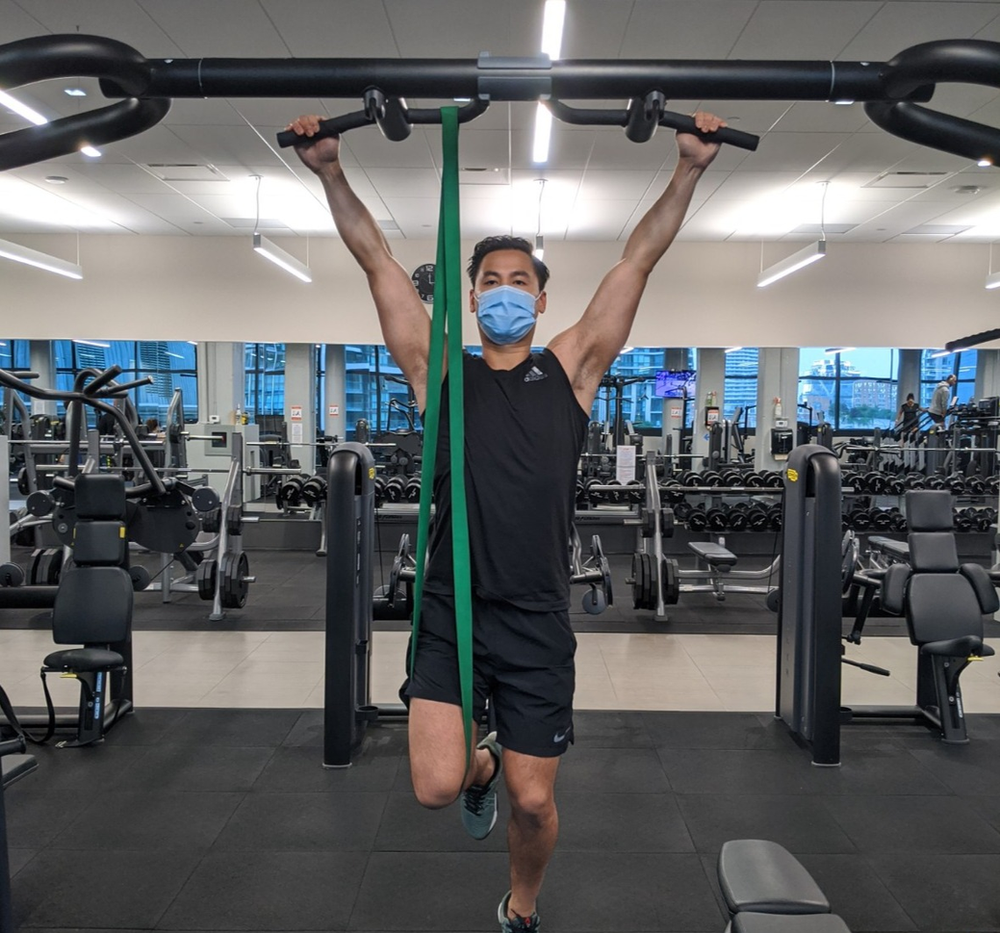
This is a great way of training both the concentric and eccentric portion of a pull up while using a band to unload your body weight. Place the band around your knee. This is easier and more secure than placing the band around your foot. Remember to pull your scapula down and in during each repetition. Keep your core and gluts tight also, this will make you more stable, and prevent your body from swinging. Play around with different concentric reps: explosive and fast or slow reps. However keep the eccentric portion of the movement slow and controlled. Use the different colour of bands to provide various level of assistance. Green is the thickest and provides the most assistance while red is the thinnest and provides the least assistance.
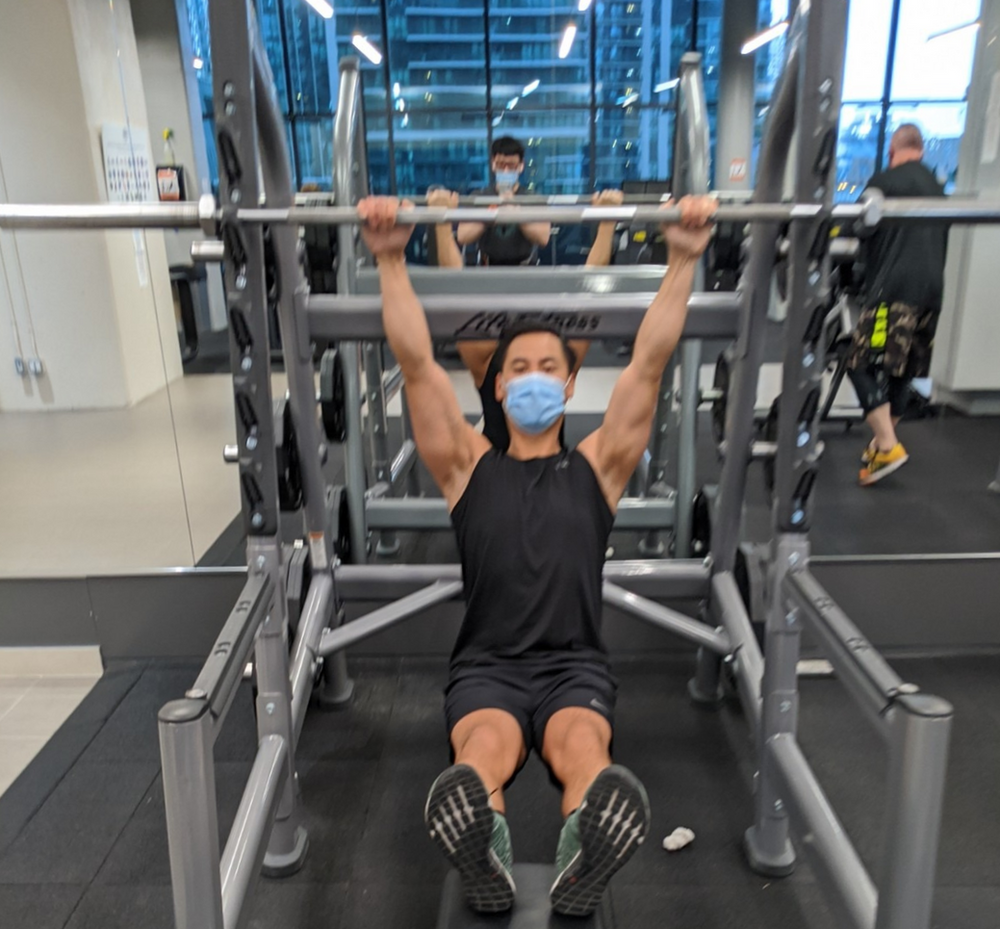
Bench assisted pull ups:
This is another way to unload your body weight during pull ups. Place your foot on a bench and keep your upper body upright and parallel with the direction of the pull up. Avoid a body weight row where your upper body is perpendicular with the direction of pull. Play around with the tempo of each rep and add static holds.
FAQ: Shoulder Pain After Pull-Ups
1. Why do I get shoulder pain after doing pull-ups?
Shoulder pain after pull-ups is often due to poor technique, muscle imbalances, or overloading the joint. Common causes include inadequate shoulder stability, weak upper back muscles, or excessive strain on the front of the shoulder during the movement.
2. Is shoulder pain after pull-ups a sign of injury?
Not always. Mild soreness can be normal, especially if you’re new to pull-ups. However, sharp pain, pinching, or persistent discomfort may indicate irritation of structures like the rotator cuff or shoulder joint and should not be ignored.
3. How can I prevent shoulder pain when doing pull-ups?
- Use proper form (avoid swinging or kipping)
- Engage your shoulder blades before pulling (scapular retraction)
- Avoid overtraining and allow recovery time
- Progress gradually with reps and intensity
- Warm up properly before starting
4. What muscles should be strengthened to avoid shoulder pain during pull-ups?
Focus on:
- Upper back muscles (rhomboids, trapezius)
- Rotator cuff muscles
- Latissimus dorsi (lats)
- Core muscles for stability
Balanced strength helps reduce strain on the shoulder joint.
5. Can improper pull-up form cause shoulder pain?
Yes. Common mistakes include:
- Shrugging shoulders instead of stabilizing them
- Not engaging the shoulder blades
- Using momentum instead of controlled movement
- Letting the shoulders roll forward at the bottom
These can increase stress on the shoulder and lead to pain.
6. Should I stop doing pull-ups if my shoulder hurts?
If you’re experiencing pain, it’s best to pause or modify pull-ups temporarily. Continuing through pain can worsen the issue. You can substitute with less stressful exercises (like rows) while addressing the cause.
7. What warm-up exercises help reduce shoulder pain before pull-ups?
- Arm circles and shoulder mobility drills
- Resistance band pull-a-parts
- Scapular pull-ups (small range of motion)
- Light rows or lat activation exercises
A proper warm-up prepares the shoulder for loading.
8. How long does shoulder pain after pull-ups usually last?
Mild soreness may last 1–3 days. If pain persists beyond 1–2 weeks, or worsens with activity, it may indicate an underlying issue that needs attention.
9. When should I see a physiotherapist for shoulder pain from pull-ups?
Consider seeing a physiotherapist if:
- Pain lasts longer than 1–2 weeks
- Pain is sharp, worsening, or limiting movement
- You feel weakness, instability, or clicking
- It affects daily activities or sleep
Early treatment can prevent chronic problems.
10. Can stretching help reduce shoulder pain after pull-ups?
Yes, stretching can help relieve muscle tightness, especially in the chest, shoulders, and lats. However, stretching alone is usually not enough—strengthening and proper technique are equally important for long-term relief.