

What is it?
Thoracic outlet syndrome is caused when a group of nerves and blood vessels are compressed in a space between the collar bone and first rib. Thoracic outlet syndrome can be caused by:
-Poor posture and ergonomics.
-Truama from a collision in sport or motor vehicle accident.
-Anatomical anomaly such as having an extra rib.
-Pregnancy.
What are the signs and symptoms?
-Pain, numbness, tingling in the arm, forearm, hand. Symptoms can be in all or one of these areas.
-Swelling and discolouration in the hand.
-Weaking arm or grip strength.
-Cold hands.
How is it treated?
With thoracic outlet syndrome the brachial plexus can be compressed at the scalene muscles, pectoralis minor muscles, or by the 1st rib. The scalene muscles are muscles along the side of the neck. Massaging and stretching these muscles can relieve the pressure it is applying on the brachial plexus. Tension along the pectoralis minor muscle which is a muscle along the front of the chest can also compress on the nerves. Massage, active release, and electro acupuncture is particularly effective at releasing the pectoralis minor. Finally if the first rib is elevated it can also apply pressure upward onto the brachial plexus. Your physiotherapist will stretch the 1st rib downward by performing a treatment called joint mobilization. Your physiotherapist will apply an oscillating downward pressure along the rib to relieve its pressure on the nerves.
Common Home Exercises
Scalene stretch
Side bend your head to your opposite shoulder. Apply a bit of over pressure with your hand. Hold this stretch for 20-30 seconds and repeat for 3 sets.

Pec minor release
The pec minor is located along the outer edge of the chest just as it connects to your shoulder. Place the lacrosse ball in this area. Gently massage this area by leaning your body weight into the ball.
Inferior first rib stretch
Use a waist belt for this exercise. Place the belt over the affected shoulder and hold either end with your hands. Look toward your arm pit on the affected side. Take a deep breath in and as your breathe out pull downward to glide the first rib inferiorly. Repeat 10 repetition and 3 sets.
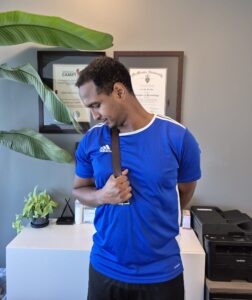
Median nerve floss
Start with your arm straight resting by your side and bend the wrist back so your palm is facing the floor. Bend your head to the opposite arm you would like to stretch. To perform the exercise lift your arm up and side bend your head toward your arm.
click below for picture of median nerve floss exercise:
carpal-tunnel-syndrome-early-signs-treatments-and-exercises
Thoracic Outlet Syndrome – Frequently Asked Questions
1. What are the early signs of thoracic outlet syndrome?
Early signs of thoracic outlet syndrome often involve nerve or circulation symptoms in the arm and hand. Common symptoms include:
-
Numbness or tingling in the arm, hand, or fingers
-
Pain in the neck, shoulder, or upper back
-
Weakness or fatigue in the arm with activity
-
A heavy or aching sensation in the arm
-
Symptoms that worsen when the arms are raised overhead
These symptoms may come and go at first and gradually become more noticeable over time.
2. What causes thoracic outlet syndrome to develop?
Thoracic outlet syndrome occurs when nerves or blood vessels are compressed in the space between the collarbone and the first rib. Several factors can contribute to this compression, including:
-
Poor posture (such as rounded shoulders or forward head posture)
-
Repetitive overhead activities
-
Muscle tightness in the neck, chest, or shoulders
-
Previous neck or shoulder injuries
-
Anatomical variations such as an extra rib
Often, TOS develops from a combination of these factors rather than a single cause.
3. How do physiotherapists diagnose thoracic outlet syndrome?
Diagnosis usually involves a combination of medical history, physical examination, and sometimes imaging tests. Your physiotherapist may:
-
Ask about your symptoms and activities that trigger them
-
Perform movement and posture tests to reproduce symptoms
-
Assess strength, sensation, and circulation in the arm
-
Your doctor may order imaging tests such as X-rays, ultrasound, or MRI if needed
4. What is the difference between thoracic outlet syndrome and carpal tunnel syndrome?
While both conditions can cause numbness or tingling in the hand, they occur in different parts of the body.
-
Thoracic outlet syndrome occurs when nerves or blood vessels are compressed near the neck and collarbone. Symptoms often involve the shoulder, arm, and hand.
-
Carpal tunnel syndrome occurs when the median nerve is compressed at the wrist. Symptoms are usually limited to the thumb, index finger, middle finger, and part of the ring finger.
The location and pattern of symptoms help your physiotherapist distinguish between the two conditions.
5. How long does thoracic outlet syndrome take to heal?
Recovery time varies depending on the cause and severity of the condition. Many people improve with conservative treatment such as physiotherapy and posture correction.
-
Mild cases may improve within 4–6 weeks
-
Moderate cases may take 2–3 months
-
Long-standing or severe cases may require several months of rehabilitation
Consistency with treatment and exercise is an important part of recovery.
6. Can thoracic outlet syndrome go away on its own?
In some mild cases, symptoms may improve if the underlying cause—such as poor posture or repetitive strain—is corrected. However, many people benefit from guided treatment such as physiotherapy to address muscle tightness, posture, and nerve irritation.
Without proper treatment, symptoms may persist or gradually worsen.
7. What are the best exercises for thoracic outlet syndrome?
Exercises for thoracic outlet syndrome typically focus on improving posture, mobility, and shoulder stability. Common exercises may include:
-
Chest and pectoral stretches
-
Upper trapezius and neck stretches
-
Shoulder blade (scapular) strengthening exercises
-
Thoracic spine mobility exercises
-
Nerve gliding exercises
Refer to some of the helpful exercises listed above.
8. Which activities should be avoided with thoracic outlet syndrome?
Certain movements may worsen symptoms, especially during early recovery. These may include:
-
Repetitive overhead lifting
-
Heavy shoulder loading
-
Carrying heavy bags on one shoulder
-
Prolonged poor posture (such as slouching at a desk)
-
Activities that reproduce numbness, tingling, or arm fatigue
Modifying these activities can help reduce irritation of the nerves or blood vessels.
9. Does poor posture cause thoracic outlet syndrome?
Poor posture can be a significant contributing factor. Forward head posture and rounded shoulders can narrow the space where nerves and blood vessels pass from the neck into the arm, increasing the likelihood of compression.
Improving posture, strengthening supporting muscles, and maintaining good ergonomics can help reduce symptoms and prevent recurrence.
10. When should I see a healthcare provider for thoracic outlet syndrome symptoms?
You should seek medical advice if you experience:
-
Persistent numbness or tingling in the arm or hand
-
Weakness or loss of grip strength
-
Pain that does not improve with rest
-
Swelling or discoloration in the arm
-
Symptoms that interfere with daily activities
Early evaluation can help identify the cause and prevent symptoms from becoming more severe.