Total knee replacement surgery, also known as Knee Arthroplasty, is a common procedure performed on individuals who need pain relief and restored function in severely damaged knee joints. The surgical procedure involves cutting away the damaged bone and cartilage from the kneecap and thighbone, and completely replacing it with an artificial joint. The prosthesis is usually made of high grade metal alloys, and medical grade plastics and polymers. In order to determine if total knee replacement surgery is right for you, an orthopedic surgeon will assess your knee’s range of motion, stability and overall strength before making a decision. X-ray can also help in determining the extent of damage to the knee. Let’s take a look at what exactly total knee replacement surgery means.
What is it?
Total knee replacement is a surgical procedure that replaces your existing knee joint with prosthetic components. All of the joint surfaces of the thigh bone (femur) and lower leg bone (tibia) are replaced with implants that completely cover the ends of the bone. During the procedure, the surgeon may also remove the part underneath the kneecap (patella) if needed and will replace it with an implant as well. After knee replacement surgery, physiotherapy will help with decreasing postoperative swelling and pain while improving knee flexibility and strength.
When and why you will need a total knee replacement?
Natural aging or a history of high impact sports can cause degeneration of the cartilage that covers the joints in the knee. When the cartilage in the knee wears down and the joint surfaces are now carrying the weight, the simplest tasks, like walking, stair climbing, or even getting up from your seat can cause pain.
When there is degeneration in the knee you may have pain, swelling and impaired function. Your doctor may recommend a total knee replacement if you have not benefited from a course of medication and physiotherapy. A knee replacement can relieve pain and allow you to have a more active lifestyle again.
How is it treated?
After a total knee replacement surgery the goals are to manage pain, improve flexibility, and strengthen the knee. Swelling and pain right after the operation is normal but the key is to be able to control it so you can move and sleep well at night. Icing the knee regularly as well as taking the medication prescribed by your surgeon is important.
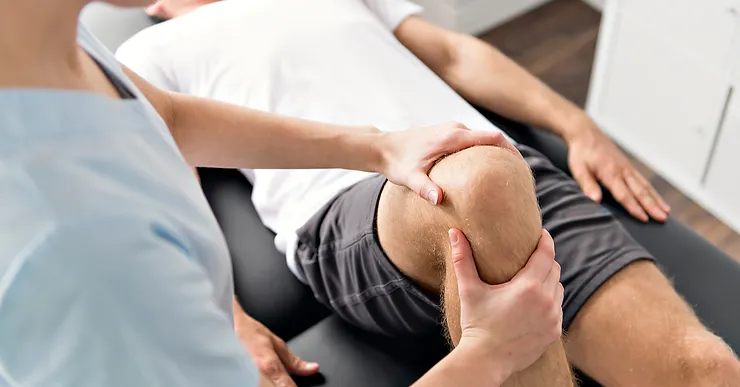
Your physiotherapist will work with you to perform gentle exercises to start stretching and strengthening you knee as well as your hips and ankles. Your physiotherapist will massage the muscles around the knee to relieve tension and reduce swelling. The scar from the operation can be particularly sensitive and massaging the area will be effective at desensitizing the incision. Over a few months your physiotherapist will work with you to restore your mobility and help you back to the activities and sports that you want to get back to.
Common Home Exercises:
Heel slide
Lye on your back with your knees straight. Slide your heel toward your buttocks as far as your feel comfortable. Repeat for 10 repetitions for 3 sets.
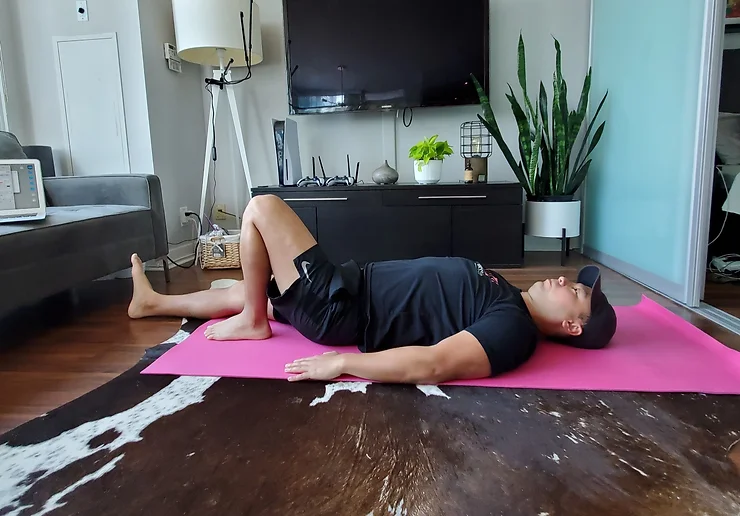
Quadricep setting
Sitting or lying with your knee straight. Squeeze your thigh muscle to engage your quadriceps. Hold the contraction for 5-10 seconds. Repeat 5-15 repetitions for 3 sets.
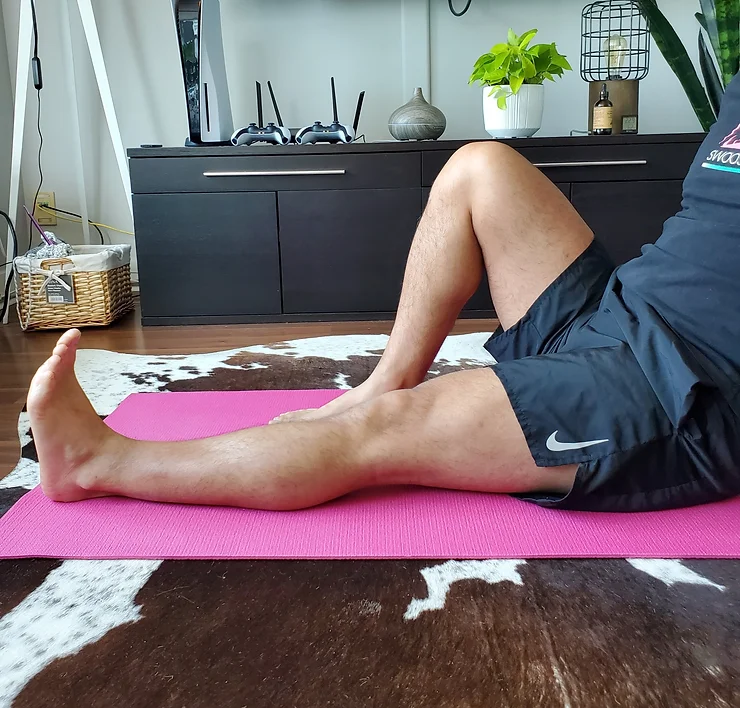
Active straight leg raise
Lye on your back. Lift your leg straight up by bending at the hip. This exercise will strengthen your hip and your thigh. Repeat 5-15 repetitions for 3 sets.
Sit to stand squat
Sit in a chair. Stand up and sit back down. To make this exercise easier start on a higher surface. For example use a high stool, a bed with a mattress on a box spring, or place a few pillows on a chair. Repeat 5-15 repetitions for 3 sets.
Physiotherapy After Total Knee Replacement – FAQ
1. What exactly happens to my knee joint during a total knee replacement?
During a total knee replacement, the damaged surfaces of the knee joint—usually due to arthritis or injury—are removed and replaced with artificial components made of metal and plastic. This restores smooth movement, reduces pain, and improves function.
2. How does physiotherapy after surgery help my recovery?
Physiotherapy is essential for:
-
Regaining knee movement and flexibility
-
Strengthening muscles around the knee and leg
-
Improving balance and walking ability
-
Reducing swelling and stiffness
-
Supporting a safe return to daily activities
3. Will I need physiotherapy before the surgery too?
Yes, pre-surgery physiotherapy (sometimes called “prehab”) can help by:
-
Strengthening the leg muscles in advance
-
Improving knee range of motion
-
Teaching exercises that will be continued after surgery
-
Supporting a faster and smoother recovery
4. What are some common exercises I’ll do with my physiotherapist?
Typical exercises may include:
-
Range-of-motion exercises: bending and straightening the knee
-
Strengthening exercises: quadriceps, hamstrings, and glute muscles
-
Balance and gait training: to help with walking safely
-
Functional exercises: getting in and out of chairs, stairs, and daily movements
Refer to the exercises listed in the blog above for some common physiotherapy exercises.
5. How soon after surgery does physiotherapy begin?
Physiotherapy usually begins within 24–48 hours after surgery, sometimes the same day, depending on your condition. Early movement helps prevent stiffness, improves circulation, and speeds up recovery.
6. Can I control swelling and pain at home between physio sessions?
Yes, at home you can:
-
Elevate your leg and use ice packs as advised
-
Perform gentle range-of-motion exercises recommended by your physiotherapist
-
Take pain medication as prescribed
-
Avoid prolonged sitting or standing in one position
7. How long will it take to walk normally again after surgery?
Most people can walk with a walker or crutches within a few days and gradually progress to a cane and then independent walking. Normal walking patterns usually return within 6–12 weeks, though full strength and endurance continue to improve over several months.
8. When can I eventually return to everyday activities and sports?
-
Everyday activities: usually 6–12 weeks, depending on strength and mobility
-
Low-impact activities (walking, cycling, swimming): often 3–6 months
-
Higher-impact sports or heavy labor: typically 6–12 months, guided by your physiotherapist and surgeon
Recovery timelines vary, but consistent physiotherapy and gradual progression are key to regaining function.