
The human head weights about 10 pounds. When your neck is straight the weight of the head is absorbed by the bones in the neck, it’s natural spinal curvature, and the muscles around the neck are lightly activated. Poor posture is often times the source of many chronic neck and back injuries. To explain this let’s use the example of how using your phone poorly can create chronic neck pain.
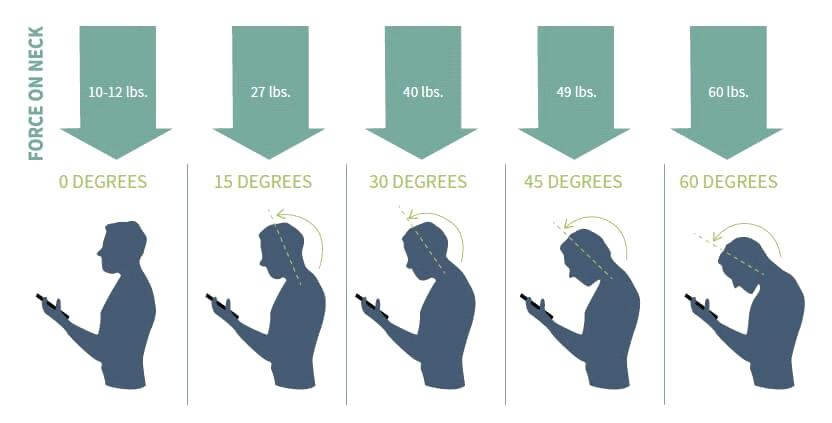
As the head moves forward the weight of your head increases. This is due to the concept of torque. The is similar to you holding a back pack very close to your body versus holding it with outstretched arms. This increased weight of your head forces the muscles around your neck to work extra hard leading to fatigue, tension, and pain at the end of the work day. This same concept applies to your lower back. If you are hunched forward over your desk your lower back is forced to hold up the weight of your torso. Your lower back will feel exhausted and tight at the end of your day.
When you sit up straight the weight of your head and torso is absorbed through the natural curvature of your spine and significantly reduces the work load of the muscles around your neck and back. Being mindful of your posture and sitting up straight can eliminate the root cause of most chronic neck and back pain.
The office ergonomics checklist:
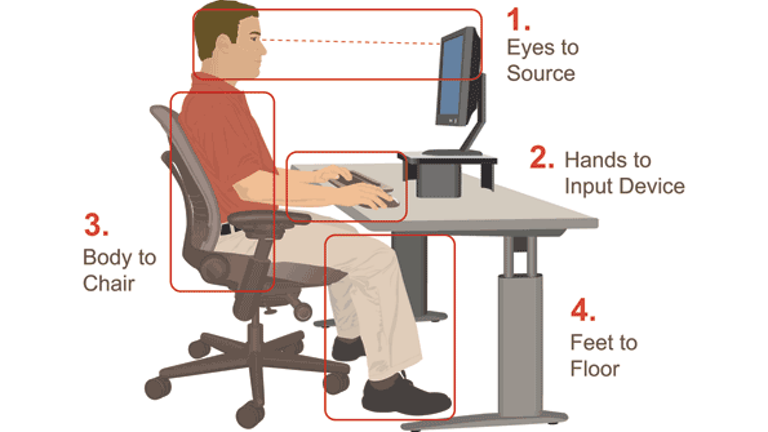
1) Eyes to Source:
Raise your monitor to eye level. If you look straight forward your eyes would be starring at the top edge of the screen. Your gaze will naturally draw down toward the content on the screen.
2) Hands to Input Device:
Your keyboard should be close to you. Shoulders should be relaxed and elbows are flexed to 90 degrees.
3) Body to Chair:
Sit in the back of your chair allowing your back to rest against the back support of your chair. If your chair has a straight back, consider getting an external lumbar support cushion to wrap around your chair. This simple lumbar support cushion can turn most chairs into a great chair. The lumbar support cushion, hugs your lower back, lifting up your torso and makes sitting upright more effortless.
4) Feet to Floor:
Both feet should be touching the floor or supported by a foot stool.
Posture FAQ: Preventing Neck and Back Pain
1. What is the main reason good posture helps prevent neck and low back pain?
Good posture keeps your spine aligned naturally, reducing stress on muscles, ligaments, and discs. Proper alignment allows your body to distribute weight evenly, lowering the risk of pain and strain.
2. How does poor posture lead to neck pain?
Leaning forward or slouching strains neck muscles and ligaments. Over time, this can cause tension, headaches, and chronic discomfort.
3. Why does poor posture affect the lower back?
Slouching flattens the natural curve of the lower spine, increasing pressure on spinal discs and overworking the lower back muscles, leading to fatigue, stiffness, and pain.
4. Can good posture alone eliminate neck and back pain?
Not always. While posture is important, other factors—like muscle weakness, prior injuries, and prolonged sitting—also play a role. Combining posture awareness with stretching, strengthening, and movement is most effective.
5. What are some posture tips for office work?
- Keep feet flat on the floor, knees at 90°.
- Sit back in your chair with lower back supported.
- Position your monitor at eye level, about an arm’s length away.
- Keep shoulders relaxed and elbows close to your body.
- Take short breaks to stand, stretch, or walk every 30–60 minutes.
6. How does posture affect muscles and fatigue?
Poor posture forces muscles to work harder to support your body, causing fatigue and soreness. Good posture allows muscles to function efficiently, reducing strain.
7. Is good posture only about sitting straight?
No. Posture includes sitting, standing, walking, and even sleeping. It’s about maintaining natural spinal alignment in all positions.
8. How long does it take to improve posture and see benefits?
With consistent awareness and exercises, improvements often appear in 2-4 weeks. Long-term benefits require making posture a daily habit.
9. Why does slouching over a desk make the lower back tired and painful?
Slouching increases pressure on spinal discs and overstretches lower back muscles. These muscles tire quickly because they’re working to stabilize your spine in an unnatural position.
10. What simple habit can help maintain good posture throughout the day?
Set a timer to check your posture every 30–60 minutes. Small adjustments—like sitting back in your chair, relaxing shoulders, or standing briefly—help prevent strain and keep your spine healthy.