Back pain after a deadlift can make you feel weary of returning back to the exercise that hurt you. Here is the exercise progression I prescribe to my patients to train their body so they are ready to return back to deadlifts.
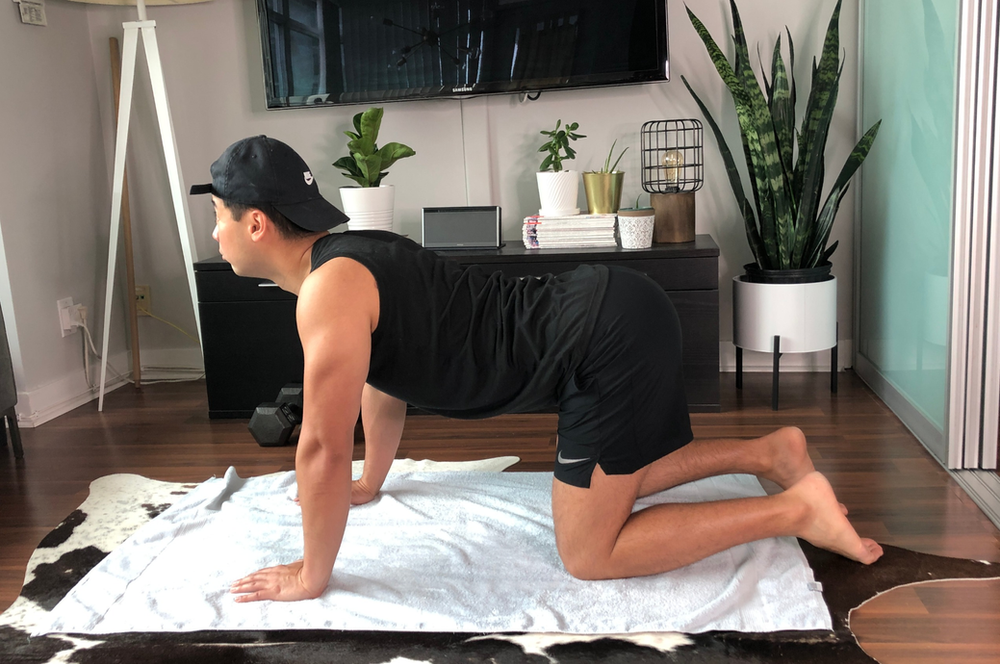
1) Cat- Cow
Shortly after your back injury your lower back mobility will be quite limited. Bending forward and backwards can be quite painful. This is a gentle option on how to re-introduce this movement to your body.
- Start on the floor, with your hands positioned under your shoulder and knees under your hips.
- Lets begin with a cow pose. Inhale and let your belly drop down as you arch your back. Gently look
upwards. - Transitioning to the cat pose, exhale and round your back drawing it toward the ceiling. Look softly
down toward your belly button.
2) Banded bridge
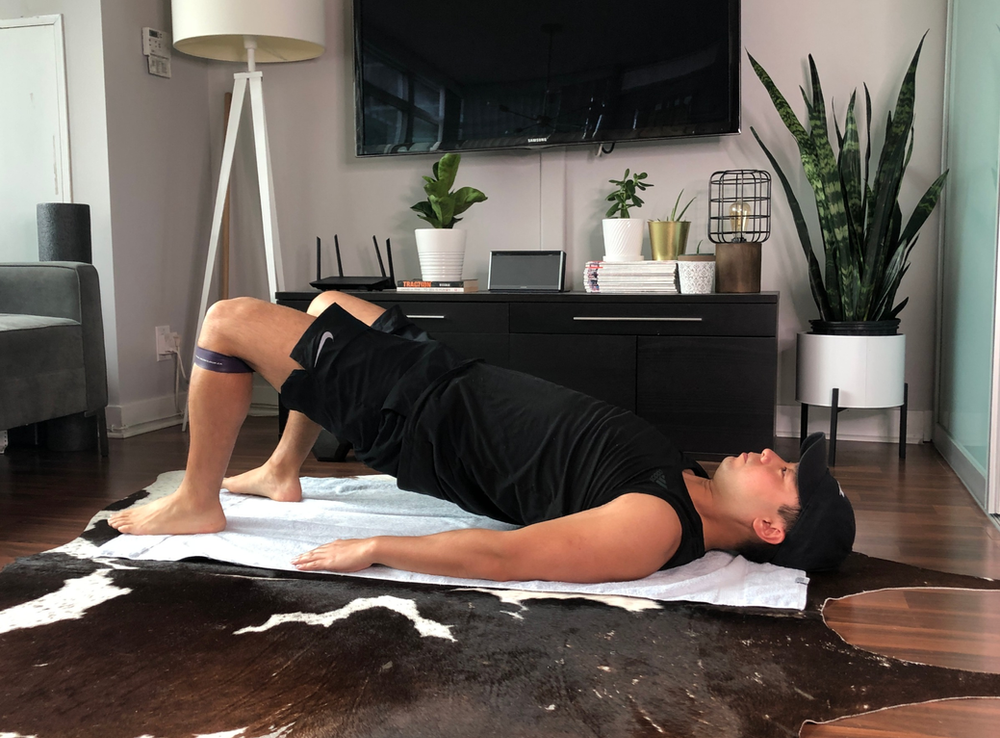
Let’s train the posterior chain of muscles you will need during your deadlifts such as your gluts, hamstrings, and back extensors. Placing a band around your knees during this exercise will help recruit the gluteus medius (lateral buttock muscles) as well as the gluteus maximus during the bridge.
- Place your hands on either side of your body to keep you balanced. Position your feet shoulder width
apart. - Keep your core tight. Push down through your heels, lifting your buttocks off the floor. Keep your back
relatively straight and avoid arching your lower back. This is a great exercise to isometrically
strengthen your core and back extensors.
3) Hip Hinge with Dowel
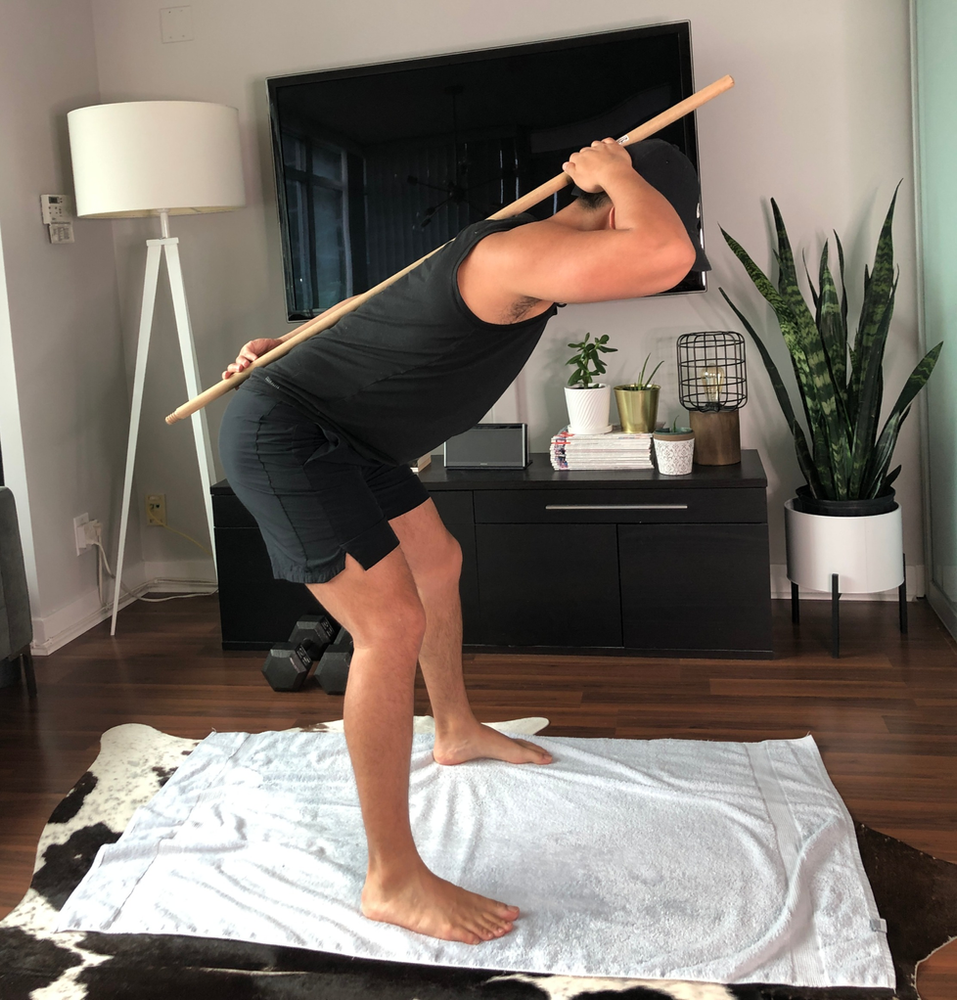
This is a fundamental movement pattern for deadlifts. Let’s focus on pain free range of motion. So only hinge as low as you feel comfortable.
- Stand shoulder width apart. Soften your knees.
- Position the dowel so it is in contact with your head, upper back, and lower back.
- Keep your core tight during this movement. Hinging at your hips, draw your buttocks back as you lower
your upper body down. - Contract your gluts, push your hips forward, and stand back up.
4) Kettle bell deadlifts
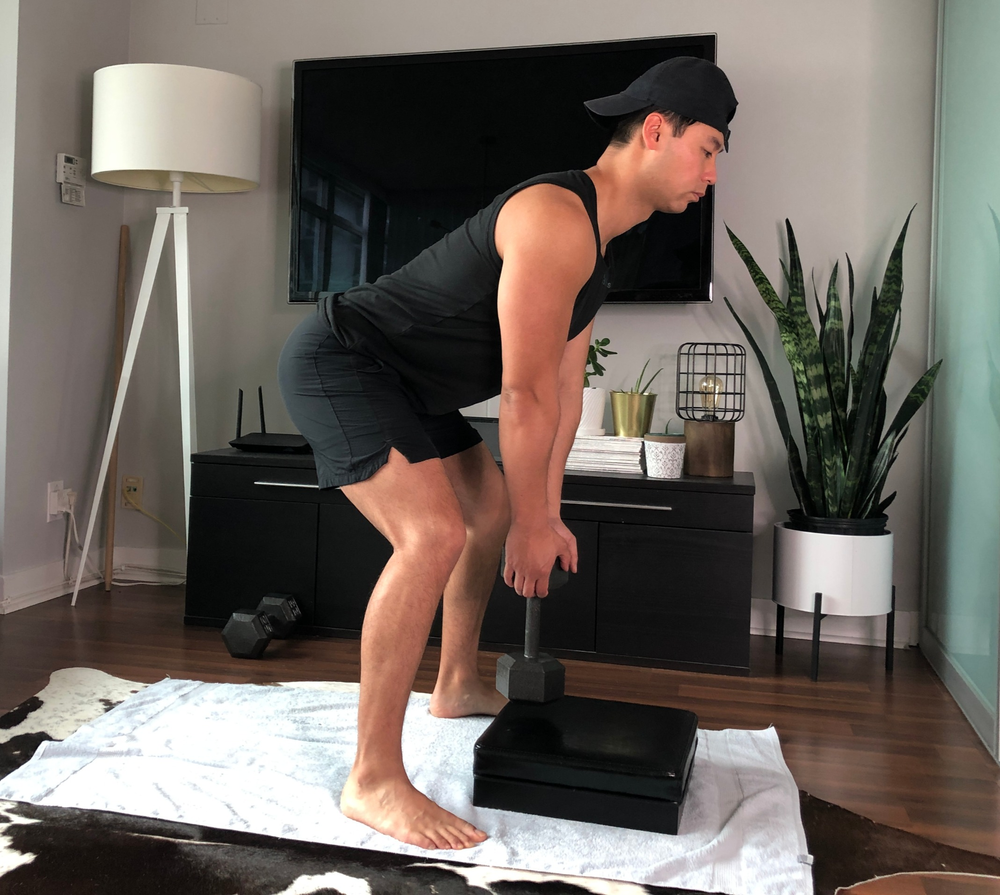
This is the first stage to return to a loaded deadlift. Decreasing the range of motion of this exercise will help you ease back into deadlifts. Place a couple of weighted plates on the floor to elevate the surface. Use a kettle bell or inverted deadlift for this exercise. Set up the weight on the edge of the plate so it is close to you.
- Stand shoulder width apart. Soften your knees.
- Hold onto the weight. Push your hips back so that there is tension on your hamstrings and gluts.
- Keep your core tight. Contract the gluts, push your hips forward, and stand up.
5) Rack pulls
Rack pulls will allow you to practice deadlift using a barbell. The safety bars on the rack will once again elevate the surface and decrease your range of motion during the lift. During the deadlift keep the bar close to your shin and thigh as you lift and lower the weight.
FAQ: Lower Back Pain After Deadlifts
1. What causes lower back pain after deadlifts?
Lower back pain after deadlifts is often caused by:
- Poor lifting technique (e.g., rounding the spine)
- Lifting too heavy too soon
- Weak core or glute muscles
- Muscle imbalances or tight hamstrings
- Overuse without adequate recovery
2. How can I tell if my deadlift form is causing my back pain?
Signs that form may be the issue include:
- Pain localized to the lower back rather than general muscle soreness
- Feeling a “pull” or sharp twinge during the lift
- Rounding of the lower back when lifting
- Pain that improves with rest and proper technique adjustments
A physiotherapist or experienced coach can assess your form.
3. What are the first steps to fix lower back pain after deadlifting?
- Stop or reduce the load until pain improves
- Rest and avoid aggravating movements
- Apply ice or heat for pain relief
- Perform gentle mobility and core activation exercises
- Consider having your form evaluated
4. Should I stop deadlifting if I have lower back pain?
Yes, temporarily stopping or modifying deadlifts is recommended until pain subsides and you’ve addressed the underlying cause. Returning too soon can worsen the injury.
5. What exercises help relieve lower back pain after deadlifts?
- Core strengthening: planks, bird-dogs, dead bugs
- Glute activation: glute bridges, clamshells
- Hip mobility: lunges, hip flexor stretches
- Gentle lower back stretches: cat-cow, child’s pose
These help stabilize and support the spine during lifting. Refer to the exercises in the above blog for my detail.
6. How long does lower back pain from deadlifts usually last?
Mild strains often improve within a few days to 2 weeks. More significant injuries may take 4–6 weeks or longer. Recovery depends on the severity and adherence to physiotherapy exercises.
7. Can strengthening my core prevent back pain when deadlifting?
Yes. A strong core stabilizes the spine, distributes load more effectively, and reduces stress on the lower back. Incorporating core and glute strengthening into your routine is essential for safe lifting.
8. Is it normal to feel sore after deadlifts?
Yes. Mild muscle soreness (DOMS) in the lower back, glutes, and hamstrings is normal after lifting. Sharp or persistent pain, however, is a warning sign of injury.
9. When should I see a physiotherapist for back pain after deadlifts?
See a physiotherapist if:
- Pain persists beyond 1–2 weeks
- You experience numbness, tingling, or weakness
- Pain is sharp or worsening
- It interferes with daily activities or lifting
Early intervention can prevent chronic issues.
10. Can changing my deadlift variation reduce lower back pain?
Yes. Variations like sumo deadlifts, trap bar deadlifts, or Romanian deadlifts can reduce stress on the lower back. A physiotherapist or coach can help choose the safest variation based on your body mechanics.