Cervical spinal arthritis and spinal stenosis are degenerative conditions in the neck. These conditions occur due to wear and tear and can cause a great deal of discomfort in the neck and even nerve pain and weakness in the arm. There are a number of treatment strategies that can be very effective at treating cervical spinal arthritis and spinal stenosis. Let’s learn more about treatment options.
What is Cervical Spinal Arthritis?
Cervical spinal arthritis—also called cervical spondylosis—is a type of arthritis that affects the joints, discs, and bones in the neck. The cervical spine is the neck region of your spine. Arthritis in this context refers to wear-and-tear (degenerative) changes in the spine. Most common in people over 50, but can begin earlier due to injury, genetics, or overuse. In cases of cervical spinal arthritis there can be degeneration of spinal discs. This causes the disc to lose water content and become less cushiony. There can be bone spurs (osteophytes) which are bony growths as a response to the degeneration. Joint stiffness and inflammation can occur around the facets joints in the neck. Nerve compression can sometimes occur if the bone spurs or herniated discs compress on the spinal nerve.
What is Cervical Spinal Stenosis?
Cervical spinal stenosis is a condition where the spinal canal in the neck (cervical spine) becomes narrowed, putting pressure on the spinal cord and nerves that travel through that area. The narrowing of the spinal canal can develop through a number of factors. The most common would be due to age-related wear and tear (degenerative changes). Another can cause can be from osteoarthritis which can cause bone spurs to form and reduces the space in the canal. Herniated/ budging discs can also the narrow the canal space. Thickening ligaments can also encroach the canal.
What are the signs and symptoms of Cervical Spinal Arthritis?
- Neck pain and stiffness. Dull, aching pain in the neck that may worsen with movement or after prolong sitting.
- Pain may radiate to the shoulders, arms, or hands (called cervical radiculopathy). The pain may be sharp, burning, or shooting.
- Numbness or tingling in the arms, hands, or fingers.
- Occipital headaches (pain at the back of the head) that radiate upward.
- Grinding or Popping Sounds (Crepitus)
What are the signs and symptoms of Cervical Spinal Stenosis?
Early or Mild Symptoms
- Neck pain or stiffness
- Tingling or numbness in the arms, hands, legs, or feet
- Weakness in the arms or legs
- Loss of fine motor skills (e.g., buttoning shirts)
Advanced Symptoms
- Balance or coordination problems
- Gait disturbances (unsteady walking)
- Muscle weakness or spasticity
- Bowel or bladder dysfunction (in severe cases)
How is it treated?
Treatment for both cervical spinal arthritis and spinal stenosis are very similar. Treatments involve using manual therapy to increasing flexibility in the neck. Manual therapy techniques such as massage and stretching will be targeting key muscles around the neck and shoulder. Joint mobilization, manipulations, and traction will focus on improving mobility in the spinal joints. Dry needling is another treatment modality your physiotherapist will use to release muscle tension in stubborn tight muscle knots around your neck and shoulder. If spinal arthritis and spinal stenosis is causing nerves compression in the neck, medical acupuncture is particularly effective at treating this issue. Learn more about medical acupuncture here.
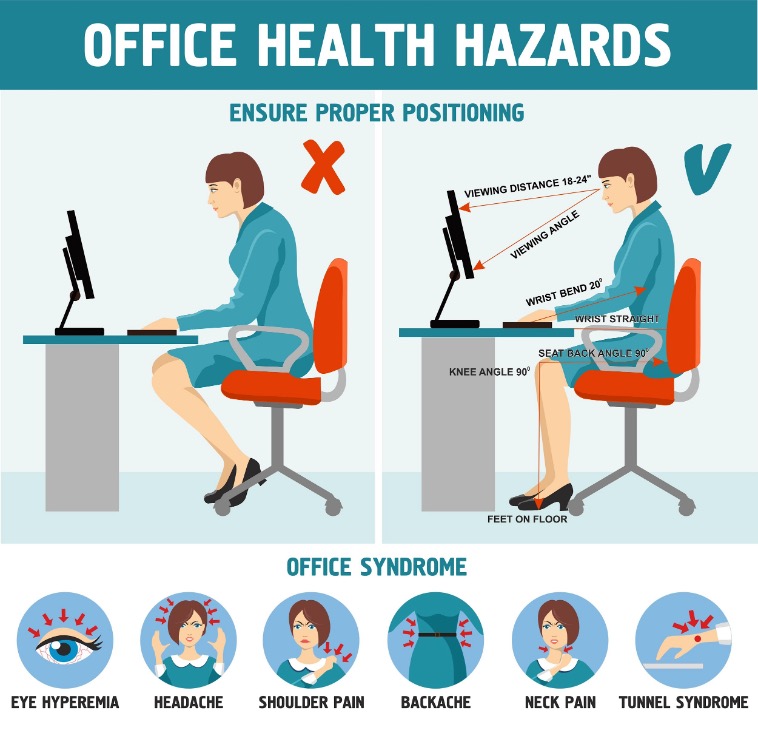
Your physiotherapist will teach you exercises to strengthening the muscles around the neck and shoulder and stretches to improved neck mobility. Office ergonomics and daily posture plays a key role in how to treat and manage cervical spinal arthritis and spinal stenosis. Your physiotherapist will complete a thorough postural exam to a tailor a solution for you.
Common home exercises:
Upper trapezius stretch
- Place your right hand behind your back to depress your right shoulder blade.
- Use your opposite hand (e.g., your left hand) to gently tilt your head toward your left shoulder.
- You should feel a stretch on the right side of your neck and shoulder.
- Maintain this position for 20-30 seconds and repeat for 3-4 sets. Repeat this stretch for your left upper trapezius.
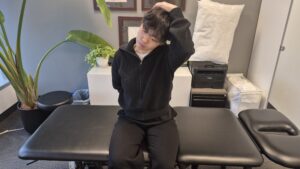
Levator scapulae stretch
- Place your right hand behind your back to depress your right shoulder blade
- Turn your head toward the left and aim to look down at your left arm pit.
- Use your opposite hand (e.g., your left hand) to provide a little bit of over pressure.
- You should feel a stretch on the right side of your neck and shoulder.
- Maintain this position for 20-30 seconds and repeat for 3-4 sets. Repeat this stretch for your left levator scapulae.

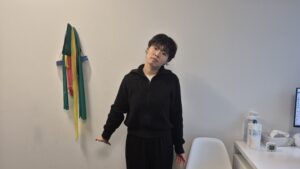
Median nerve floss
- This exercise is used to relieve nerve symptoms in the arm.
- Start with your arm straight resting by your side and bend the wrist back so your palm is facing the floor.
- Bend your head to the opposite arm you would like to stretch.
- Lift your arm up and side bend your head toward your arm.
- It is important that as you are doing this exercise that you do not feeling any numbness, tingling, burning and any other nerve symptoms. If you do feel any of these symptoms straighten your wrist so your palm is facing forward as you perform this exercise.
- Repeat this exercise for 10 repetition and 3-4 sets.

Chin retractions
Learn how to perform the chin retraction exercise here.
Cervical Spinal Arthritis & Cervical Spinal Stenosis – FAQ
1. What is cervical spinal arthritis?
Cervical spinal arthritis, also known as osteoarthritis of the neck, is a degenerative condition where the cartilage and joints in the cervical spine (neck) wear down over time. This can lead to stiffness, inflammation, and the formation of bone spurs.
2. What is cervical spinal stenosis?
Cervical spinal stenosis is a condition where the spinal canal in the neck narrows, placing pressure on the spinal cord and/or nearby nerves. This narrowing is often related to age-related changes, including arthritis.
3. What are common symptoms of cervical spinal arthritis?
Common symptoms include:
-
Neck pain and stiffness
-
Reduced range of motion
-
Headaches (often starting at the base of the skull)
-
Muscle tightness in the neck and shoulders
-
Occasional clicking or grinding with movement
4. What are common symptoms of cervical spinal stenosis?
Symptoms can vary depending on severity, but may include:
-
Neck pain
-
Numbness or tingling in the arms or hands
-
Weakness in the arms or hands
-
Difficulty with coordination or balance
-
In more severe cases, issues with walking or fine motor skills
5. How is cervical spinal arthritis and spinal stenosis diagnosed?
Diagnosis typically involves:
-
A detailed medical history and physical examination
-
Assessment of movement, strength, and nerve function
-
Imaging tests such as X-rays, MRI, or CT scans to confirm structural changes
6. What causes cervical spinal arthritis and stenosis?
The most common cause is age-related wear and tear. Other contributing factors include:
-
Previous neck injuries
-
Repetitive strain or poor posture
-
Genetics
-
Degenerative disc disease
-
Thickening of ligaments or development of bone spurs
7. Can these conditions be treated without surgery?
Yes, most cases are managed conservatively. Non-surgical treatments may include:
-
Physiotherapy
-
Activity modification
-
Pain management (e.g., medication as prescribed)
-
Postural correction and ergonomic changes
Many people experience significant improvement without needing surgery.
8. When should I consider surgery?
Surgery may be considered if:
-
Symptoms are severe or worsening
-
There is significant nerve or spinal cord compression
-
You experience progressive weakness, coordination issues, or loss of function
-
Physiotherapy has not provided sufficient relief
A specialist such as a neurologist or orthopedic surgeon will help determine if surgery is appropriate.
9. What role does physiotherapy play in treatment?
Physiotherapy is a key part of recovery and management. It helps to:
-
Improve neck mobility and flexibility
-
Strengthen supporting muscles
-
Reduce pain and stiffness
-
Improve posture and movement patterns
-
Decrease pressure on irritated nerves
A structured program can also help prevent symptom progression.
10. Are lifestyle changes important in managing these conditions?
Yes, lifestyle changes can make a significant difference. Helpful strategies include:
-
Maintaining good posture (especially with desk work)
-
Staying physically active
-
Performing regular stretching and strengthening exercises
-
Managing stress and muscle tension
-
Using proper ergonomics at work and home
These changes can help reduce symptoms and support long-term spine health.