MENTAL AND PHYSICAL HEALTH
During this period of self-isolation and uncertainty taking care of our mental health is paramount. Remember physical distancing doesn’t mean “social” distancing. Try to connect with your family and friends daily through text and video chat. How you feel emotionally is going to affect how you feel physically. Our wonderful city of Toronto, and our country as a whole, is resilient. Take care of your mental health by connecting with your family, friends, and colleagues and we will get through this together. n
Remember to eat well during this period of time. The Canada food guide recommends 7-10 servings of fruits and vegetables daily for adults. Also, aim to drink 8 tall glasses of water a day. Staying hydrated helps with boosting your energy and concentration. Consider decreasing the portion size of your meals slightly to account for the decrease daily walking and exercise that you would otherwise do.
Perform short full body workouts three times per week. There is wonderful assortment of exercise videos on Youtube that can be performed with body weight. You may not be able to make new “gains” but they are great at maintaining your physique. Full body workouts are great at decreasing the physical and mental tension during this period of self-isolation with Covid 19.
ERGONOMICS
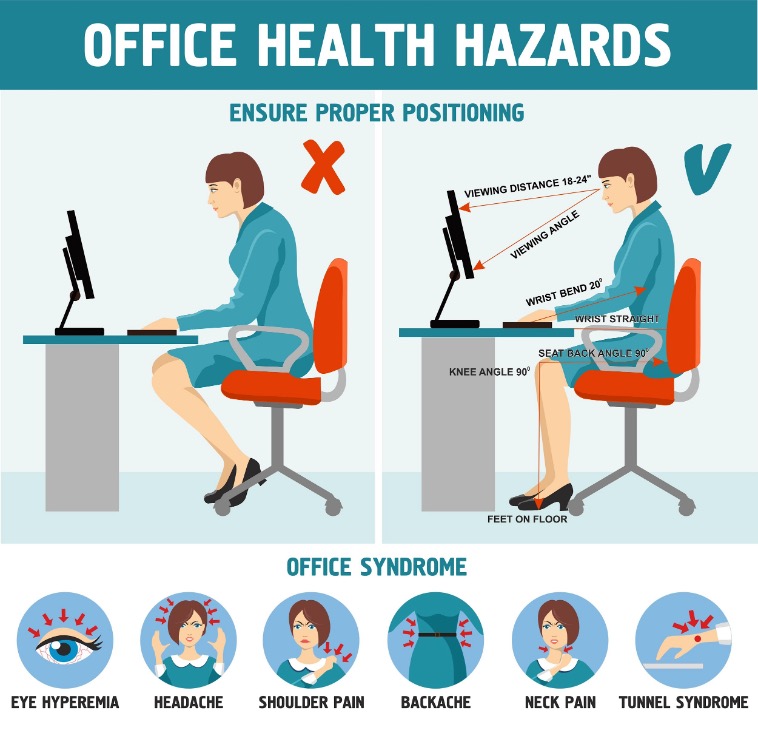
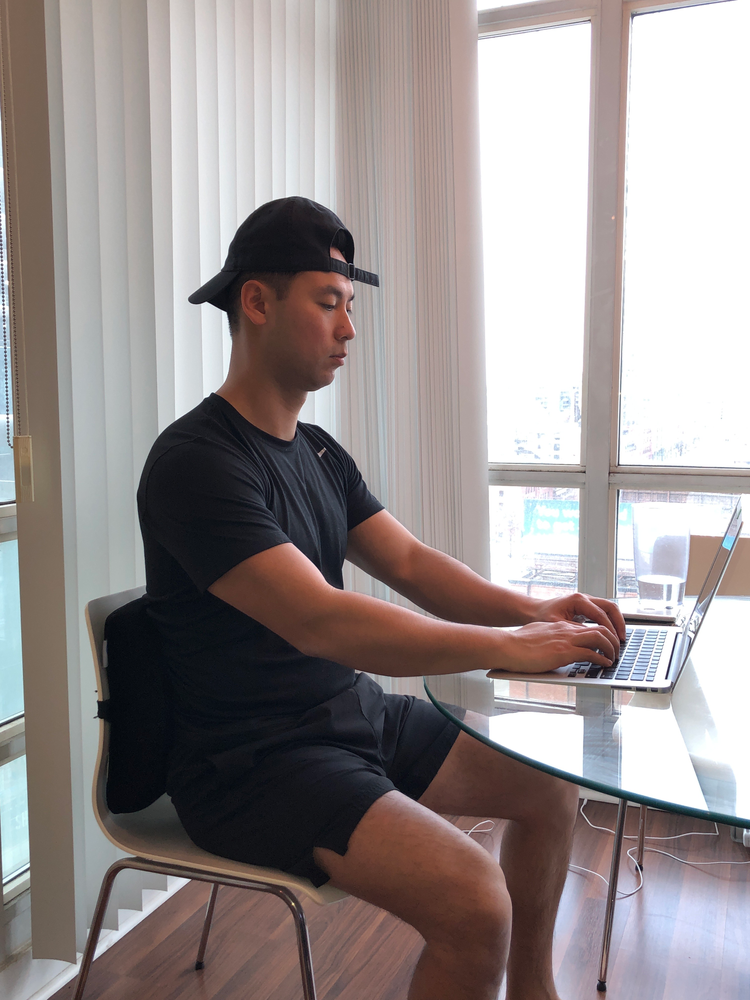
Sitting with proper posture during your work day is key in preventing neck and lower back pain. Setting up an ergonomic home office is very important to help with your posture. Set up your office at a desk or dining table where you can sit up straight and your feet can touch the floor. For additional back support use a lumbar support, rolled up towel, or a couch pillow. If possible plug in your laptop to an external keyboard and external monitor. If you would like to switch things up and work from your couch sit up straight. Use a pillow to provide additional back support. Place a pillow on your lap to rest your laptop and elevate it slightly.
NECK AND BACK STRETCHES
With this period of self-isolation we are certainly doing a lot more sitting and lying around. We are all spending a lot more time looking down at our phones, tablets, and laptops to connect with friends or stay up to date on the news. All this puts a lot more stress on our spine. In order to alleviate this pressure I would recommend doing one set of each of these two exercises 2-3x/day.
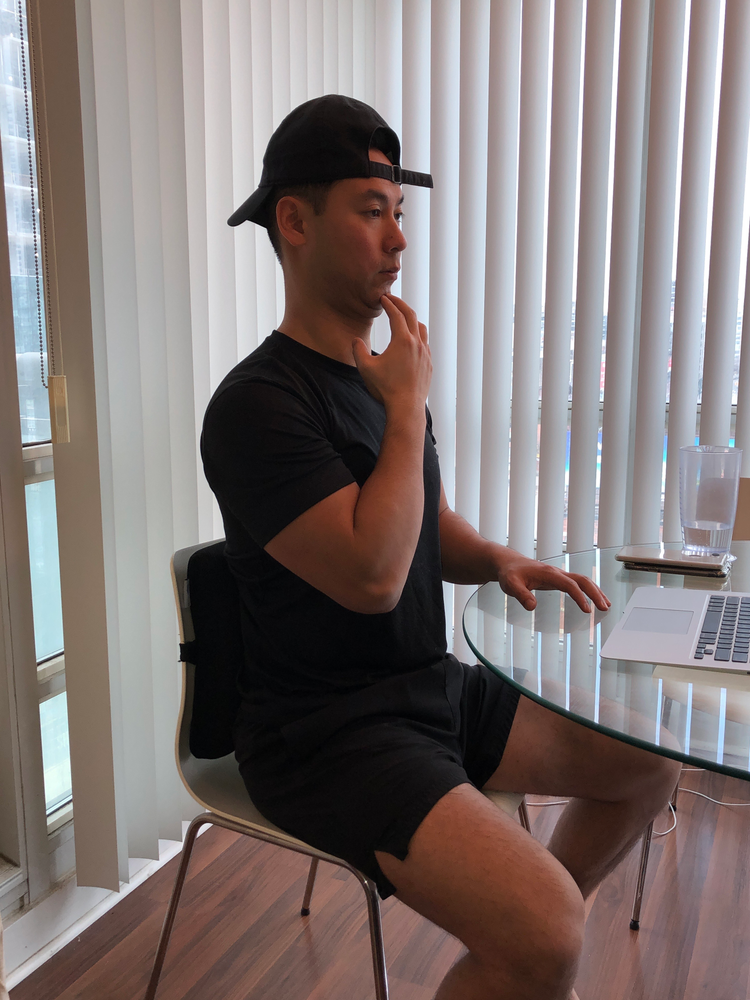
CHIN RETRACTIONS
-start by sitting up with good posture
-place your hand on your chin to guide the movement of sliding your head backwards
-your neck will make a “double chin” action
-perform 1 set of 10
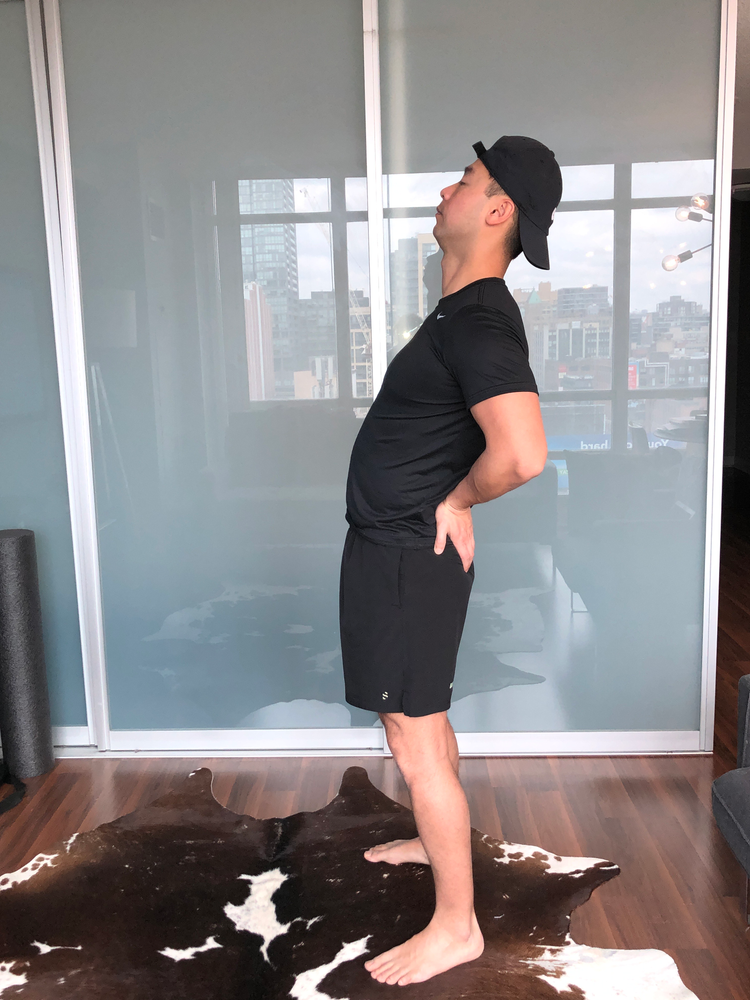
STANDING BACK EXTENSIONS
-stand with your feet shoulder width apart
-place your hands on your back and just above your butt
-arch backwards as far as you feel comfortable
-perform 1 set of 10
FAQ: Staying Active and Healthy While Self-Isolating at Home
1. How can I stay active while self-isolating at home during COVID-19?
You can stay active by creating short movement breaks throughout the day, using bodyweight exercises, following online workout videos, or even doing household chores actively. The key is consistency—moving every 1–2 hours helps maintain circulation and energy.
2. Why am I feeling more stiff and sore during self-isolation?
Reduced daily movement, prolonged sitting, and limited access to gyms or outdoor activities can lead to muscle stiffness and soreness. Muscles and joints need regular movement to stay flexible and strong.
3. What can I do if working from home is causing neck or back pain?
- Adjust your workspace ergonomically: screen at eye level, chair supporting your lower back, feet flat on the floor.
- Take short movement breaks every 30–60 minutes.
- Do stretches for the neck, shoulders, and lower back.
- Include strengthening exercises for your core and upper back to support posture.
4. How much movement do I really need each day while stuck at home?
Aim for at least 30 minutes of moderate activity per day, which can be broken into short sessions. Additionally, include frequent light activity, like standing, stretching, or walking around the house, to prevent stiffness.
5. What are easy exercises I can do at home without equipment?
- Bodyweight squats and lunges
- Push-ups or wall push-ups
- Planks or side planks
- Glute bridges
- Marching in place or stair climbing
Even 5–10 minute mini-sessions throughout the day can be beneficial.
6. Can staying active help with stress and anxiety during self-isolation?
Yes. Physical activity releases endorphins, improves mood, reduces stress, and can help regulate sleep. Even short bouts of movement or gentle stretching can positively affect mental well-being.
7. What stretches help relieve tension from sitting all day at home?
- Chest opener stretch against a wall or doorway
- Upper back stretch (cat-cow or seated twist)
- Hip flexor stretch (lunge position)
- Hamstring stretch (standing or seated)
- Neck side bends and rotations
Hold each stretch for 20–30 seconds and repeat 2–3 times.
8. Why does my body feel more tired even though I’m moving less?
Reduced movement can actually lower energy levels because circulation, oxygen delivery, and muscle activation are decreased. Regular activity helps maintain energy, reduce fatigue, and improve alertness.
9. What small daily habits can help me feel better physically during self-isolation?
- Stand or walk around every hour
- Stretch or do a quick exercise routine in the morning
- Set up a dedicated ergonomic workspace
- Drink water regularly and maintain a balanced diet
- Use stairs or household tasks as opportunities to move
Small, consistent changes make a big difference over time.