You have been having on and off neck pain for the last couple of years. However in the last few months you have also started having pain around your shoulder and burning pain down your arm and into your hand. The pain has also caused you to have a number of sleepless nights lately. Your arm pain might be caused from your neck due to a condition called a herniated disc, or more commonly known as a bulging disc. The condition is not as scary as it sounds and there is very effective treatment to fix this. Lets take a look at what is a cervical herniated disc or bulging disc.

What is a cervical herniated disc or bulging disc in the neck?
A herniated cervical disc, also known as a cervical disc herniation, occurs when one of the discs in the cervical spine (the neck region) ruptures or bulges out of its normal position. The cervical spine is made up of seven vertebrae (C1-C7) separated by intervertebral discs, which act as cushions or shock absorbers between the vertebrae. Each disc has a tough outer layer called the annulus fibrosus and a gel-like inner core called the nucleus pulposus.
When a cervical disc herniates, the inner gel-like material (nucleus pulposus) leaks out through a tear or rupture in the outer layer (annulus fibrosus) of the disc. This can occur due to factors such as age-related wear and tear, trauma, or repetitive stress on the spine. The herniated disc material may then press against nearby spinal nerves or the spinal cord itself, leading to symptoms such as neck pain, arm pain, numbness, tingling, weakness, and possibly muscle spasms.
What are the signs and symptoms?
The signs and symptoms of a cervical herniated disc can vary depending on the severity of the herniation and the nerves affected. Common signs and symptoms include:
- Neck Pain: Pain in the neck is often the first symptom experienced. It may be localized to the neck or radiate to the shoulders, arms, and hands.
- Arm Pain: Pain that radiates down one or both arms is a hallmark symptom of cervical disc herniation. The pain may be sharp, shooting, or burning in nature.
- Numbness and Tingling: Sensations of numbness, tingling, or pins-and-needles may be felt in the arms, hands, fingers, or even in the shoulders.
- Weakness: Muscle weakness in the arms or hands may occur due to nerve compression caused by the herniated disc. This weakness can affect grip strength and fine motor skills.
- Changes in Reflexes: Reflexes in the affected arms or hands may be diminished or exaggerated compared to normal.
- Difficulty with Fine Motor Skills: Tasks that require dexterity and fine motor control, such as buttoning a shirt or holding utensils, may become challenging due to weakness or sensory changes.
- Pain with Certain Movements: Pain may worsen with certain movements of the neck, such as bending forward, turning the head, or looking up.
- Muscle Spasms: In some cases, muscle spasms in the neck or shoulder region may occur as a protective response to the injury.
It’s important to note that not everyone with a cervical herniated disc will experience all of these symptoms, and the severity can vary from person to person.
How is it treated?
Your physiotherapist will use a variety of hands on treatment techniques to resolve pain and tension in the neck and shoulders. This can involve manual traction to relieve pressure on the cervical discs. Massage and stretching can release tension in the neck and shoulder which include muscles such as upper trapezius, levator scapulae, cervical erectors, and pectoralis major. Medical acupuncture can be applied to reduce muscle tension and nerve pain in the neck and arm. (Find out how acupuncture works here).
Poor ergonomics can often be the root cause in many cases of disc herniation. Your physiotherapist will work with you to discuss with you on how to improve your posture and ergonomics when you are at work and at home.
Common home exercises
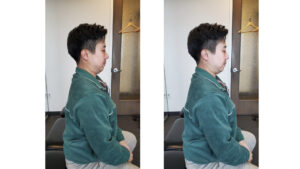
Chin retractions:
Performing chin retraction exercises can help strengthen the muscles in your neck, decrease the pressure from the disc onto the nerves, and improve posture. Here’s how you can perform a basic chin retraction exercise:
- Sit or stand in a comfortable position: Ensure that your back is straight and your shoulders are relaxed.
- Tuck your chin in: Start by aligning your head with your spine. Then, gently draw your chin straight back without tilting your head up or down.
- Hold the position: Hold the retracted position for about 5-10 seconds while maintaining normal breathing. You should feel a gentle stretch at the base of your skull and the back of your neck.
- Release: Slowly release the chin retraction and return to the starting position.
- Frequency: Perform 10-15 repetitions of the chin retraction exercise for 1 set. Perform 1 set of this exercise every 1-2 hours.
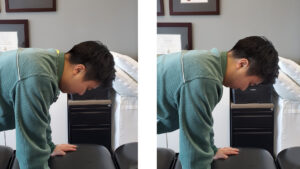
Chin retractions on all 4’s
- Kneel on the floor with your knees under your hips and your hands under your shoulder: Ensure that your back is straight and your shoulders are relaxed. Performing the chin retraction in this position is more challenging and tiring for your neck muscles.
- Tuck your chin in: Start by aligning your head with your spine. Then, gently draw your chin straight back without tilting your head up or down.
- Hold the position: Hold the retracted position for about 5-10 seconds while maintaining normal breathing. You should feel a gentle stretch at the base of your skull and the back of your neck.
- Release: Slowly release the chin retraction and return to the starting position.
- Frequency: Perform 10-15 repetitions of the chin retraction exercise for 1 set. Perform 1 set of this exercise every 1-2 hours.
Median nerve floss
The median nerve floss exercise will treat the nerve pain in the arm and hand. Learn how to perform the median nerve slider here.
Cervical Herniated & Bulging Discs: Frequently Asked Questions (FAQ)
1. What exactly is a cervical herniated disc or bulging disc in the neck?
A cervical herniated or bulging disc occurs when one of the discs between your neck vertebrae becomes damaged and protrudes outward.
-
A bulging disc happens when the outer layer weakens and the disc pushes outward evenly.
-
A herniated disc occurs when the inner gel-like material leaks through a tear in the outer layer.
Both conditions can press on nearby nerves, causing pain, tingling, or weakness in the neck, shoulders, and arms.
2. What are the typical signs and symptoms of a neck disc bulge or herniation?
Common symptoms include:
-
Neck pain or stiffness
-
Pain that radiates into the shoulder, arm, or hand
-
Numbness or tingling in the arm or fingers
-
Muscle weakness in the upper limbs
-
Increased pain with certain movements—especially looking down or turning the head
-
Headaches originating from the neck
Symptoms vary depending on the severity and which nerve root is affected.
3. What causes a disc in the cervical spine to bulge or herniate?
Several factors can contribute to disc bulging or herniation, including:
-
Age-related degeneration (the most common cause)
-
Poor posture, especially from prolonged laptop or phone use
-
Repetitive strain from work or sports
-
Sudden injury such as whiplash
-
Weakness or imbalances in surrounding muscles
-
Lifting heavy objects with poor technique
Over time, daily stress on the spine can weaken the discs, making them more susceptible to injury.
4. How is a neck disc bulge or herniation diagnosed in physiotherapy?
Physiotherapists use a combination of:
-
A detailed health history and symptom assessment
-
Posture and movement analysis
-
Range-of-motion and strength testing
-
Neurological tests (reflexes, sensation, nerve tension tests)
-
Palpation of the cervical spine and surrounding tissues
If necessary, they may refer you for imaging (MRI or X-ray) to confirm the diagnosis or rule out more serious conditions.
5. What are the non-surgical treatment options for a cervical herniated or bulging disc?
Conservative treatment like physiotherapy is highly effective for most people. Common physiotherapy-based treatments include:
-
Manual therapy: gentle joint mobilizations, soft-tissue techniques, and traction
-
Therapeutic exercises: stretching, strengthening, mobility, and postural retraining
-
Nerve gliding exercises to reduce nerve irritation
-
Activity modification to reduce strain
-
Heat or ice therapy for pain relief
-
Education on ergonomics and proper movement habits
Most cases improve significantly within weeks with consistent therapy and home exercises.
6. How important are posture and ergonomics in preventing and treating a neck disc problem?
Extremely important. Poor posture—especially forward-head posture and rounded shoulders—increases pressure on the cervical discs and accelerates wear and tear. Proper ergonomics help reduce strain by keeping the head, neck, and spine aligned. This includes:
-
Proper desk setup
-
Monitor height adjustment
-
Taking frequent breaks
-
Strengthening postural muscles
Improving posture is one of the most effective ways to prevent recurrence.
7. What activities or movements should I avoid while dealing with a neck disc issue?
To prevent worsening symptoms, avoid:
-
Prolonged looking down (phones, tablets, reading)
-
Heavy lifting, especially overhead
-
Sudden jerking or twisting movements of the neck
-
High-impact activities (e.g., contact sports) during flare-ups
-
Sleeping on your stomach
-
Poorly supported sitting or slouched posture
Your physiotherapist may modify these recommendations based on your specific condition and recovery stage.