There are a number of surgeries to stabilize the shoulder and repair tendons and ligaments of the shoulder. Common surgeries include rotator cuff tear repairs and shoulder stabilization surgery (Latarjet procedure) to stabilize frequently dislocating shoulders. Often these procedures are performed arthroscopically leaving only small scars. After surgery the shoulder can be sore, stiff, and inflamed. Your physiotherapist will work with you to help manage your pain and inflammation with gentle hands on treatment.
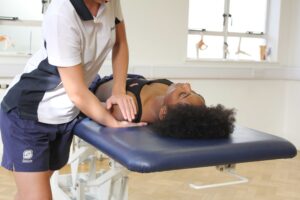
Your physiotherapist will work with your surgeon and follow their rehabilitation protocol to help you recover. Simple activities such as dressing, bathing, and sleeping could be difficult after surgery and your physiotherapist can help guide you on how to adapt and perform these tasks. Physiotherapy will initially focus on improving your shoulder flexibility and strength and as you progress your physiotherapist will customize your treatment to help you reach your individualized goals.
Common Home Exercises:
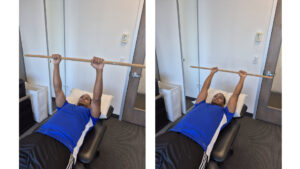
Active Assisted Flexion
This exercise involves using your non-injured arm and a stick to help move the post surgical arm through its range of motion. Here’s how to perform active assisted flexion:
- Lie on your back
- Hold a stick with both hands, palms facing down.
- Start with your arms extended straight out in front of you at shoulder level.
- Slowly raise the post surgical arm upward, with the assistance of the non-injured arm
- Move the arm as far as is comfortable, aiming for a gentle stretch and only mild pain.
- Hold the end position for a few seconds.
- Slowly lower the arm back to the starting position.
- Repeat the movement for 6-12 repetitions and 3 sets
It’s essential to maintain control throughout the movement and avoid jerky or forceful motions. The assisting arm should provide just enough support to help the post surgical arm through its range of motion with only mild discomfort. Over time, as strength and flexibility improve, you can gradually reduce the amount of assistance provided by the non-injured arm.
Wall Crawls for Flexion
- Stand facing a wall, about arm’s length away.
- Place your palm flat against the wall at waist level.
- Slowly walk your fingers up the wall as high as you can comfortably reach while keeping your arm straight.
- Hold the stretched position for a few seconds.
- Slowly slide your hand back down the wall to the starting position.
- Repeat the movement for 6-12 repetitions and 3 sets

Wall Crawl for Abduction
- Stand facing perpendicular to the wall, about arm’s length away.
- Place your palm flat against the wall at waist level.
- Slowly walk your fingers up the wall as high as you can comfortably reach while keeping your arm straight.
- Hold the stretched position for a few seconds.
- Slowly slide your hand back down the wall to the starting position.
- Repeat the movement for 6-12 repetitions and 3 sets

Post-Surgical Shoulder Rehabilitation: Frequently Asked Questions
1. When should I start physiotherapy after my surgery?
The timeline for starting physiotherapy depends on the type of shoulder surgery you had—such as a rotator cuff repair, labral repair, shoulder stabilization, or tendon debridement.
Most patients begin rehab within the first 1–2 weeks after surgery, following their surgeon’s referral and protocol. Early physiotherapy typically focuses on protecting the repair, minimizing stiffness, and managing pain. Always follow your surgeon’s specific guidelines, as some procedures require a longer initial immobilization period.
2. How does the physiotherapist collaborate with my surgeon during rehabilitation?
Your physiotherapist and surgeon work as a team throughout your recovery. Collaboration may include:
-
Reviewing your surgical report and post-operative protocol
-
Following surgeon-specific timelines for mobility, strengthening, and return-to-activity
-
Providing regular progress updates
-
Adjusting the treatment plan if pain, swelling, or unexpected limitations occur
This coordinated communication ensures that the rehab program stays aligned with how your shoulder is healing biomechanically.
3. What are the initial goals of post-surgical rehab in the early recovery phase?
During the first few weeks after surgery, the goals of physiotherapy are to:
-
Reduce pain and inflammation
-
Protect the surgical repair
-
Maintain mobility in the neck, elbow, and wrist
-
Prevent shoulder joint stiffness without stressing the repaired tissues
-
Begin gentle passive range-of-motion exercises as allowed
-
Reinforce safe movement patterns and sling use
This phase lays the foundation for long-term recovery by promoting healing while avoiding complications like adhesive capsulitis (frozen shoulder).
4. When can I safely return to sport or high-level physical activities?
Return-to-sport timelines vary depending on the surgery performed, your sport, and your healing progress. In general:
-
Light sport-specific drills may begin around 3–4 months
-
Strengthening and dynamic stability progress around 4–6 months
-
Full return to competitive sport typically occurs 6–9 months post-surgery
Overhead sports (e.g., tennis, baseball, volleyball) and contact sports may require the longer end of this timeline. Clearance from both the surgeon and physiotherapist is essential.
5. How does the rehab process address restoring strength and function of supporting muscles?
A successful shoulder rehab program requires more than healing the repaired tissue—it involves restoring balanced strength throughout the entire shoulder complex. Rehabilitation targets:
-
Rotator cuff activation and endurance
-
Scapular stabilizers (serratus anterior, lower trapezius, rhomboids)
-
Core and postural muscles
-
Neuromuscular control for smooth overhead motion
-
Functional strength for daily activities or sport-specific demands
Exercises progress gradually from isometrics to resistance bands, then to weights and dynamic stability drills.
6. What role does individualized goal-setting play in post-surgical recovery?
Every shoulder surgery and every patient is different, so personalized goal-setting is essential. Your physiotherapist will tailor your program based on:
-
Your lifestyle and activity level
-
The demands of your work or sport
-
Your healing speed and mobility progress
-
Pain levels and functional limitations
-
Long-term goals, such as returning to overhead sport or lifting without pain
Clear, realistic goals help guide each stage of rehabilitation and keep you motivated as you progress.