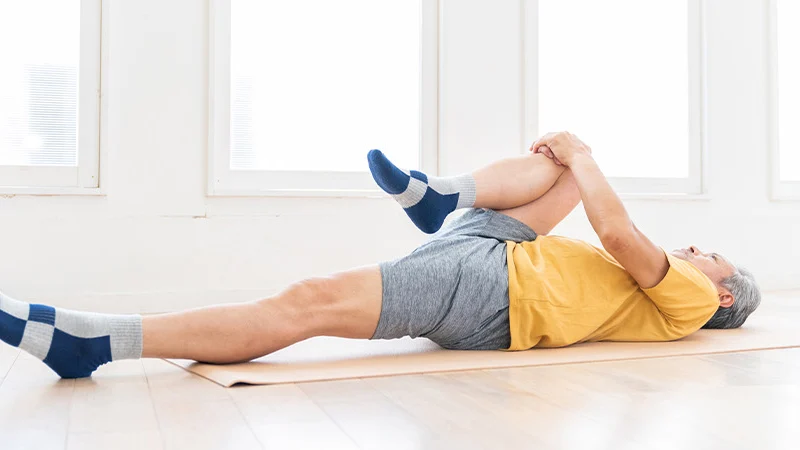
IT band syndrome is a common overuse injury that causes pain on the outside of the knee, especially during running and cycling. This guide explains its causes, symptoms, and treatment, including how physiotherapy, targeted strengthening exercises, manual therapy, gait analysis, and activity modification can relieve pain, restore function, and help prevent future injuries.

What is it?
IT band syndrome, also known as iliotibial band syndrome, is a common overuse injury that affects the iliotibial band, a thick band of fibrous tissue that runs along the outside of the thigh from the hip to the shin. This injury can also be referred as “runners knee”. The injury is often caused by repetitive motions, such as running or cycling, and results in pain, inflammation, and stiffness in the affected area. The location of knee pain can be localized in certain areas or generalized around the whole knee. The cause of IT Band syndrome is often a combination of weakness in the quadriceps and gluteus medius along with tension along the IT Band and gluteus maximus. The combination of weakness and tension in certain muscles in the hip and knee lead to pain with movements such as walking and running.
What are the signs and symptoms?
-
Knee pain which can be sharp or dull
-
Tenderness or soreness along the iliotibial band
-
Stiffness or a burning sensation in the affected area
-
Pain that worsens with activity, particularly with running, cycling, or other repetitive motions
-
Pain that improves with rest
-
Pain or discomfort when going up or down stairs
-
Pain or discomfort when sitting for long periods of time
-
Swelling or inflammation on the outside of the knee
How is it treated?
Physiotherapy will address the cause of IT Band syndrome, which is a muscle imbalance between muscles of the hip and knee. Physiotherapy treatment will include:
-
Stretching and manual therapy: Stretch, massage, and active release treatments will be targeted toward the gluteus maximus and IT Band to reduce tension in these structures relieving the knee pain.
-
Acupuncture: Dry needling which is a form of acupuncture is particularly effective at reducing tension in the gluteus maximus. Electro acupuncture applied along the hip, thigh, and knee can reduce pain and improve circulation in the knee to promote healing.
-
Strengthening exercises: Hip and knee exercises will be prescribed by . your physiotherapist which will focus on strengthening the muscles in your quadriceps and glutes.
-
Gait analysis: Your physiotherapist will analyze your walking and running pattern to ensure that you are using the correct technique, which can reduce the stress on the IT band.
-
Orthotics: Your physiotherapist may recommend orthotics to correct biomechanical issues caused by your feet which is contributing to poor alignment in your knee leading to IT band syndrome.
-
Education: The physiotherapist will give you information about how to prevent IT band syndrome from recurring and how to manage symptoms.
Common Home Exercises
Squat
-
Stand with your feet shoulder-width apart and point your toes slightly outward.
-
Lower your hips back and down as if you were sitting back into a chair.
-
Keep your weight in your heels and your back straight.
-
Lower until your thighs are parallel to the ground or lower.
-
Push through your heels to return to the starting position.
-
Repeat for 10-20 repetitions for 3 sets.
Lunges
-
Stand up straight with your feet hip-width apart.
-
Take a large step forward with one foot, keeping your feet facing forward.
-
Lower your body by bending both knees, making sure your front knee is directly above your ankle and not past your toes.
-
Keep your chest up and your back straight as you lower your body. Your back foot should be on the ball of your foot with your heel lifted.
-
Push through your front heel to return to the starting position.
-
Alternate legs, lunging with the other leg. Repeat for 10-20 repetitions per side for 3 sets.
It’s important to keep your core engaged and your back straight throughout the exercise. Make sure that your front knee is not past your toes and your back knee is almost touching the floor.

Glut Medius Leg Raise
-
Start by lying on your side with your legs straight and your feet together. Maintain a straight posture where your shoulder, hip, and feet are in straight alignment.
-
Bring your top leg back behind midline, turn your knee downwards toward the ground, point your toes up (dorsiflexion).
-
Lift your top leg toward the ceiling. You should feel a contraction along the side of your buttock.
-
Repeat this for 10-20 repetitions for 3 sets.

Click here to learn about other knee and hip injuries and treatments.
Frequently Asked Questions About IT Band Syndrome
What is IT band syndrome?
IT band syndrome (iliotibial band syndrome or ITBS) is a common overuse injury that causes pain on the outside of the knee. It develops when the iliotibial (IT) band, a thick band of connective tissue running from the hip to the knee, becomes irritated during repetitive activities such as running, cycling, hiking, or climbing stairs. IT band syndrome is one of the most common causes of lateral knee pain in runners and active individuals.
What are the most common symptoms of IT band syndrome?
The most common symptom of IT band syndrome is pain on the outside of the knee that worsens during running, cycling, or other repetitive activities. You may also experience tenderness along the outside of the knee, tightness on the outer thigh, pain when walking downhill or downstairs, and discomfort that improves with rest but returns when activity resumes. Symptoms often begin gradually and worsen if left untreated.
What causes IT band syndrome?
IT band syndrome is usually caused by repetitive stress rather than a single injury. Common contributing factors include increasing training volume too quickly, weak hip and glute muscles, poor running mechanics, muscle imbalances, reduced flexibility, improper footwear, and running on sloped or uneven surfaces. Identifying and correcting these factors is essential for long-term recovery.
Can physiotherapy help treat IT band syndrome?
Yes. Physiotherapy is one of the most effective treatments for IT band syndrome because it addresses the underlying cause rather than just relieving symptoms. A physiotherapist will assess your strength, flexibility, movement patterns, and biomechanics before creating a personalized treatment plan that may include manual therapy, strengthening exercises, stretching, gait analysis, education, and a gradual return to activity.
Which exercises are recommended for IT band syndrome?
The best exercises for IT band syndrome strengthen the muscles that support the hip, pelvis, and knee. Common exercises include clamshells, glute bridges, side-lying leg raises, lateral band walks, single-leg balance exercises, step-downs, squats, and core strengthening. While gentle stretching may help reduce tightness, strengthening the hip muscles is often the most important part of recovery.
Should I continue running if I have IT band syndrome?
It depends on your symptoms. If running causes mild discomfort that does not worsen during or after exercise, you may be able to continue with modified training. However, if pain increases while running or persists afterward, reducing or temporarily stopping running is recommended until symptoms improve. A physiotherapist can help determine when it is safe to return to running and how to prevent the injury from recurring.
How long does it take to recover from IT band syndrome?
Most people recover from IT band syndrome within two to eight weeks when treatment begins early and contributing factors are addressed. More persistent cases may require several months of rehabilitation. Recovery depends on the severity of the injury, activity level, and adherence to a structured physiotherapy program.
Can IT band syndrome be prevented?
Yes. IT band syndrome can often be prevented by gradually increasing training intensity, strengthening the hip and core muscles, maintaining good flexibility, wearing appropriate footwear, warming up before exercise, and allowing adequate recovery between workouts. Proper running mechanics and addressing muscle imbalances also reduce the risk of future episodes.
Is IT band syndrome a serious injury?
IT band syndrome is not usually a serious injury, but it can become chronic if left untreated. Although it rarely causes permanent damage to the knee, ongoing irritation can interfere with running, cycling, walking, and other physical activities. Early treatment typically leads to a faster recovery and helps prevent recurring symptoms.
When should I see a physiotherapist for IT band syndrome?
You should see a physiotherapist if pain on the outside of your knee lasts longer than a few days, returns every time you exercise, limits your daily activities, or does not improve with rest. Early assessment can identify the cause of your IT band syndrome, speed recovery, and reduce the risk of long-term problems or repeated flare-ups.