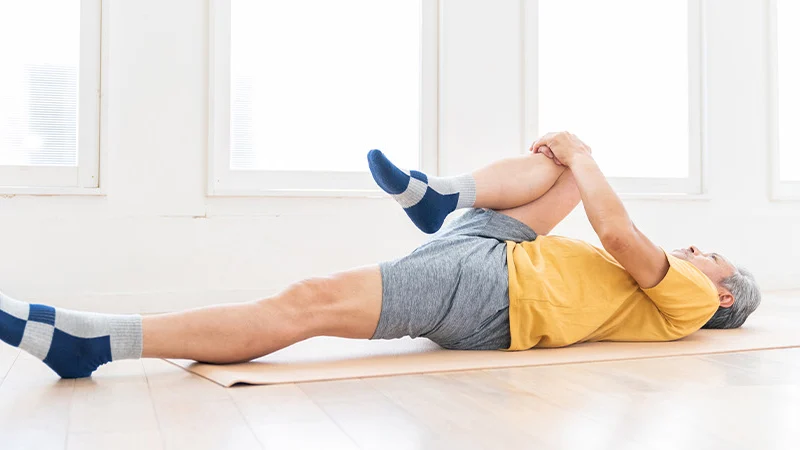
SI joint pain is a common cause of lower back, pelvic, and buttock discomfort that can affect your ability to walk, sit, exercise, and perform daily activities. This blog explains the causes and symptoms of SI joint pain, how physiotherapy can help reduce pain and improve movement, and common exercises to restore strength, mobility, and stability.

What Is Sacral Iliac Joint Pain?
Sacral Iliac joint pain, also known as SI joint pain, is pain that originates from one or both of the sacroiliac (SI) joints. These joints connect the bottom of your spine (the sacrum) to your pelvis (the iliac bones). They play an important role in transferring forces between your upper body and legs while providing stability during activities such as walking, running, standing, and lifting.
Although the SI joints have only a small amount of movement, they are supported by strong ligaments and muscles that help absorb shock and maintain pelvic stability. When the joint or surrounding ligaments become irritated, inflamed, or do not move normally, pain can develop.
What Are the Symptoms of SI Joint Pain?
SI joint pain can cause discomfort in the lower back and pelvis and is often mistaken for other conditions, such as a lumbar disc injury, sciatica, or hip pain. Symptoms can develop suddenly after an injury or gradually over time due to repetitive stress or changes in movement patterns.
Common symptoms of SI joint pain include:
Pain on One Side of the Lower Back
The most common symptom is pain over one SI joint, located just below the waistline where the spine meets the pelvis. Although both joints can be affected, symptoms are usually felt on only one side.
Stiffness in the Lower Back or Pelvis
Some people notice stiffness in the lower back or pelvis, particularly after sitting for long periods or first thing in the morning. This stiffness often improves with gentle movement.
Buttock Pain
Many people experience aching or sharp pain deep in the buttock. This is one of the hallmark symptoms of SI joint dysfunction and is often aggravated by prolonged standing or walking.
Pain That Radiates Into the Hip, Groin, or Thigh
SI joint pain may spread into the hip, groin, or back of the thigh. Unlike sciatica, the pain typically does not travel below the knee or into the foot.
Pain When Changing Positions
Activities that load one side of the pelvis can irritate the SI joint. Pain is commonly felt when:
- Standing up from a chair
- Climbing stairs
- Rolling over in bed
- Getting in or out of a car
- Standing on one leg
- Taking long strides while walking
Pain After Prolonged Sitting or Standing
Remaining in one position for an extended period can increase stress on the SI joint, leading to worsening pain after sitting at a desk, driving, or standing for long periods.
A Feeling of Instability
Some individuals describe a sensation that their pelvis is “shifting,” “giving way,” or feels unstable during walking or changing directions. While this feeling is common, it does not necessarily mean the joint is actually out of place.
Difficulty With Exercise or Sports
Running, jumping, golfing, tennis, and other activities that involve twisting or impact can aggravate SI joint pain, making it difficult to participate comfortably.
How is it treated?
Your physiotherapist will use manual therapy which is an effective form of treatment for sacral iliac (SI) joint. Joint mobilization, a specific type manual therapy technique, is used to stretch the stiff and irritable sacral iliac joint. Your skilled physiotherapist will stretch and mobilize the SI joint to free up the joint allowing for better pain free movement. After treatment you will notice a easier ability to walk, sit, and squat. Your physiotherapist will also massage some of the tight muscles around the lower back which could also be restricting the movement in the sacral iliac joint. Acupuncture or dry needling, if you are interested, can be effective at reducing pain as well by targeting the muscles of the lower back and buttocks. Treatment will focus on improving your overall function to help you return to work, daily activities, and overall sleep more comfortably at night.
Common Home Exercises
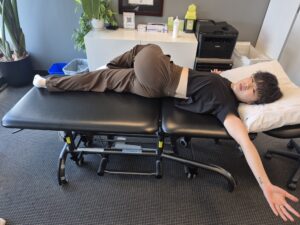
Supine Spinal Twist
The supine spinal twist stretch is a gentle mobility exercise that can help improve flexibility in the lower back, hips, and trunk.
- Lie on your back with your legs extended, then bend one knee and place your foot flat on the floor.
- Gently bring your bent knee across your body toward the opposite side while keeping both shoulders on the floor. Extend your opposite arm out to the side and turn your head toward your hand if comfortable.
- Hold the stretch for 20–30 seconds while breathing slowly, then return to the starting position with control.
- Repeat 2–4 times on each side.
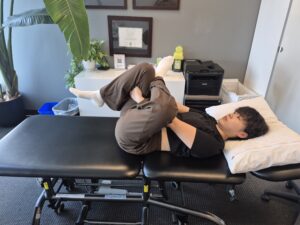
Supine piriformis stretch
This stretch can relieve the stubborn buttock pain that comes along with an SI joint dysfunction.
- Lie on your back with both knees bent and your feet flat on the floor.
- Cross one ankle over the opposite knee, creating a figure-four position.
- Gently pull the supporting leg toward your chest until you feel a stretch in your buttock and hip.
- Hold the stretch for 20–30 seconds while breathing normally, then slowly return to the starting position.
- Repeat 2–4 times on each side.
Bird Dog
This exercise works on strengthening your core. Learn how to perform this exercise here.
Frequently Asked Questions About SI Joint Pain and Physiotherapy Treatment
1. What is SI joint pain?
SI joint pain refers to pain originating from the sacroiliac (SI) joints, which connect the bottom of the spine (sacrum) to the pelvis. These joints help transfer forces between the upper body and legs during activities such as walking, running, and lifting. When the SI joint or surrounding ligaments become irritated or stressed, it can lead to pain in the lower back, buttock, hip, or thigh.
2. What does SI joint pain feel like?
SI joint pain is commonly felt as a deep ache or sharp pain on one side of the lower back or buttock. Some people may experience discomfort that spreads into the hip, groin, or back of the thigh. Pain is often aggravated by activities that place stress on the pelvis, such as climbing stairs, standing on one leg, getting out of a car, or rolling over in bed.
3. What causes SI joint pain?
SI joint pain can develop from several factors, including:
- Sudden injuries such as falls or lifting heavy objects
- Repetitive stress from activities like running or sports
- Prolonged sitting or poor movement habits
- Pregnancy-related changes that increase stress on the pelvis
- Arthritis or age-related changes
- Muscle weakness or poor control around the hips and core
Often, SI joint pain develops due to a combination of factors rather than one specific cause.
4. How is SI joint pain diagnosed?
A physiotherapist diagnoses SI joint pain through a detailed assessment of your symptoms, movement patterns, and physical examination. This may include evaluating your lower back, hips, pelvis, and performing specific SI joint provocation tests.
Because SI joint pain can feel similar to other conditions, such as lumbar disc injuries or hip problems, a thorough assessment helps identify the true source of your symptoms.
5. Can physiotherapy help SI joint pain?
Yes. Physiotherapy is an effective treatment option for many people with SI joint pain. A physiotherapist can help reduce pain, improve movement, restore strength, and address contributing factors that may be placing stress on the SI joint.
Treatment may include manual therapy, targeted exercises, mobility exercises, posture and movement retraining, and education on modifying activities.
6. What exercises are good for SI joint pain?
The best exercises depend on the cause of your SI joint pain and your individual symptoms. Common exercises recommended by physiotherapists may include:
- Core strengthening exercises
- Glute strengthening exercises
- Hip mobility exercises
- Pelvic stability exercises
- Gentle lower back stretches
Exercises should be performed with proper technique and should not increase your pain. A physiotherapist can recommend exercises that are appropriate for your condition.
7. How long does it take to recover from SI joint pain?
Recovery time varies depending on the severity of symptoms, the underlying cause, and how consistently you follow your treatment plan. Many people notice improvement within a few weeks with appropriate physiotherapy, while more persistent cases may require a longer rehabilitation program.
The goal of physiotherapy is not only to reduce pain but also to restore strength and prevent symptoms from returning.
8. Can SI joint pain go away on its own?
Mild SI joint pain may improve with activity modification, gentle movement, and self-management strategies. However, if pain persists, keeps returning, or affects your ability to work, exercise, or perform daily activities, physiotherapy can help identify the underlying cause and provide a structured recovery plan.
9. Is SI joint pain the same as sciatica?
No. Although SI joint pain and sciatica can feel similar, they involve different structures. Sciatica occurs when the sciatic nerve is irritated, often causing pain, numbness, tingling, or weakness that travels down the leg.
SI joint pain is usually felt around the lower back, buttock, and hip area and typically does not extend below the knee.
10. When should I see a physiotherapist for SI joint pain?
You should consider seeing a physiotherapist if your SI joint pain:
- Lasts longer than a few days or keeps coming back
- Limits your ability to walk, exercise, or work
- Makes sitting or standing uncomfortable
- Causes difficulty with daily activities
- Has not improved with rest or self-care
A physiotherapist can assess your symptoms and create a personalized treatment plan to help you return to your normal activities safely.