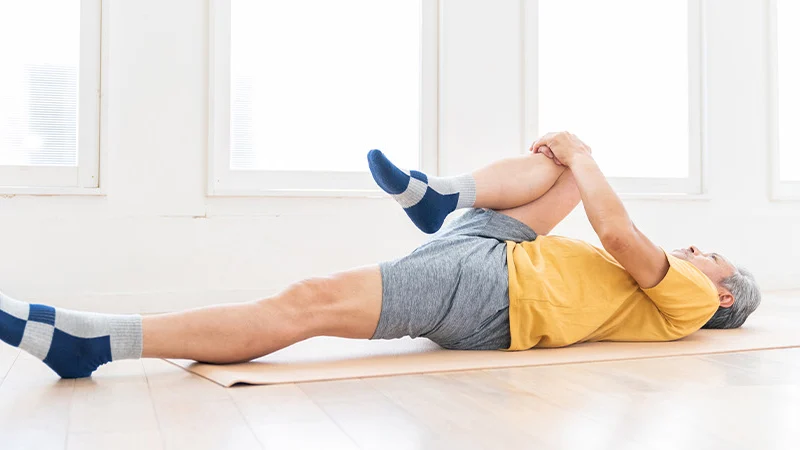
A lateral collateral ligament (LCL) tear is a painful knee injury that affects the ligament running along the outer side of the joint. This ligament plays a crucial role in keeping the knee stable, especially during side-to-side movements. When it becomes overstretched or torn—often from a sudden impact, twist, or awkward landing—it can lead to sharp pain, swelling, and difficulty putting weight on the leg. Understanding what causes an LCL tear, its symptoms, and how it’s treated can help you take the right steps toward recovery and prevent future injuries.
What is it?
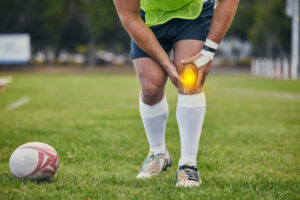
A lateral collateral ligament (LCL) tear is an injury to one of the main ligaments on the outer (lateral) side of your knee. The LCL connects your thigh bone (femur) to your fibula (the smaller bone in your lower leg), and its main job is to stabilize the knee against forces that push it inward.
Lateral collateral ligament (LCL) tears most often occur when a force pushes the knee inward, placing excessive stress on the outer side of the joint. This typically happens during contact sports like football, soccer, or hockey, where collisions or tackles can drive the knee into a vulnerable position. Non-contact mechanisms can also contribute, such as sudden changes in direction, awkward landings, or slipping and twisting the knee unexpectedly. Hyperextension injuries, where the knee bends backward too far, may also strain or tear the LCL. In many cases, LCL tears occur alongside injuries to other structures of the knee due to the intensity of the force involved.
What are the signs and symptoms?
An LCL tear often causes:
- Pain on the outside of the knee
- Swelling or tenderness along the ligament
- A feeling of instability or the knee “giving way”
- Difficulty walking or bending the knee
- Bruising on the outer knee (in some cases)
How is it treated?
Treatment after an initial LCL tear will focus on protecting the knee. Your physiotherapist will often recommend a hinge brace for you to wear to provide stability and protect the knee. After an LCL tear, your knee will be quite stiff and your knee range of motion will be limited making sitting and walking difficult. To improve your knee flexibility, your physiotherapist will massage and stretch your knee. Exercises will be prescribe to strengthen the glut and quadriceps muscle to restore stability in your knee. These muscles are critical in supporting your knee in simple day to day activities such as walking and standing and in athletic movements such as running and jumping. Although you will take short break in terms of sports and training your physiotherapist will work with you to determine a plan of when you can safely return back to sports.
Common home exercises
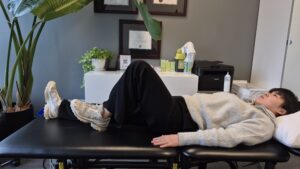
Heel Slides
-
Lie on your back with both legs extended comfortably on the floor or a bed. Keep your spine relaxed and your toes pointing upward.
-
Slowly bend your injured knee by sliding your heel toward your buttocks. Keep your foot in contact with the surface as it moves.
-
Go as far as you comfortably can, stopping when you feel a gentle stretch but not sharp pain.
-
Hold the bent position for 2–3 seconds, maintaining smooth, controlled breathing.
-
Slowly slide your heel back down, straightening your knee to the starting position.
-
Repeat 10–15 times, performing 3 sets.
Mini squats
-
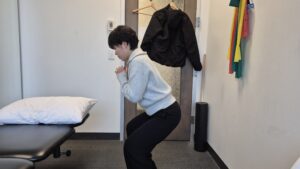
Stand with your feet hip-width apart, toes pointing forward, and your weight evenly distributed across both legs.
-
Engage your core and keep your chest lifted while looking straight ahead.
-
Begin the movement by pushing your hips back slightly, as if you’re about to sit down. This helps protect your knees and keeps proper alignment.
-
Bend your knees to lower your body a short distance, usually about 50% of a full squat. Keep your knees aligned with your toes and avoid letting them collapse inward.
-
Pause briefly at the bottom, maintaining a gentle, controlled position.
-
Push through your heels to straighten your legs and return to the starting position, keeping your movement slow and steady.
-
Repeat 10–15 times, perform 3 sets.
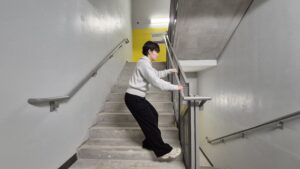
Step down from stair
-
Place your affected leg on the step, facing the arm rail.
-
Bend your knee slowly to lower your body as if you are sitting in a chair.
-
Push through your heel of the leg on the step to lift your body up. Use the arm rail to help with balance but avoid using it to pull yourself upward.
-
Stand tall at the top, keeping your hips level and avoiding leaning to one side.
-
Repeat 10–12 times, completing 2–3 sets, as recommended by your physiotherapist.
Quadricep setting:
learn how to perform this exercise here.