Kinesiology tape
-
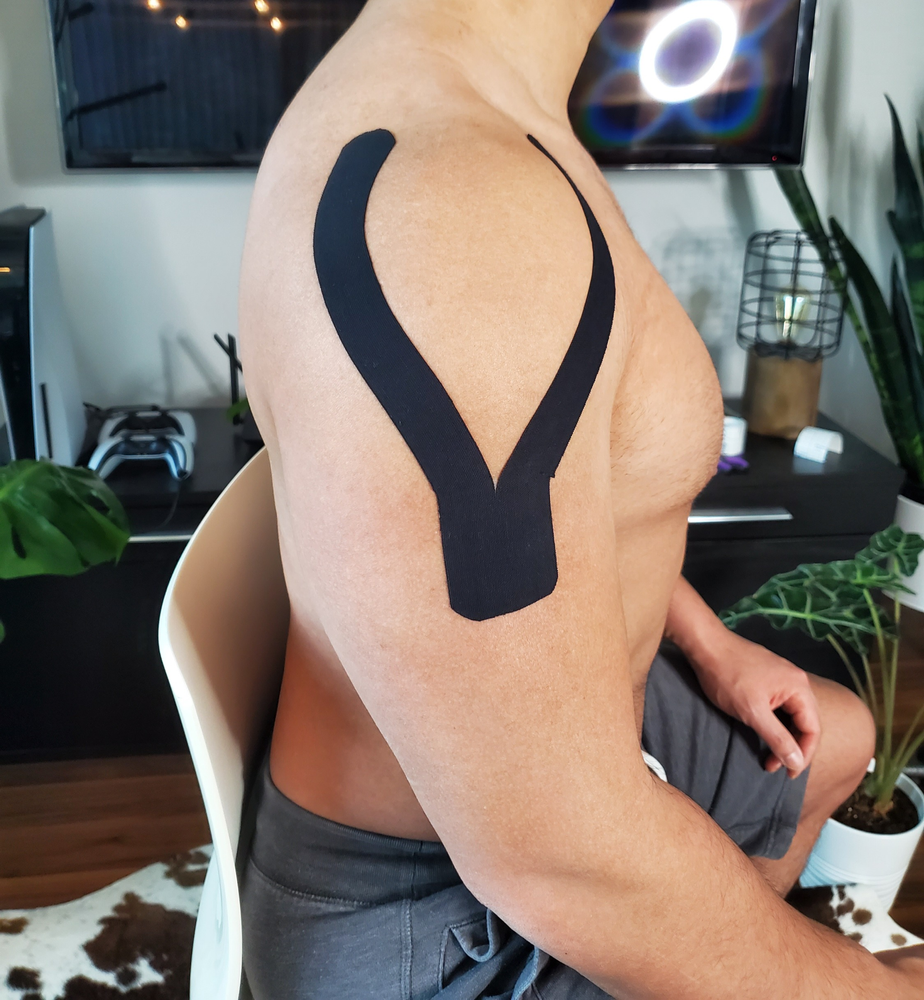
- To perform this taping technique you will need two pieces of Kinesiology tape cut into Y strips.
-
- Apply the base of the Y strip along the deltoid tuberosity of the humerus. The deltoid tuberosity is where your deltoid inserts into the humerus.
-
- Bring the patient’s arm up into abduction and external rotation like in a throwing motion. This position will lengthen the anterior deltoid. If this position is painful your patient can instead move their arm into extension which will also lengthen the anterior deltoid. In either position, apply little to no stretch to the tape as you lay the anterior tail of the tape around the anterior deltoid of your patient’s shoulder.
-
- Next position your patient’s arm forward and internally rotate their shoulder. This will lengthen the posterior deltoid. Apply little to no tension to the posterior tail of the tape and lay the tape around the posterior deltoid of your patient’s shoulder.
-
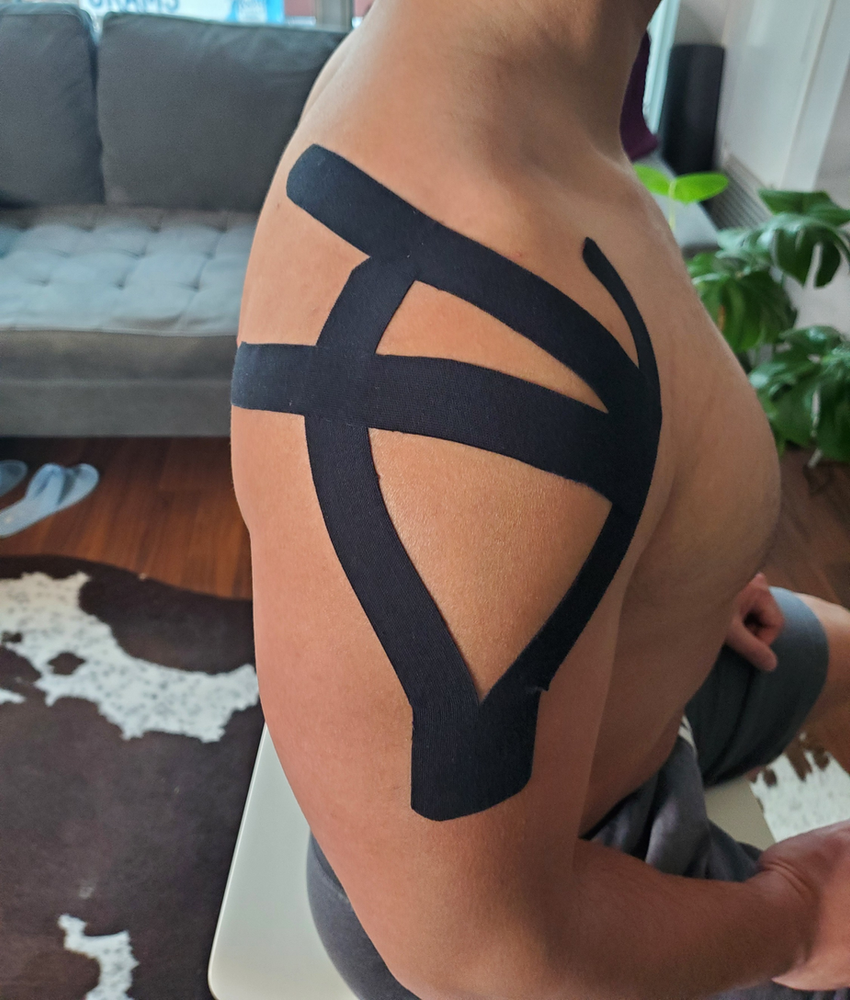
- Then ask your patient to put their hand behind their lower back. They can also pull their shoulder blade back slightly.
-
- Place the base of the 2nd Y strip along the front of the shoulder. Then apply 75% tension on the superior tail of the tape and lay the tape above the “spine” of the shoulder blade. Apply 75% tension on the inferior tail of the tape and lay the tape below the “spine” of the shoulder blade.
-
- Using the backing paper of the tape rub the K-tape and heat activate the glue on the tape.
Leuko tape
-
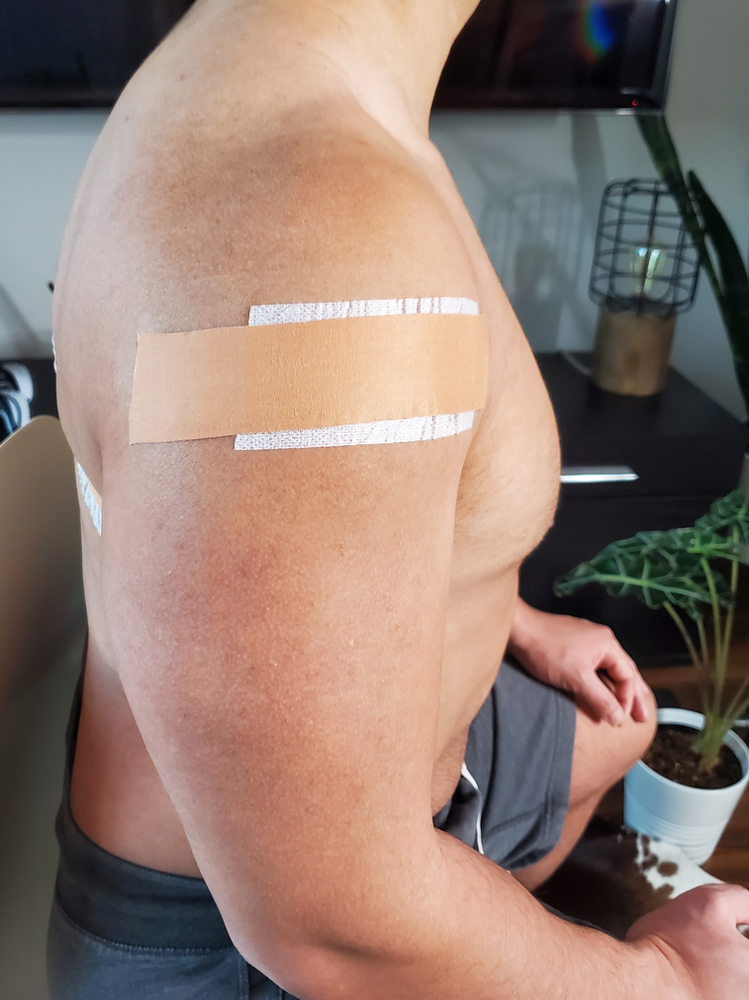
- To perform this taping technique you will need two pieces of Leuko tape. Cover roll tape can also be applied on your patient’s skin prior to performing this taping technique and the Leuko tape can be applied over it. This will help limit skin irritation when the Leuko tape is removed.
-
- Ask your patient to retract their shoulder blade backwards. Apply the Leuko tape along the anterior deltoid. Pull the tape firmly back applying the end of the tape to the posterior deltoid.
-
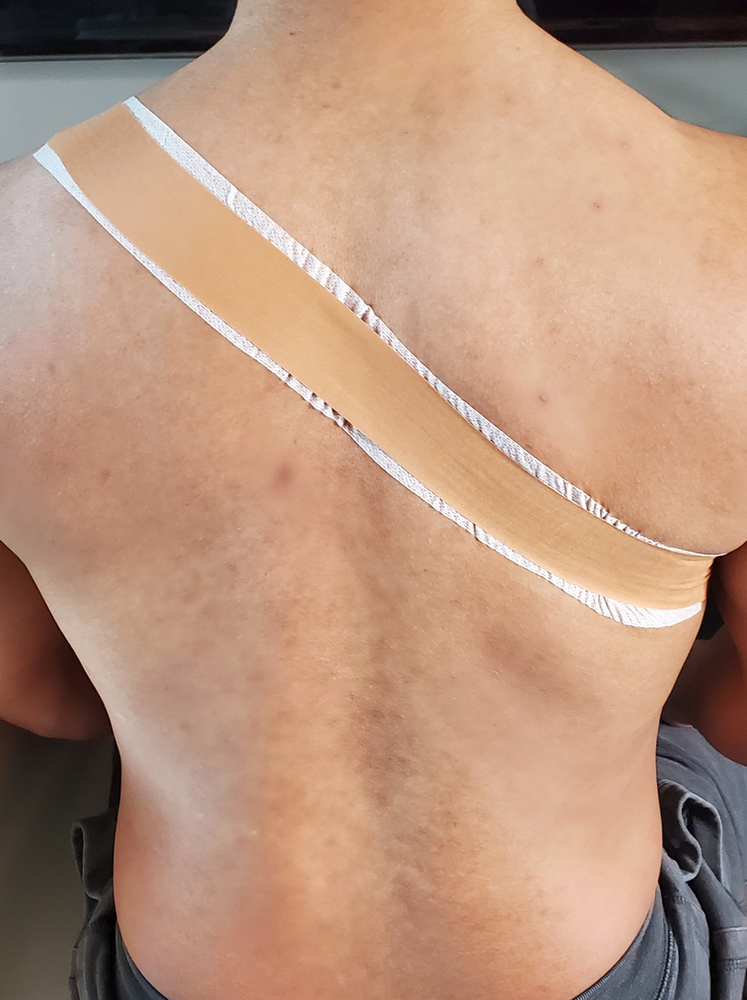
- Ask your patient to shrug their shoulder up slightly. Apply the 2nd strip of Leuko tape 1-2 inches below their arm pit. Pull the tape up toward the patient’s opposite shoulder and lay the end of the tape on their upper trapezius. The strip of tape is referred as the “axillary sling”.
-
- Use a small piece of paper to rub the Leuko tape and heat activate the glue on the tape.
Shoulder Taping: Frequently Asked Questions
1. What is shoulder taping and how does it help relieve pain?
Shoulder taping involves applying adhesive tape to the shoulder muscles and joints to provide support, improve movement awareness, and help reduce discomfort. Depending on the technique used, taping may:
- Assist with shoulder stability
- Encourage proper movement patterns
- Reduce strain on irritated tissues
- Improve body awareness during movement
It is commonly used by athletes and individuals recovering from shoulder injuries or managing chronic shoulder pain.
2. Does kinesiology tape really work for shoulder pain?
Kinesiology tape may help reduce pain and improve function for some people with shoulder conditions. Research suggests that it can provide short-term pain relief and may enhance shoulder movement when used alongside physiotherapy, exercise, and other treatment approaches.
However, results can vary between individuals, and kinesiology tape is generally considered a supportive tool rather than a cure for the underlying condition.
3. What shoulder conditions can taping help with?
Shoulder taping is commonly used to help manage symptoms associated with:
- Rotator cuff injuries
- Shoulder impingement syndrome
- Shoulder instability
- Muscle strains
- Tendonitis
- Bursitis
- Postural-related shoulder pain
- Recovery from certain sports-related shoulder injuries
A physiotherapist can help determine whether taping is appropriate for your specific condition.
4. How does KT tape reduce shoulder pain?
KT tape is thought to reduce shoulder pain by:
- Providing sensory feedback to the nervous system
- Improving muscle activation and movement patterns
- Gently lifting the skin to reduce pressure on pain-sensitive tissues
- Supporting circulation in the affected area
These effects may help improve comfort during daily activities, exercise, and rehabilitation.
5. How long can you wear KT tape on your shoulder?
Most KT tape applications can be worn continuously for 3 to 5 days, depending on:
- The type of tape used
- Your activity level
- Skin sensitivity
- Exposure to water and sweat
The tape is typically water-resistant, allowing users to shower, swim, and exercise while wearing it. If the tape begins to peel significantly, causes irritation, or becomes uncomfortable, it should be removed.
6. Can I tape my shoulder myself?
Yes. Many people can apply KT tape to their shoulder using manufacturer instructions, online tutorials, or guidance from a healthcare provider.
However, because the shoulder is a complex joint and some taping techniques require precise placement, it may be helpful to have a physiotherapist demonstrate the correct application initially to ensure the best results.
7. Is shoulder taping better than using a brace?
Neither option is universally better—the best choice depends on your condition and goals.
Shoulder taping may be preferable if you:
- Want lightweight support
- Prefer greater freedom of movement
- Need assistance with posture or muscle activation
- Participate in sports or exercise
A shoulder brace may be preferable if you:
- Require more substantial support
- Need protection following an injury
- Require additional shoulder stability during recovery
In some cases, taping and bracing may be used together as part of a rehabilitation program.
8. Are there any side effects of shoulder taping?
Shoulder taping is generally safe for most people, but potential side effects include:
- Skin irritation or redness
- Itching or discomfort
- Allergic reactions to the adhesive
- Blistering if applied incorrectly or too tightly
- Skin damage when removed improperly
If irritation occurs, remove the tape and discontinue use. Individuals with sensitive skin may wish to test a small piece before full application.
9. Can shoulder taping improve posture?
Shoulder taping may help improve posture by increasing awareness of shoulder and upper back positioning. Some taping techniques are designed to encourage better shoulder alignment and reduce slouching.
While taping can serve as a helpful reminder to maintain proper posture, lasting improvements typically require:
- Strengthening exercises
- Mobility and flexibility work
- Ergonomic adjustments
- Consistent posture awareness
10. When should I avoid taping my shoulder?
Avoid using shoulder tape or seek medical advice first if you have:
- Open wounds, cuts, or skin infections
- Known adhesive allergies
- Significant swelling of unknown cause
- Suspected fractures
- Severe shoulder injuries
- Circulation problems
- Unexplained shoulder pain
You should also seek physiotherapy assessment if your shoulder pain:
- Is severe
- Follows a major injury
- Causes significant weakness or instability
- Does not improve with conservative care
A physiotherapist can determine the most appropriate treatment plan for your condition.